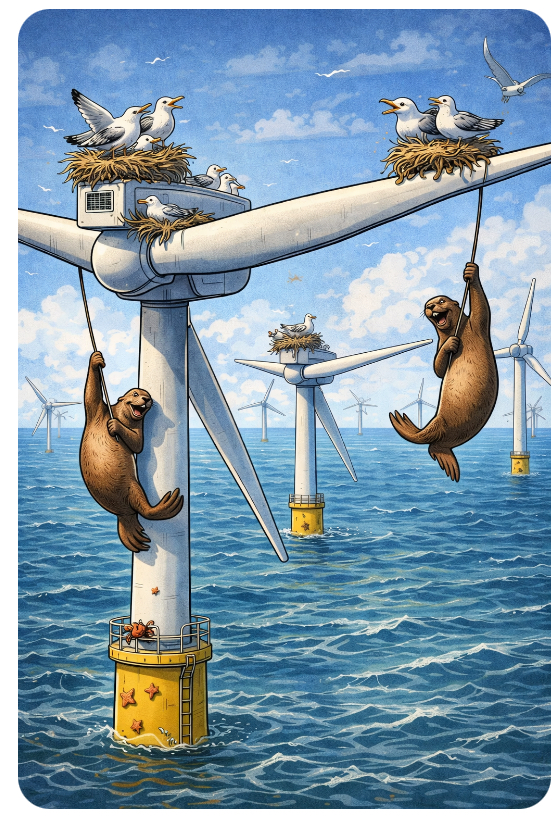
Scotland, the land of endless wind and even more ambitious energy targets, is now staring down the barrel of a 2027 offshore wind construction halt. Why? Because you can build turbines until Nessie shows up with a wrench, but if the grid can’t handle the juice—it’s just a very expensive spin class for seagulls.
🌬️ When You Realise Wind Isn’t Oil With Better PR
For years we’ve been told wind is the clean, green messiah. But here’s the inconvenient truth they don’t put in glossy manifestos:
You can’t ship wind in a barrel. You can’t stick it on a tanker and sell it to a country on the other side of the world. And once your grid’s full? That energy just… vanishes. Poof. Gone with the gale.
Meanwhile, oil, for all its political baggage and environmental guilt trips, can be stored, sold, stockpiled, and exported. It keeps the lights on, the hospitals humming, and the supply chains rolling. Wind? It keeps turbines spinning and politicians dreaming. 🛢️💤
So while we’re mothballing projects and preaching sustainability, we’re also importing oil and gas like we forgot what decade we’re in. And come 2027, when the blades stop turning, who’s going to explain to the public that the future of energy ran headfirst into the reality of infrastructure?
Don’t get us wrong—renewables matter. But trying to run an industrial economy on wind without storage, without backup, and without exporting options is like trying to run a Formula 1 car on enthusiasm and vibes.
⚠️ Challenges ⚠️
Is this the moment green policy meets grim reality? Should we be honest about what wind can and can’t do before the lights go out? Let’s hear your take. Realism, rage, or revolutionary ideas—we want it all. 🌍🗣️
👇 Comment, share, debate.
The sharpest insights will blow into the next issue of the magazine. 📝💨


 Chameleon Magazine
Leave a comment