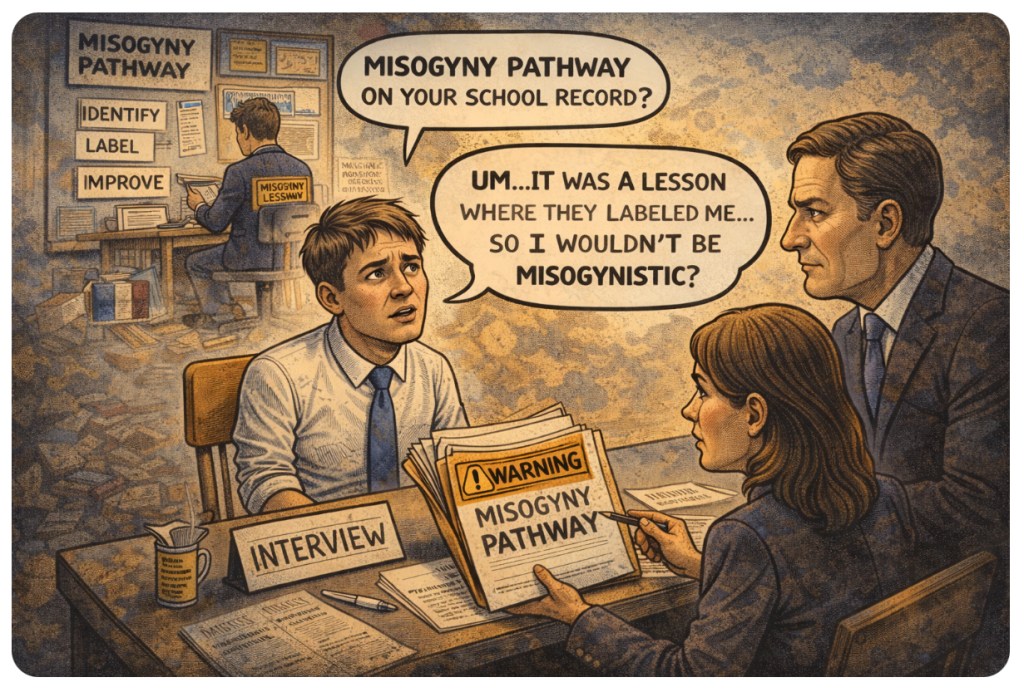
Step aside maths, science, and literacy—because the new star of the curriculum is Misogyny Management, complete with child labelling, pathway planning, and a hearty dose of bureaucratic self-satisfaction. That’s right: British schools are now expected to identify young “problematic” boys and start them on the “journey to not being awful”.
🎓 From Detention to Deconstruction: Welcome to Behavioural Bureaucracy High
This isn’t education—it’s a social rebranding project. Teachers, already balancing 1,000 responsibilities and a broken photocopier, are now supposed to diagnose sexism in preteens like they’re child psychiatrists with a sixth sense for microaggressions.
“Hi, I’m Sam. I did geography, double science, and a six-week government-certified misogyny remediation plan.”
Sounds great on a CV, right? Maybe future job applications will come with drop-down trauma menus:
☑ A-Level Biology
☑ Work Experience
☑ Completed Misogyny Pathway after making a joke about Andrew Tate in Year 9
Let’s not sugar-coat it: if there’s real abuse or misogyny, schools should act—firmly, immediately, and proportionately. But this scheme? It’s not protection—it’s profiling wrapped in policy-speak, building permanent records on children before they’ve figured out algebra, let alone ideology.
And let’s be real: when Labour or the Department for Education says “pathway,” what they mean is a bureaucratic conveyor belt that starts with a label and ends with a glowing Ofsted report about “early intervention”—not actual change.
Meanwhile, the root causes of gender-based violence? Poverty. Home life. Online extremism. All untouched. But don’t worry, little Tom’s now on the respect pathway after holding a door “too confidently.”
🤯 Challenges 🤯
Is this the future of education—label, document, and rehabilitate every thought? What’s next, Patronising 101?
💬 Sound off in the blog comments if you’re worried we’re raising a generation more terrified of being labelled than empowered to think.
👇 Comment, tag a teacher drowning in forms, or share with a friend whose son just got flagged for making eye contact.
The sharpest takes will be featured in the next issue of the magazine. 📝🔥


 Chameleon Magazine
Leave a comment