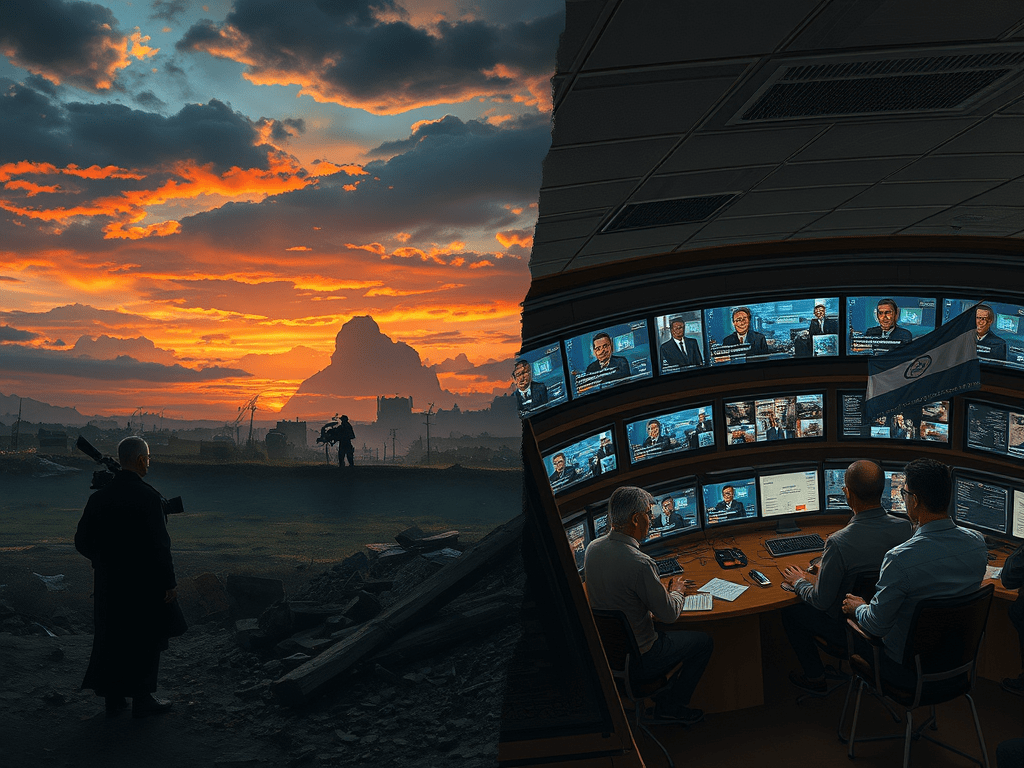
📺🌍Every word broadcast from a war zone shapes someone’s understanding—and someone else’s reality. When the BBC misreports Gaza, it’s not just a bad headline. It’s a loaded weapon in the court of global opinion.
🎥 The Power to Frame a War—And the Cost of Getting It Wrong
You don’t need to fire a missile to tip a war. All you need is a camera, a microphone, and an audience that still trusts you. That’s why the BBC matters. Its voice still echoes globally, especially in places where people have little else to rely on for “the truth.”
But when that voice starts painting one side as the villain—over and over—without scrutiny or balance, it doesn’t just inform. It forms narratives that shape policy, inflame hatred, and justify violence. And the people who feel the consequences first aren’t media executives in London—they’re civilians on the ground.
A BBC mistranslation can mean a missed evacuation. A biased frame can turn victims into villains. A single false report, repeated enough, becomes a cemented perception in the minds of millions.
⚖️ When Trust Becomes Collateral Damage
The BBC’s own leaked memo exposed it: war coverage tilted, context stripped, assumptions skewed. The broadcaster—seen by many as the gold standard of impartiality—now admits it must “learn lessons.”
The question is: Why did it take whistleblowers to say what viewers already knew?
Jonathan Munro, the BBC’s global news director, brushed off warnings of bias and praised BBC Arabic as “exceptional.” But “exceptional” doesn’t mean exempt from responsibility. Especially when it’s broadcasting to millions in one of the most emotionally volatile and politically fraught conflicts on Earth.
When trust breaks, it’s not just bad PR. It’s a strategic vulnerability. Governments cite BBC reports at the UN. Activists use them to demand justice. Riots can ignite over what’s said—or left unsaid—on international airwaves. The stakes? Real lives. Real deaths. Real hate.
🧨 What the BBC Didn’t Say
This isn’t just about Gaza. It’s about the role media plays in shaping the moral terrain of war. About who gets believed. Who gets mourned. Who gets blamed. And who gets buried before the truth even catches up.
The assumption that journalists are neutral bystanders? Gone. Today, they’re part of the conflict. Their words can de-escalate—or inflame. And if they’re not accountable, they’re dangerous.
The BBC isn’t just reviewing coverage. It’s reviewing its moral compass—too late for some, but maybe not too late for the rest of us.
🔥 Challenges 🔥
What happens when the most trusted voice in news starts whispering bias?
Who checks the fact-checkers?
And what do we lose when neutrality becomes negotiable?
👇 Sound off in the blog comments—not just on X or WhatsApp.
💬 Like, share, and speak your truth. Because media doesn’t just report the story—it becomes the story.
📝 The most unflinching takes will be published in the next issue of the magazine.


 Chameleon Magazine
Leave a comment