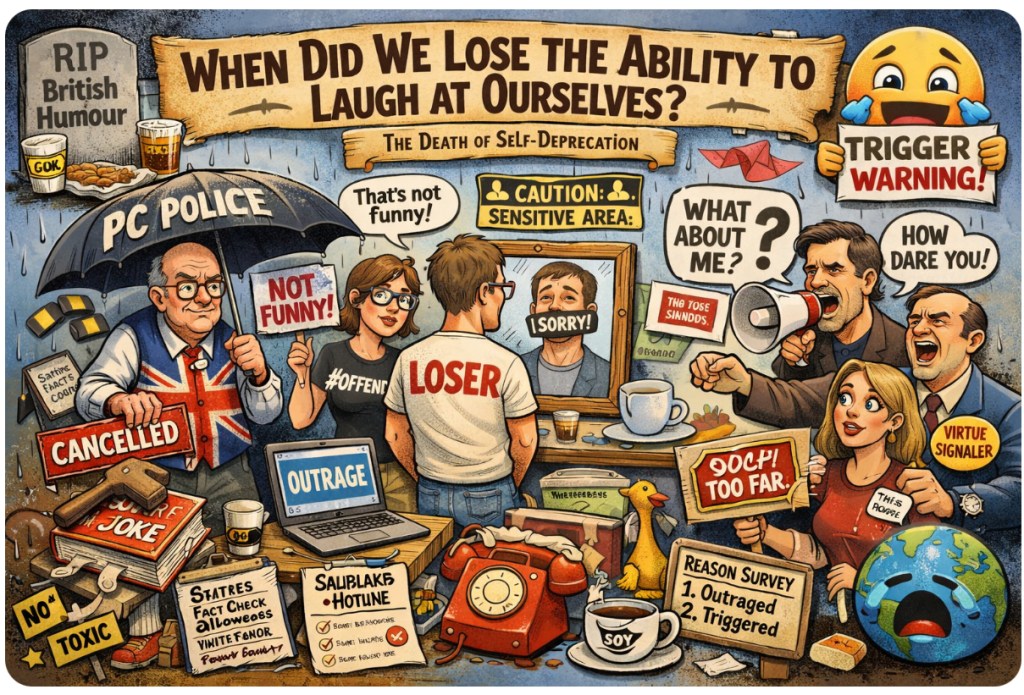
Once upon a time, the British could laugh at anything — especially themselves. Now? We flinch, we hashtag, we cancel. The national pastime of dry wit and taking the mickey has been buried beneath a landslide of disclaimers and digital outrage. Somewhere between political correctness and influencer culture, we lost the one thing that made our misery funny: perspective.
🪞 Mirror, Mirror, Why So Offended?
Used to be, you could joke about your own receding hairline, your tragic dating life, or the fact that your house cost more than your entire bloodstream is worth — and people relaxed.
Now? Make a crack about your own incompetence and someone will write a 47-tweet thread on why you’re “perpetuating negative self-image in late-stage capitalist discourse.” 🧠📉
We went from laughing at our collective chaos — rain-soaked festivals, broken kettles, NHS waiting lists — to acting like every joke needs a moral compass and a trigger warning.
Even satire gets fact-checked now, as if sarcasm needs a citation.
The art of self-deprecation wasn’t just humour — it was survival. It’s how we dealt with war, Thatcher, and microwaved beans on toast. But now, everyone’s either offended or professionally offended on someone else’s behalf. It’s like we replaced humour with a customer complaint form.
Maybe we didn’t get more sensitive — maybe we just got more self-important. Because if you can’t laugh at yourself, chances are you think you’re too special to be the punchline. 🧵🤡
🧨 Challenges 🧨
So what happened? Have we become a nation of narcissists in search of safe spaces — or is comedy truly evolving into something more thoughtful (and joyless)?
Drop your thoughts in the comments: do you miss the golden days of laughing through the pain, or are we better off policing punchlines?
👇 Hit comment, like, or tag that friend who used to be funny before they got a LinkedIn.
The wittiest replies will be immortalised in the next issue — unfiltered and unapologetic. 💥📝


 Chameleon Magazine
Leave a comment