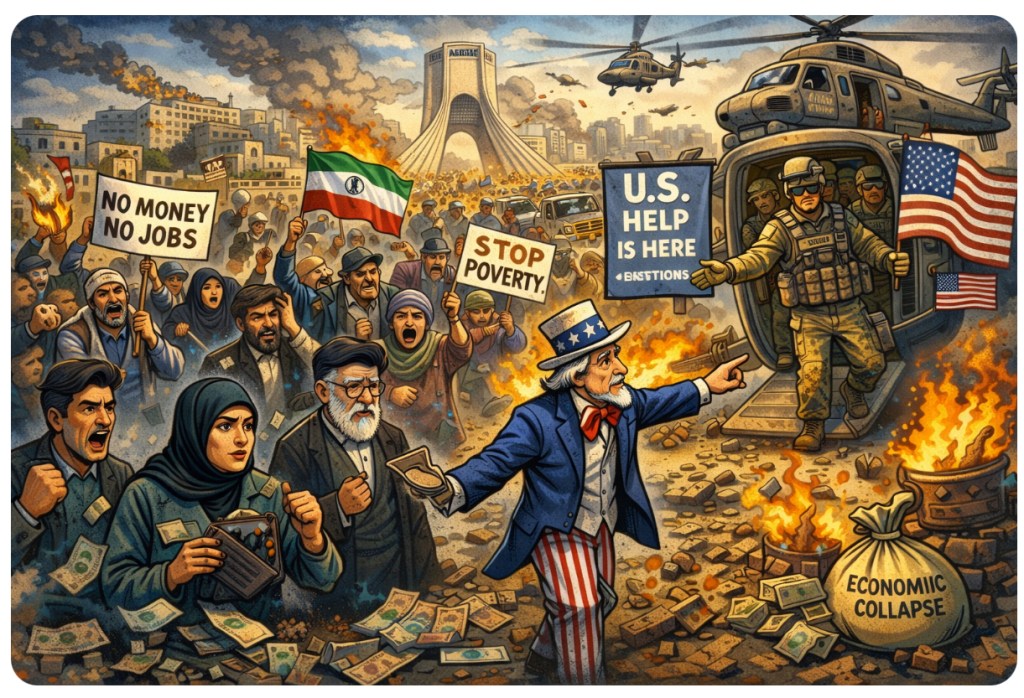
In the latest episode of Geopolitics: Oops, Who Did That?, the idea making the rounds is that the United States will heroically swoop in to “save” Iranian citizens from economic collapse—an economy many argue was kneecapped by, well… the United States. Freedom incoming. Receipts optional.
🎭 The Saviour Complex, Reloaded
Here’s the familiar script. Sanctions tighten. Currency wilts. Ordinary people suffer. Protests flare. Then—cue dramatic music—Washington clears its throat and announces it is deeply concerned and prepared to help the very population caught in the crossfire of policies designed to pressure their leaders.
It’s the geopolitical equivalent of setting your neighbour’s house on fire to “encourage renovation,” then arriving with a garden hose and a press release.
Let’s be clear: Iranian citizens aren’t naïve. They can hold two truths at once. They know their own leadership has driven corruption, mismanagement, and repression into the ground—and they also know that years of sanctions from United States have acted like a financial tourniquet on daily life in Iran.
So when talk turns to America “rushing in,” it lands less like salvation and more like performance art.
🧨 Help, But Make It Strategic
Will the US actually rush in? History suggests “rush” is generous. What usually arrives first are statements, targeted carve‑outs, symbolic gestures, and a careful insistence that this time it’s different. Aid is calibrated. Pressure remains. Optics are polished.
Meanwhile, citizens are left navigating inflation, shortages, and a political showdown they didn’t schedule. The moral posture is tidy: support the people, oppose the regime. The lived reality is messier: economic warfare rarely lands only on leaders.
The uncomfortable irony? When collapse accelerates internal unrest, it’s often framed as proof the policy “worked.” When civilians bear the cost, it’s framed as tragic but unavoidable. When intervention is floated, it’s framed as benevolence. Same playbook. New decade.
🔥 Challenges 🔥
So what is this really—humanitarian concern or geopolitical damage control? Can a country plausibly play firefighter after years as arsonist? And at what point do ordinary people stop being chess pieces in someone else’s grand strategy?


 Chameleon Magazine
Leave a comment