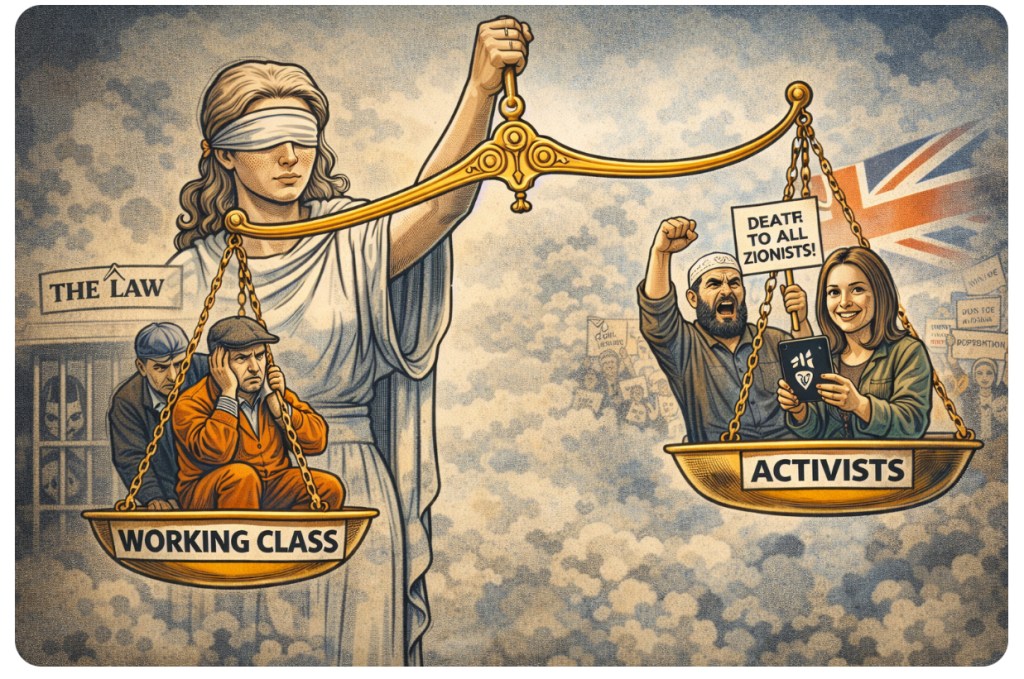
When Lucy Connolly shared propaganda online, the British justice system acted like it still had a spine. Arrested. Tried. Jailed. No questions. No delays. Just swift punishment for glorifying terrorist violence. She had a daughter and a family and apologised and if only she had plead not guilty.
Then enters Alaa Abd el-Fattah, the British-Egyptian activist whose resurfaced social media posts—including one calling for the killing of all Zionists—spark outrage. And what does the Home Secretary do? Issues a strongly worded statement… and does absolutely nothing else.
No jail. No revoked citizenship. Not even a slapped wrist. Just a shrug and a moral grey cloud over Whitehall.
🔍 A Tale of Two Extremists—Treated Worlds Apart
Lucy Connolly
📍 British-born
📲 Shared extremist posts
👩⚖️ Convicted, sentenced, imprisoned
📜 Legal process: swift and merciless
Alaa Abd el-Fattah
📍 Born in Egypt, later acquired UK citizenship
📲 Called for the murder of Zionists in historic tweets
🚫 No prosecution. No revocation. No deportation.
🛡️ Legal process: dodged with “complexity” excuses
Here’s the kicker: Both committed speech crimes. But only one was treated as a criminal.
So what gives? Is it about justice? Or politics?
Because if you glorify one kind of hate, the system pounces. But if your hate fits a certain activist profile? Suddenly the legal radar breaks. The red lines blur. And the Home Secretary can’t quite locate that “national security” folder anymore.
It’s not about liking or defending either of them. It’s about consistency.
The UK can’t keep pretending it’s serious about extremism while editing the definition on the fly.
Either hate speech is hate speech, or the whole system’s just political theatre with a prison wing.
🔥 Challenges 🔥
Is the UK enforcing law—or managing headlines?
Why are some extremists jailed, while others are gently condemned in a press release?
And how far does your identity shield you from consequences?


 Chameleon Magazine
Leave a comment