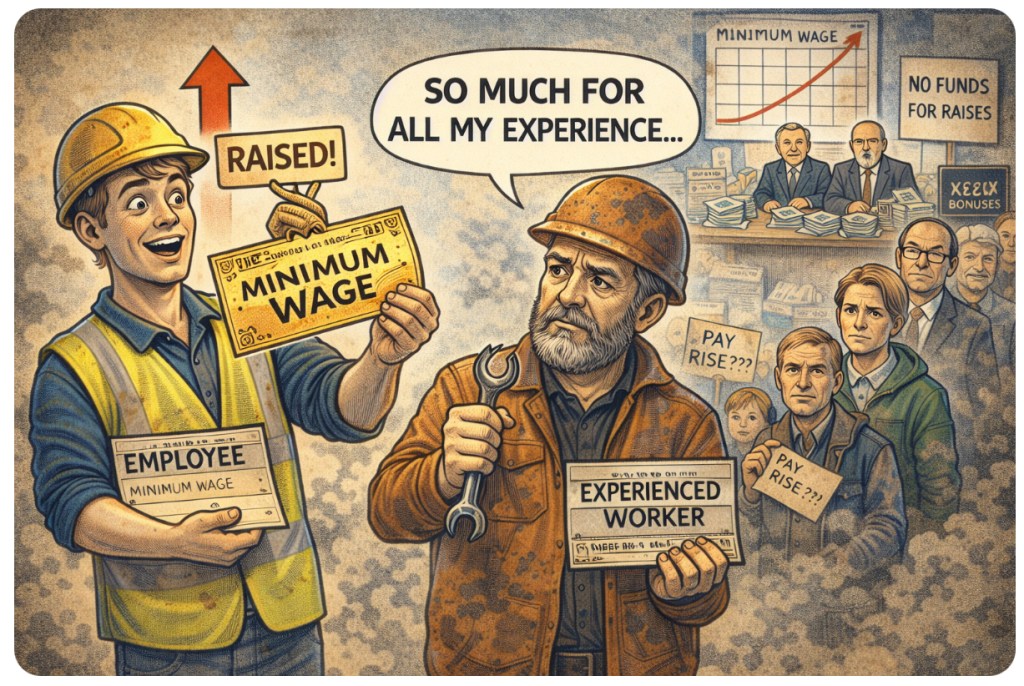
Great news, everyone! The minimum wage is going up—finally. But before we all clink mugs in the break room, let’s ask the awkward question no one at HR wants to answer:
If entry-level staff are now earning more… when do experienced workers see their rise?
Spoiler: apparently never. Or at least not any time soon. Because while governments love announcing minimum wage increases with the drama of a royal wedding, employers seem to treat wage structures like archaeological digs—slow, dusty, and full of “delays.”
🐌 The Crawl of Competence Compensation
Imagine spending five years learning a trade, mentoring newbies, and carrying the weight of someone else’s mistakes—only to find out the kid who joined last week is now just 50p behind you.
Minimum wage goes up fast.
Experienced wage growth? Slower than a lunchtime spreadsheet.
And companies? Oh, they love the optics. “We support fair pay!” they cheer, while secretly adjusting payroll like it’s a game of Jenga: keep the bottom stable, ignore the middle, and pray the whole thing doesn’t topple from resentment.
Let’s be honest. Raising the floor without nudging the ceiling just flattens morale. It sends one message: Your experience isn’t worth rewarding. And for some employers, that’s not a glitch—it’s a feature.
We’re told there’s “no budget” to review pay bands. But funny how there’s always room for performance bonuses—just not yours.
💸 Challenges 💸
Are wage ladders being pulled up behind us? Should every minimum wage rise trigger an across-the-board pay realignment? Or will companies just keep squeezing the middle and calling it “efficiency”?


 Chameleon Magazine
Leave a comment