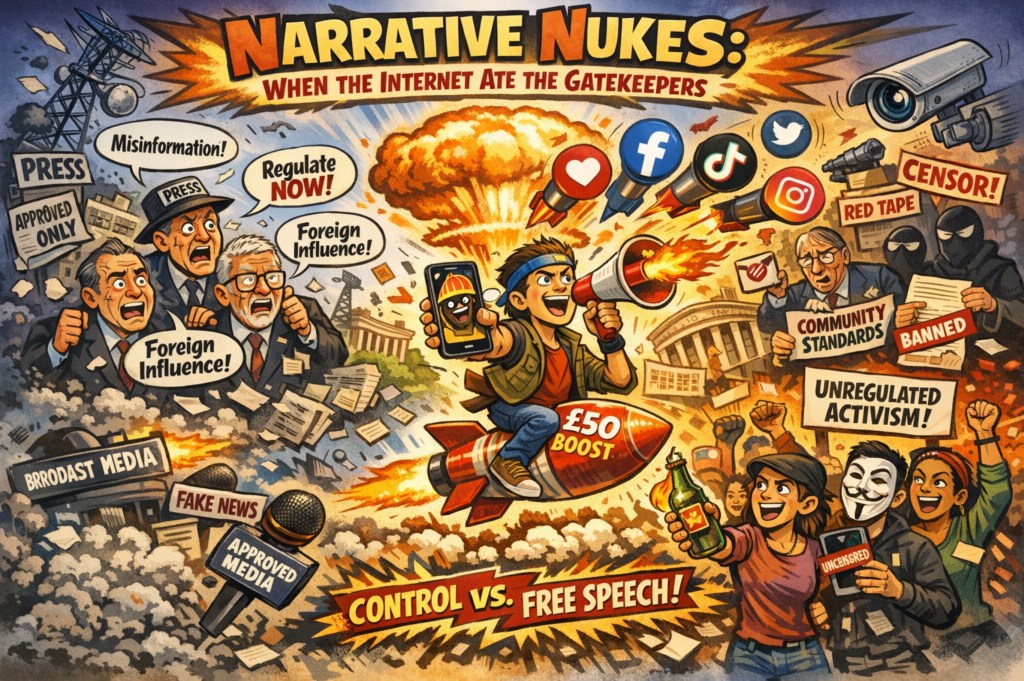
💥📣The old guard is panicking, and it’s not because TikTok teens are dancing again. It’s because their monopoly on who gets to speak—and be heard—is finally collapsing. Social media didn’t just disrupt communication; it vaporised the velvet ropes of narrative control. Now, every smartphone is a newsroom, every meme a Molotov, and every promoted post a digital slap to the face of traditional authority.
🎤 The Mic Drop Heard Round the System
For decades, power was propped up by a simple trick: control the megaphone, and you control the message. Councils, governments, and legacy media had the narrative monopoly—only they could approve, distribute, and legitimize. Protest was politely tolerated, provided it stayed within the chalk lines of regulation, red tape, and heavily surveilled public parks.
Then came the algorithmic sledgehammer. 📱💣 A single activist with £50 in ad spend can now reach more people than a BBC segment buried at 11:45 PM. No editorial gatekeeping, no producer approvals, no need to “balance” voices with someone in a suit saying the opposite. The hierarchy collapsed like a bad Jenga tower—and the folks at the top did not take it well.
Cue the panic responses:
- “This is misinformation!” (Translation: this wasn’t vetted by one of our institutions.)
- “We need tighter regulations!” (Translation: we’re losing control of the narrative faucet.)
- “This is foreign influence!” (Translation: we can’t trace the source, and that terrifies us.)
But here’s the real kicker: governments need the same tools they now fear. Facebook ads aren’t just for fringe campaigns anymore—they’re for ministers, mayors, and misinformation czars. Suppress dissent too hard, and you kneecap your own influence ops. It’s narrative mutually assured destruction. ☢️📢
So instead of frontal censorship, we get the soft coup of language:
“Unregulated activism.”
“Non-compliant content.”
“Community standards.”
They can’t shut it down. So they smother it in red tape, shadowban it with plausible deniability, and hope nobody notices the irony: The new “disinformation” looks a lot like old-fashioned democracy. But louder. And with better memes. 🧠🔥
Because the true horror for the establishment isn’t chaos.
It’s people thinking for themselves—and being heard.
🚨 Challenges 🚨
Are we living in the golden age of free speech or the end of it dressed in UX design? Is grassroots power finally winning, or is the system just shape-shifting again? Drop your unfiltered thoughts in the blog comments—not just the Facebook echo chamber. 💬🚪👀


 Chameleon Magazine
Leave a comment