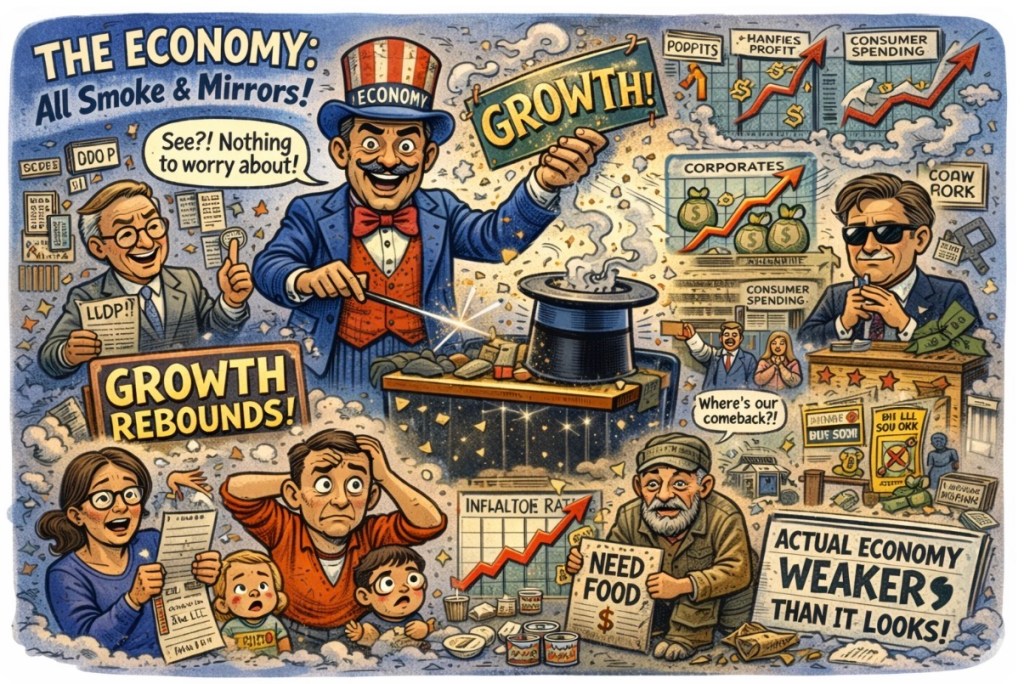
🎩📉Growth is back, baby! Or so the spreadsheets say. But behind the glittering headline GDP numbers, the real economy looks more like it’s been living off instant noodles and denial.
📊 “Back in the Black!” — Said No One at the Grocery Store
The government announced “growth.” Analysts cheered. Economists nodded wisely on cable news. And yet, across the country, people squinted at their bills wondering if they missed the part where anything actually got better.
Sure, the GDP got a little boost — kind of like a defibrillator zap to a financially flatlining patient. But this “growth” is basically the economic equivalent of slapping a coat of paint on a collapsing shed and calling it a renovation. Yeah, technically it’s upright, but maybe don’t go inside.
Let’s break it down:
📈 Corporate profits? Still soaring.
🏦 Bank stocks? Rebounding like they never even heard of “cost of living.”
💸 Wages? Crawling behind inflation like a tortoise in a windstorm.
🥫 Real people? Still deciding between dinner and heat.
But don’t worry — your suffering is “transitory,” according to some guy with a PhD in abstract optimism. Meanwhile, economists point to “consumer spending” as proof of vitality, ignoring the fact that most of it’s happening at dollar stores or on BNPL apps that charge 37% interest for toilet paper.
The truth? The economy feels worse because, for millions, it is worse. The vibe isn’t off — the math is just lying by omission. “Growth” doesn’t mean your rent’s lower, or your paycheck fatter. It just means someone, somewhere, made money. Probably the same five guys who always do.
It’s not a comeback. It’s a cover-up. 📉🎭
💥 Challenges 💥
Why does the economy look healthier on paper than it feels in real life? Who’s cashing in while everyone else is cashing out? Let’s rip into the data, the gaslighting, and the selective optimism. Drop your rants, questions, or economic coping mechanisms in the blog comments. 🔥💬


 Chameleon Magazine
Leave a comment