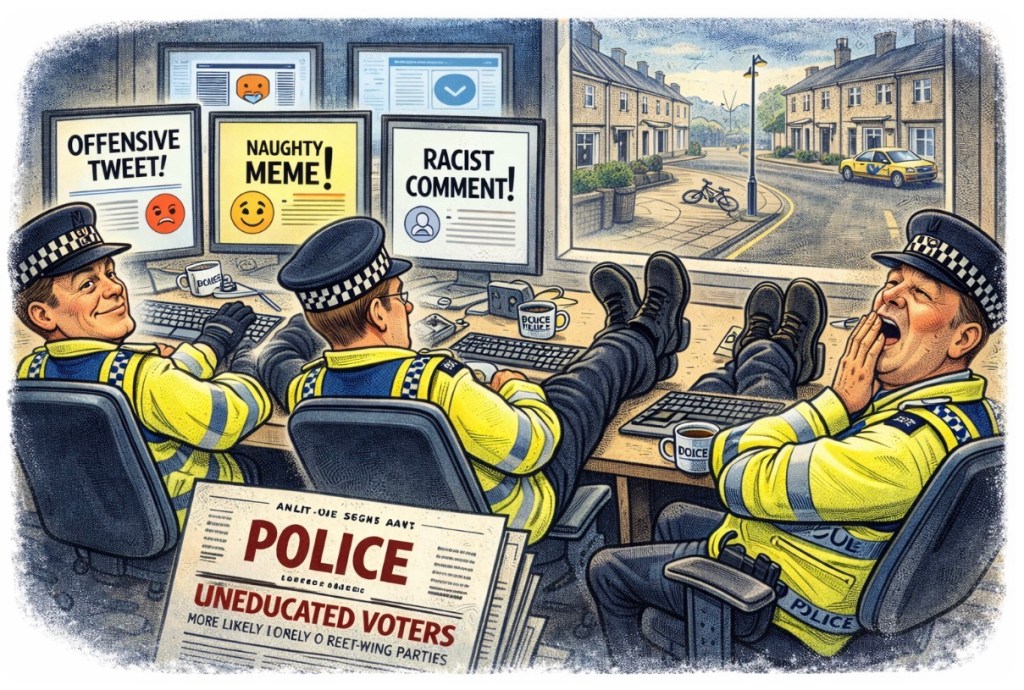
💻🚓In a rare outbreak of common sense, the Home Office has finally noticed that an alarming number of police officers appear to be guarding keyboards rather than streets.
🪑 Click, Log, File, Repeat — Policing in the Digital Age
Under plans backed by Shabana Mahmood, police forces are facing heavy cutbacks aimed squarely at what she calls a “bureaucratic” model of policing—one that mysteriously diverts officers away from neighbourhoods and into swivel chairs.
And let’s be honest: anyone who’s tried reporting an actual crime lately knows the drill. Before an officer can leave the station, three forms must be filled out, two risk assessments completed, and at least one person online must be monitored in case they swear at their laptop.
The modern British copper, it seems, is less “on the beat” and more “on the spreadsheet.” Somewhere along the line, policing drifted from catching criminals to cataloguing micro-aggressions and recording social media incidents with all the urgency of a burglary—sometimes more.
🚨 Neighbourhoods vs Notified Incidents
Mahmood’s review aims to shift resources back to neighbourhood policing—remember that? Actual humans, visible officers, deterrence, reassurance. Radical stuff. The kind of policing where crimes are prevented, not just logged for statistical comfort.
Critics say cuts are dangerous. Others quietly note that if fewer officers are tasked with monitoring Twitter arguments at 11pm, more might be available to answer a 999 call before the suspect’s made tea and gone to bed.
Because while the public expects police to deal with violence, theft, and anti-social behaviour, too often the system seems geared toward protecting feelings, filing reports, and waiting patiently for someone to be offensive online.
🔥 Challenges 🔥
Should police be chasing criminals—or chasing comments? Has common sense finally re-entered the chat, or is this just another review that disappears into a filing cabinet? Sound off in the blog comments (not Facebook). 💬🔥


 Chameleon Magazine
Leave a comment