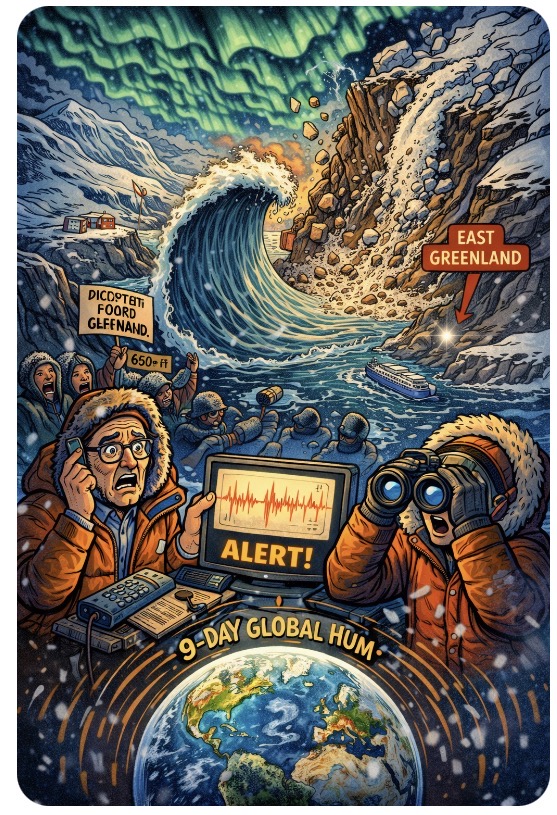
It wasn’t aliens. It wasn’t a secret weapon. It was Earth itself groaning under the weight of climate chaos. In September 2023, the planet pulsed with a rhythmic vibration every 90 seconds—for nine days straight. Scientists around the world stared at their seismic sensors like confused DJs trying to identify a beat drop from the underworld. The culprit? Not a tectonic tantrum. Not a nuclear accident. But a massive mountainside collapse in Greenland, courtesy of our relentless campaign to boil the Arctic.
🧊 When a Glacier Lets Go, the Whole Planet Feels It
Let’s paint the scene: a remote fjord in East Greenland, where a glacier once dutifully held up a mountainside like the world’s coldest bodyguard. But thanks to rising temperatures, that icy support system turned into a slushy betrayal. With nothing left to cling to, the mountain gave up—and 25 Empire State Buildings’ worth of rock thundered into the sea.
The impact created a tsunami as tall as a 60-story building—but here’s the twist: the wave didn’t escape. It got trapped in Dickson Fjord like a beast in a bottle, ricocheting back and forth for days. Every surge flexed the Earth’s crust like a wet trampoline, sending a low-frequency doom hum across the globe. For over a week, our planet literally vibrated from one glacier’s final gasp.
And don’t sleep on the implications: this isn’t just a Greenland problem. This is a new genre of climate horror. These fjords are scenic cruise routes now. Next time, we might swap a seismic curiosity for a casualty count.
Forget “the butterfly effect.” This is the glacier slap effect—and it’s global.
🔥
Challenges
🔥
What happens when climate change stops being slow and starts smashing mountains into the sea? What do we do when warming ice starts punching holes in Earth’s crust like a drunk MMA fighter? Think this was a one-off freak show? Or the first pulse of a planet in breakdown mode?


 Chameleon Magazine
Leave a comment