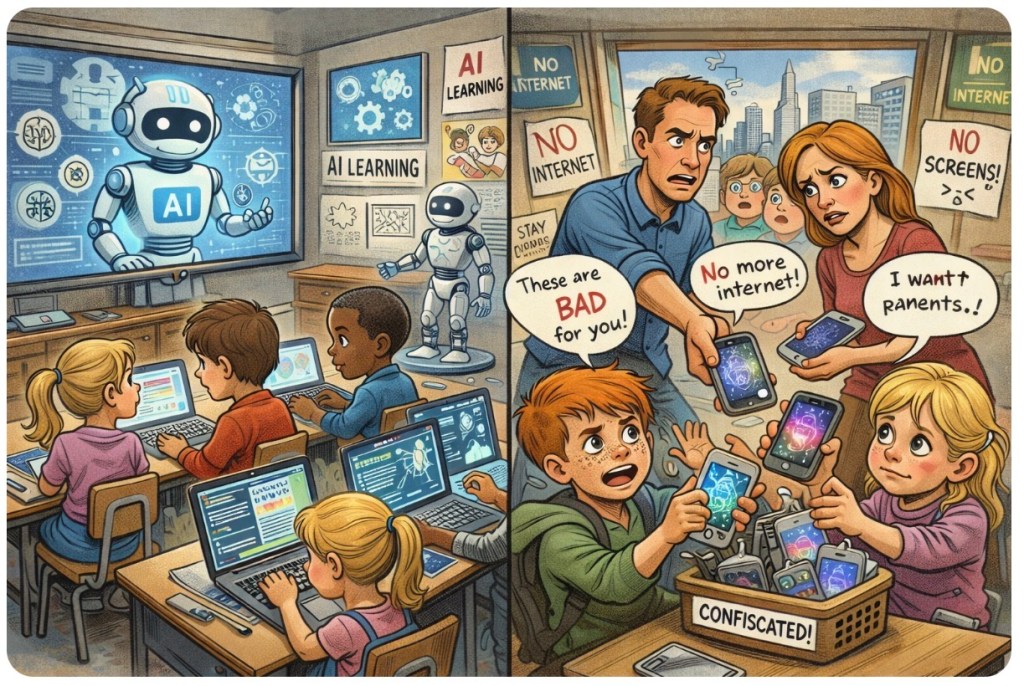
📵🤖As adults yank Wi-Fi routers from walls and lock phones in kitchen drawers, a quiet question hums beneath the moral panic: are we protecting children—or training them to be spectacularly unprepared for the future?
🧠🚫 The Great Digital Purge (Now With Extra Anxiety)
Let’s be honest. This whole “ban the internet to save the children” movement feels less like safeguarding and more like a collective adult nervous breakdown. Yes, the internet is messy. Yes, it’s loud, addictive, and occasionally feral. But so was the industrial revolution—and we didn’t respond by banning books and steam engines.
While policymakers and parenting gurus hyperventilate about screen time, the world is sprinting headfirst into AI. Not theoretical AI. Not sci-fi AI. Everyday, workplace-embedded, decision-shaping AI. Tools built by companies like OpenAI aren’t optional extras anymore—they’re becoming basic literacy.
So what happens if kids grow up internet-starved?
They won’t be “pure.”
They’ll be digitally illiterate.
That’s not childhood innocence—that’s future unemployment with better manners.
Teaching children about AI without internet access is like teaching swimming with a PowerPoint and a strong sense of hope. They won’t just lag behind—they’ll be locked out entirely, while peers elsewhere are already collaborating with machines, automating tasks, and learning how not to be replaced by algorithms.
And let’s talk hypocrisy: the same adults banning access are using GPS, smart assistants, recommendation engines, and workplace automation every single day. “Do as I say, not as I scroll.” 📱🙄
The real danger isn’t exposure—it’s ignorance. Children don’t need digital prohibition; they need digital fluency. Guidance. Context. Guardrails. You don’t teach road safety by banning roads—you teach kids how to cross without getting flattened.
🔥 Challenges 🔥
Are we genuinely protecting children—or just soothing adult fear while quietly sabotaging the next generation’s ability to compete, create, and think critically in an AI-shaped world? Is banning access easier than doing the hard work of education? Tell us: are we raising citizens… or future spectators? Drop your take in the blog comments. 💬⚡


 Chameleon Magazine
Leave a comment