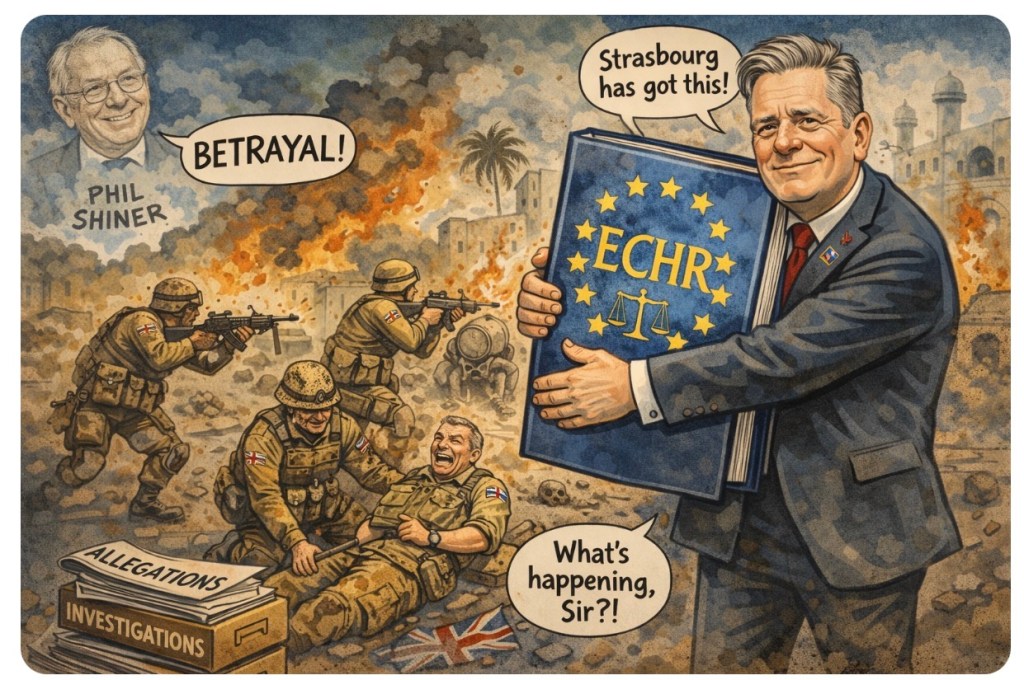
⚖️🇬🇧💣Before he was Prime Minister, Sir Keir Starmer lent his legal weight to a cause that many now see as a betrayal of British troops. Acting pro bono, he backed a legal case that helped open the floodgates to years of costly, traumatic investigations into soldiers who served in Iraq—many of whom were later cleared. Now, a resurfaced chapter from a book edited by disgraced solicitor Phil Shiner shows Starmer doubling down, praising European courts as better suited to “holding governments to account.” Translation: let Strasbourg sort out Britain’s war zone.
📚 The Man, The Myth, The ECHR Superfan
Imagine fighting in a warzone, risking your life for your country, only to return home and be investigated for years—thanks in part to a human rights lawyer who later became Prime Minister. That’s not satire. That’s Britain 2024.
Keir Starmer didn’t just represent human rights groups backing a case that extended British legal jurisdiction into Iraq. He volunteered to. And now we know he wasn’t just turning up in court—he was writing chapters in Phil Shiner’s bedtime reading, praising the European Court of Human Rights like it was the Second Coming of Justice.
Shiner, for those with blessedly short memories, was struck off for dishonesty after filing fake abuse claims against British troops. But Starmer? He walked away from the whole affair with a knighthood and a political career. The soldiers? They got interrogated, demonised, and dragged through endless legal hell.
If there’s a word soldiers keep using to describe this? It’s betrayal.
And to be clear: no one’s arguing that real abuse should go unpunished. But the issue isn’t justice—it’s weaponised lawfare. It’s how Starmer helped create a system where allegations equalled guilt, and British soldiers were treated like suspects before any facts were on the table.
Now he’s running the country. But don’t worry—he’s still a “man of principle.” Just maybe not yours.
💥 Challenges 💥
What does it mean when the man running the country once helped prosecute its own soldiers on behalf of foreign courts? Why is this just now being properly scrutinised? Should we accept this as noble legal work—or call it what soldiers feel it is: betrayal with a briefcase?


 Chameleon Magazine
Leave a comment