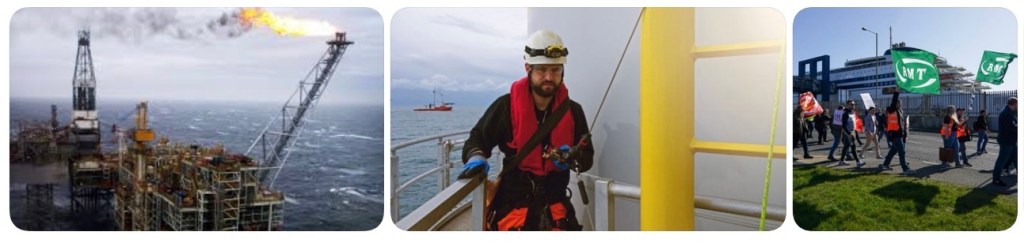
The slow bleed of British industry continues—this time offshore. While politicians polish talking points and cheerlead the “just transition,” workers from Bilfinger to Harbour Energy are facing just redundancy. The RMT is holding the line, but let’s be honest: fighting offshore job cuts in single digits is like plugging a dam with chewing gum. It’s the drizzle before the deluge.
⚓ Cutting Ropes While the Boat’s Still Floating
Welcome to the prequel of a national economic comedown—starring a shrinking North Sea sector, offshore redundancies, and a government that thinks “reskilling” means emailing someone a PDF. The truth? These aren’t just job cuts. They’re warning shots.
- Bilfinger, Aramark, Petrofac, Harbour—each holding “consultations” like it’s a polite chat over biscuits instead of people’s livelihoods.
- “Only single figures,” they say. Great! Just a few breadwinners per rig being handed P45s while global energy demand rises.
- Meanwhile, foreign aid cheques are flying out the Treasury like confetti, and we’re exporting stability while importing uncertainty.
Let’s cut the fantasy: this is industrial decline in real time. No green utopia, no magical workforce transition, no offshore wind fairy job factory is riding to the rescue.
And if you think “more immigration” or “more training” is the answer, congratulations—you’ve missed the question. You can’t train your way out of a policy vacuum, and you can’t replace high-wage, high-skill energy jobs with barista gigs and gig-economy virtue signals.
The North Sea isn’t dying—it’s being abandoned.
🧯 Challenges 🧯
Are we really going to standby while the last engines of British industry get shut down for photo ops and climate PR? Should the government bail out actual working industries before writing more foreign aid cheques? Where’s the national plan—if there ever was one?


 Chameleon Magazine
Leave a comment