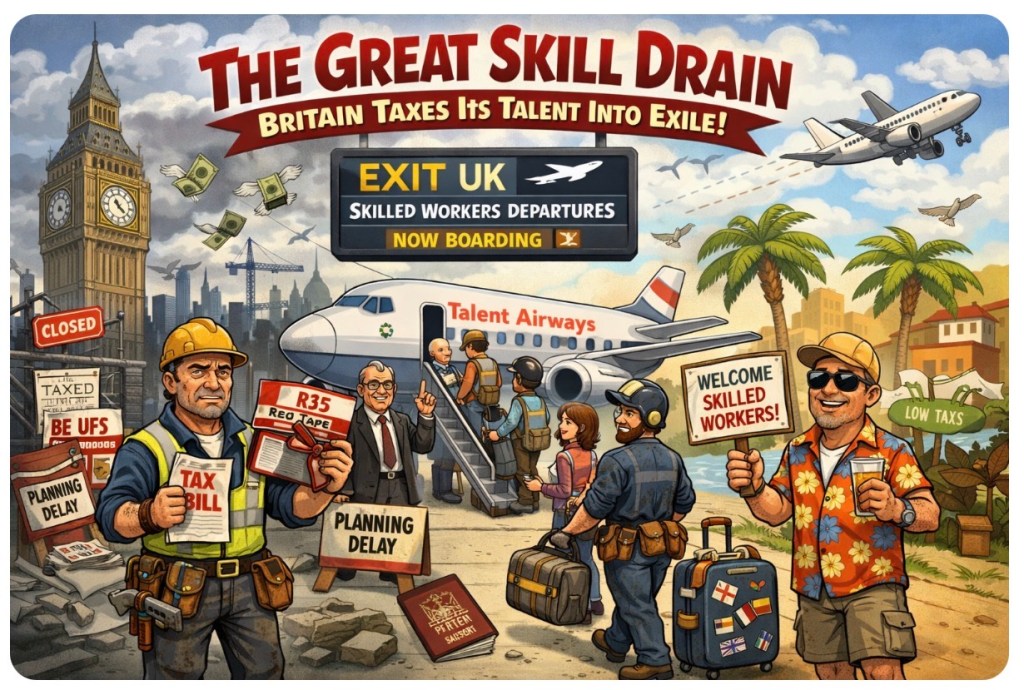
🧳🔧In a nation desperate for housing, energy transition, and infrastructure resilience, the UK has found a bold new solution: chase out the very people who could build it. Top tradespeople—from master electricians to renewables engineers—aren’t leaving because they’re lazy, woke, or lured by avocado toast. They’re leaving because Britain’s reward for excellence looks like a bureaucratic migraine wrapped in a tax bill.
🛠️ “Thanks for Building Britain—Now Get Out”
Welcome to modern Britain, where highly skilled tradespeople are treated like suspicious freeloaders with power tools. Want to run a small business? Get ready to be taxed, tracked, and strangled with compliance tape. Profits? Taxed. Losses? Yours to swallow. Regulation? Enough to make a civil servant weep with joy. And if you succeed? Congratulations—you now qualify for more scrutiny, zero pricing protection, and the privilege of watching your international peers out-earn you while sipping coffee in sun-drenched Lisbon. ☕🇵🇹
Forget the fantasy that the “weak” are fleeing. It’s the best who go first:
- The ones who speak fluent CAD, not just English.
- The ones who are in-demand in Canada, Germany, or Singapore.
- The ones who look at the UK’s IR35, employer NI hikes, planning delays, and ask: “Why am I still here?”
And let’s be crystal clear: this isn’t a political tantrum. It’s structural rot. The kind of rot that sees sole traders treated like tax dodgers-in-waiting while offshore corporations tap-dance through loopholes. Meanwhile, the people wiring your EV charger or reinforcing that school roof are staring at spreadsheets wondering if the Netherlands has better health insurance and fewer grey areas in contract law.
Britain doesn’t have a brain drain.
It has a skills hemorrhage—and the wound is self-inflicted. 🩸🇬🇧
🔥 Challenges 🔥
Are we really okay with exporting our best and brightest because the system makes staying a mug’s game? Should a tradesman need a tax lawyer just to install a boiler? Sound off in the comments section of the blog, not just Facebook. We want your take: snarky, sharp, or scorching. 🔥🧠


 Chameleon Magazine
Leave a comment