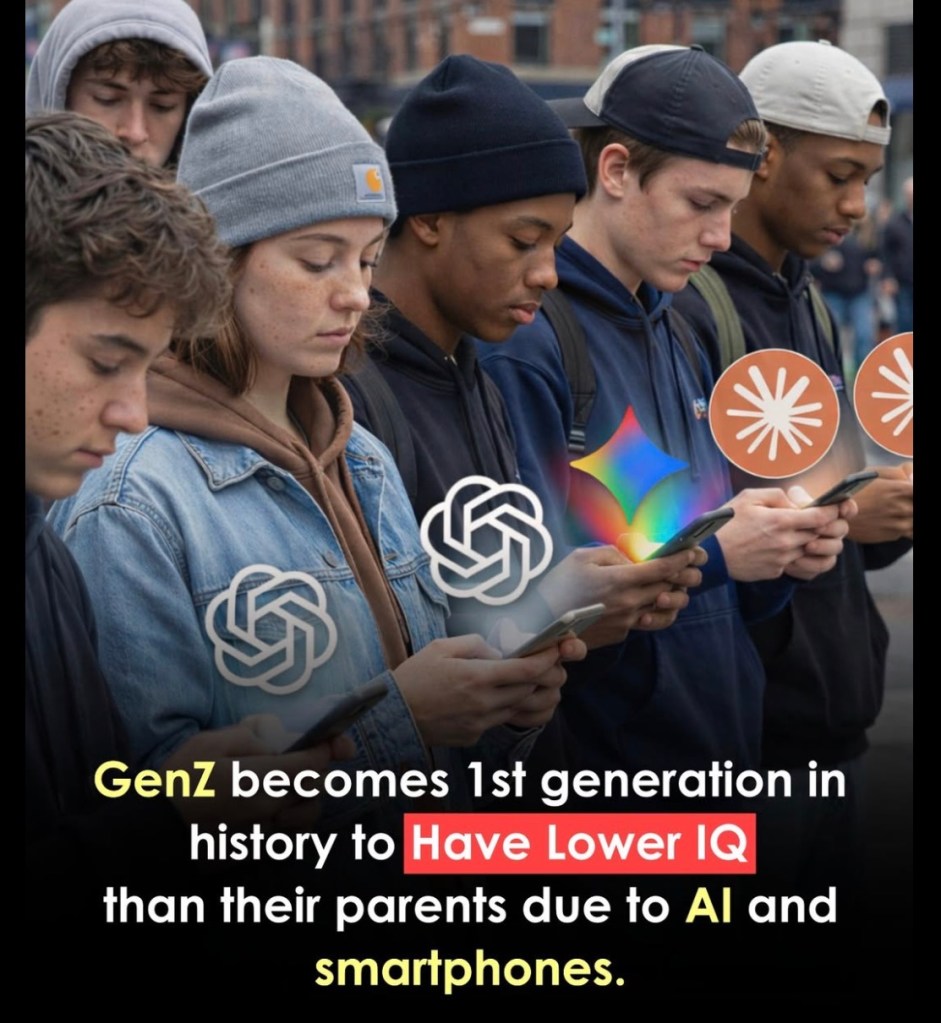
Gen Z: The First Generation Brave Enough to Log Off? 📱🧠✨
They say Gen Z might be the first generation with “lower IQs” than their parents because of AI and smartphones. Dramatic, isn’t it? As if an entire generation woke up one morning, downloaded an app, and collectively misplaced its brain. 🙄
But what if the real plot twist isn’t cognitive decline… it’s a cultural rebellion?
What if Gen Z isn’t getting “dumber”—they’re just less interested in memorising trivia for a system that promised loyalty and delivered burnout?
🧠📉 Or Is It Just a Different Kind of Smart?
Every generation gets its moral panic. Television was going to rot brains. Video games were going to turn kids into zombies. Google was going to end thinking. Now AI is apparently stealing everyone’s neurons like a digital pickpocket.
Here’s the uncomfortable truth: AI does reduce the need to store certain information. Why memorise a 12-step process when an algorithm can draft it in seconds? Why grind 80-hour weeks doing repetitive tasks if a machine can do them faster?
But maybe that’s not intellectual decay. Maybe that’s optimisation.
Previous generations equated intelligence with endurance—how long you could sit still, how much you could memorise, how much corporate pain you could tolerate without crying into a spreadsheet. 📊💼
Gen Z? They’re asking a different question:
“If a machine can do it… why am I sacrificing my life for it?”
And honestly, that question might be the smartest thing anyone’s asked in decades.
🤖💼 Work Was a Religion. Gen Z Is Questioning the Faith.
For years, work wasn’t just a job—it was identity. Hustle culture. Side gigs. LinkedIn humblebrags. “Rise and grind.” The holy trinity of exhaustion.
Gen Z walked into that temple and said:
“This seems… unnecessary.”
Instead of glorifying burnout, they’re experimenting with boundaries. Remote work. Portfolio careers. Mental health days without apology. Flexible living. Experiences over status symbols.
They don’t necessarily want less success. They just don’t want success to cost their entire existence.
And here’s where AI enters like a suspiciously helpful intern.
If AI can draft emails, write code, generate art, manage logistics, automate admin, and even assist decision-making—why should humans cling to the most repetitive, soul-sapping aspects of work?
Maybe AI isn’t making Gen Z less intelligent. Maybe it’s making them less willing to perform unnecessary labour.
That’s not stupidity. That’s strategic delegation. 🧠⚡
🎢📚 Life Beyond the Cubicle
Critics see young people on their phones and assume decline. But phones are also:
- Learning platforms
- Creative studios
- Businesses in your pocket
- Social networks
- Global classrooms
Gen Z is growing up fluent in tools that older generations are still suspicious of. They’re not necessarily thinking less—they’re thinking differently.
If IQ tests measure pattern recognition and logic, what happens when pattern recognition is outsourced to AI? Does that lower intelligence—or shift it toward creativity, judgement, emotional intelligence, and adaptability?
The industrial age valued memory and repetition.
The AI age might value discernment and imagination.
That’s a shift—not a collapse.
🔥 The Real Fear No One Admits
The panic isn’t really about IQ.
It’s about control.
If a generation realises:
- Work isn’t the only source of identity
- AI can handle the grind
- Life can prioritise experience over endurance
Then the entire “suffer now, maybe live later” model starts to wobble.
And that’s terrifying for systems built on overwork.
Gen Z might be the first generation to look at AI and say:
“Great. You do the spreadsheets. I’ll go live.”
That’s not a sign of decline. That’s a sign of renegotiation.
💬 So What’s Really Happening?
Maybe IQ isn’t falling off a cliff. Maybe intelligence is evolving alongside the tools available.
Maybe Gen Z isn’t disengaged—they’re disillusioned.
Maybe AI won’t make humans obsolete. Maybe it will make pointless work obsolete.
And maybe—just maybe—that frees up something far more valuable than test scores:
Time.
Curiosity.
Actual living.
The question isn’t whether Gen Z is less intelligent.
The question is whether they’re the first generation bold enough to admit that life might be bigger than productivity.They say Gen Z might be the first generation with “lower IQs” than their parents because of AI and smartphones. Dramatic, isn’t it? As if an entire generation woke up one morning, downloaded an app, and collectively misplaced its brain. 🙄
But what if the real plot twist isn’t cognitive decline… it’s a cultural rebellion?
What if Gen Z isn’t getting “dumber”—they’re just less interested in memorising trivia for a system that promised loyalty and delivered burnout?
🧠📉 Or Is It Just a Different Kind of Smart?
Every generation gets its moral panic. Television was going to rot brains. Video games were going to turn kids into zombies. Google was going to end thinking. Now AI is apparently stealing everyone’s neurons like a digital pickpocket.
Here’s the uncomfortable truth: AI does reduce the need to store certain information. Why memorise a 12-step process when an algorithm can draft it in seconds? Why grind 80-hour weeks doing repetitive tasks if a machine can do them faster?
But maybe that’s not intellectual decay. Maybe that’s optimisation.
Previous generations equated intelligence with endurance—how long you could sit still, how much you could memorise, how much corporate pain you could tolerate without crying into a spreadsheet. 📊💼
Gen Z? They’re asking a different question:
“If a machine can do it… why am I sacrificing my life for it?”
And honestly, that question might be the smartest thing anyone’s asked in decades.
🤖💼 Work Was a Religion. Gen Z Is Questioning the Faith.
For years, work wasn’t just a job—it was identity. Hustle culture. Side gigs. LinkedIn humblebrags. “Rise and grind.” The holy trinity of exhaustion.
Gen Z walked into that temple and said:
“This seems… unnecessary.”
Instead of glorifying burnout, they’re experimenting with boundaries. Remote work. Portfolio careers. Mental health days without apology. Flexible living. Experiences over status symbols.
They don’t necessarily want less success. They just don’t want success to cost their entire existence.
And here’s where AI enters like a suspiciously helpful intern.
If AI can draft emails, write code, generate art, manage logistics, automate admin, and even assist decision-making—why should humans cling to the most repetitive, soul-sapping aspects of work?
Maybe AI isn’t making Gen Z less intelligent. Maybe it’s making them less willing to perform unnecessary labour.
That’s not stupidity. That’s strategic delegation. 🧠⚡
🎢📚 Life Beyond the Cubicle
Critics see young people on their phones and assume decline. But phones are also:
- Learning platforms
- Creative studios
- Businesses in your pocket
- Social networks
- Global classrooms
Gen Z is growing up fluent in tools that older generations are still suspicious of. They’re not necessarily thinking less—they’re thinking differently.
If IQ tests measure pattern recognition and logic, what happens when pattern recognition is outsourced to AI? Does that lower intelligence—or shift it toward creativity, judgement, emotional intelligence, and adaptability?
The industrial age valued memory and repetition.
The AI age might value discernment and imagination.
That’s a shift—not a collapse.
🔥 The Real Fear No One Admits
The panic isn’t really about IQ.
It’s about control.
If a generation realises:
- Work isn’t the only source of identity
- AI can handle the grind
- Life can prioritise experience over endurance
Then the entire “suffer now, maybe live later” model starts to wobble.
And that’s terrifying for systems built on overwork.
Gen Z might be the first generation to look at AI and say:
“Great. You do the spreadsheets. I’ll go live.”
That’s not a sign of decline. That’s a sign of renegotiation.
💬 So What’s Really Happening?
Maybe IQ isn’t falling off a cliff. Maybe intelligence is evolving alongside the tools available.
Maybe Gen Z isn’t disengaged—they’re disillusioned.
Maybe AI won’t make humans obsolete. Maybe it will make pointless work obsolete.
And maybe—just maybe—that frees up something far more valuable than test scores:
Time.
Curiosity.
Actual living.
The question isn’t whether Gen Z is less intelligent.
The question is whether they’re the first generation bold enough to admit that life might be bigger than productivity.


 Chameleon Magazine
Leave a comment