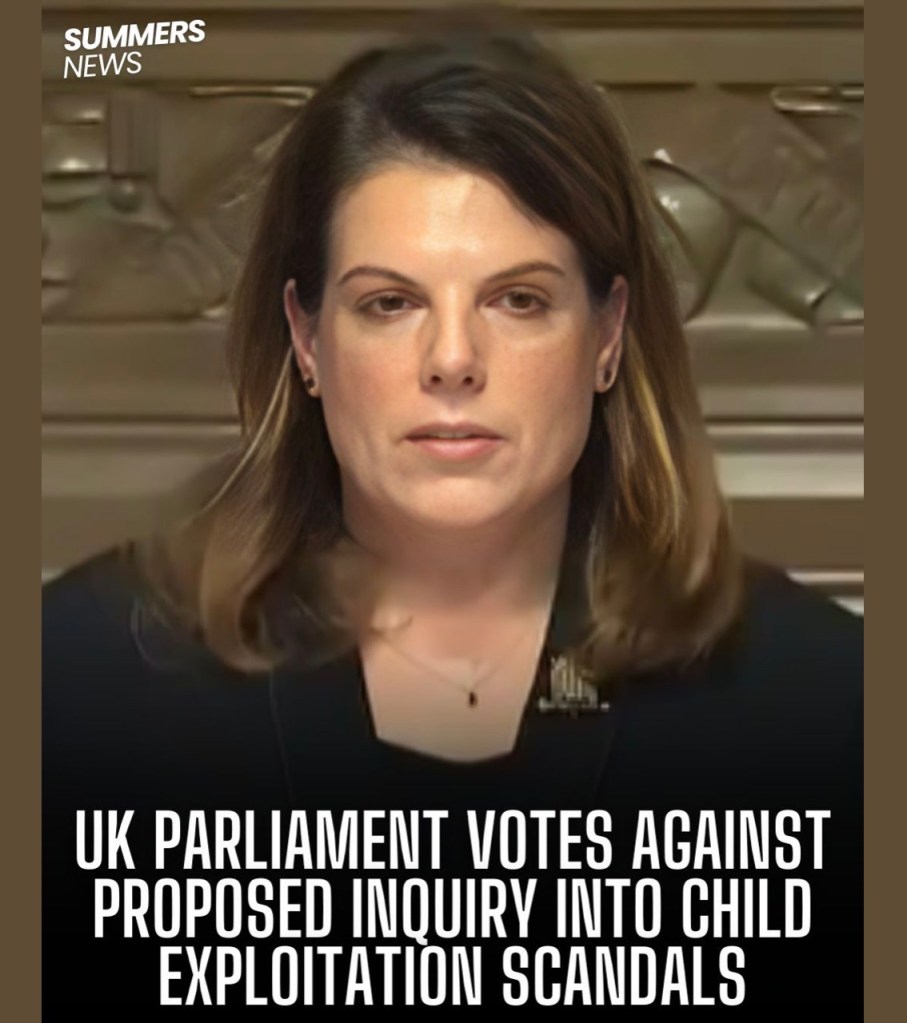
🚪⚖️When the words “child exploitation scandals” and “proposed inquiry” appear in the same sentence, most people expect one thing: action. Instead, the UK Parliament has delivered something closer to a bureaucratic shrug. The vote? Against launching a proposed inquiry. The optics? About as comforting as a locked filing cabinet labelled “Nothing To See Here.” 📂🔒
This isn’t just a political footnote. It’s a thunderclap in a country that’s spent years confronting the ugly truth about systemic abuse, institutional silence, and missed warning signs. And now, when asked to dig deeper, Parliament has chosen… not to.
🧱 Democracy’s Brick Wall Moment
Let’s break this down. Allegations and past scandals involving child exploitation have haunted multiple towns, councils, and institutions across the UK. Survivors have fought tooth and nail to be heard. Public trust? Fragile at best.
So when the opportunity arose to pursue a new inquiry—more scrutiny, more transparency, more accountability—the collective response from lawmakers was essentially: “We’re good.” 👍
It raises uncomfortable questions. If not now, when? If not this, what? And if not for vulnerable children, then for whom exactly does urgency apply?
Critics argue that refusing an inquiry sends the wrong message—that safeguarding transparency takes a backseat when political inconvenience enters the chat. Supporters of the vote may claim existing investigations are sufficient. But here’s the catch: confidence isn’t built on reassurance alone. It’s built on visible, relentless accountability.
You can’t campaign on protecting the vulnerable and then flinch when it’s time to examine the paperwork. 📑👀
This isn’t about party colours. It’s about whether the public believes that uncomfortable truths are pursued with the same energy as comfortable press releases.
And right now? The silence feels loud. 🔇
🔥 Challenges 🔥
If transparency is the backbone of democracy, what happens when we decide not to look too closely? Are we protecting due process—or protecting reputations?
This is where you come in. Does Parliament’s decision reflect pragmatism, political fatigue, or something far more troubling?
Drop your thoughts in the blog comments (not just the socials 👇). Let’s talk about accountability, trust, and whether this vote strengthens or fractures public faith.
👇 Comment. Like. Share. Start the conversation where it counts.
The sharpest insights and most powerful takes will be featured in the next issue of the magazine. 📝🔥


 Chameleon Magazine
Leave a comment