🏥✨
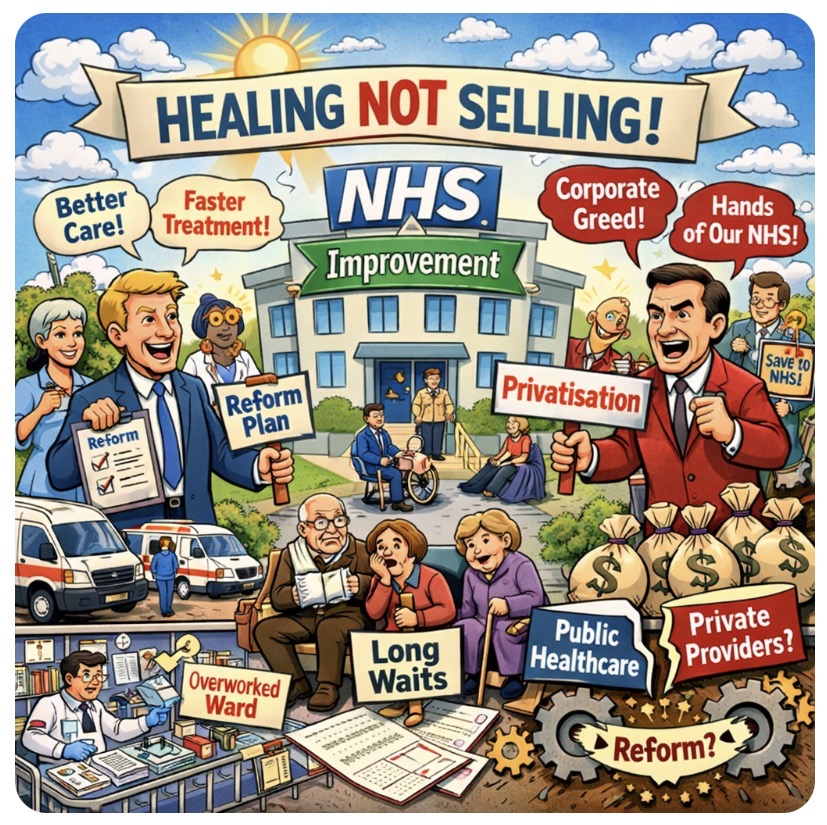
The NHS is sacred ground in British politics. Mention “reform” and half the country hears “for sale.” 🔔
But what if the debate isn’t about privatisation at all — and more about performance? What if the argument is less “sell it off” and more “sort it out”?
Because while critics warn of creeping corporatisation, Reform UK maintains three consistent pillars:
✔ Free at the point of use
✔ Taxpayer funded
✔ Universal access
That’s not demolition. That’s redesign. 🛠️
🌟 Reform or Ruin? Why the NHS Debate Needs Fewer Scare Words
Let’s be honest: waiting lists are long. Staff are stretched. Bureaucracy is heavy. The public is frustrated.
Reform UK’s proposals — from expanding private treatment capacity to restructuring NHS England — are framed by the party as ways to improve delivery, not dismantle the institution.
Using private providers when NHS waiting times are breached? That’s presented as a pressure-release valve, not a fire sale.
Encouraging competition? Advocates say it sharpens performance.
Reducing administrative overhead? Few taxpayers are campaigning for more paperwork. 🗂️
Opponents label this “privatisation by stealth.”
Supporters call it “common-sense reform.”
But here’s the uncomfortable truth: expanding private provision within a publicly funded system is not the same as selling the NHS. And pretending they’re identical doesn’t help patients stuck waiting months for treatment.
The NHS has always evolved. Foundation trusts. Outsourced services. GP contracts. Reform isn’t new — it’s constant. The question isn’t whether change happens. It’s whether change works.
And maybe — just maybe — voters are more interested in shorter waiting times than semantic warfare. ⏳
Are we too quick to equate change with collapse?
If a reform keeps healthcare free, universal, and tax-funded — but alters how it’s delivered — is that betrayal… or pragmatism?
Before choosing outrage, dig into the detail. Then tell us what improvement should actually look like. Join the conversation where nuance lives — in the blog comments. 💬👇
👇 Like. Share. Debate respectfully.
The most thoughtful and sharpest comments will be featured in the next issue of the magazine. 📰⭐


 Chameleon Magazine
Leave a comment