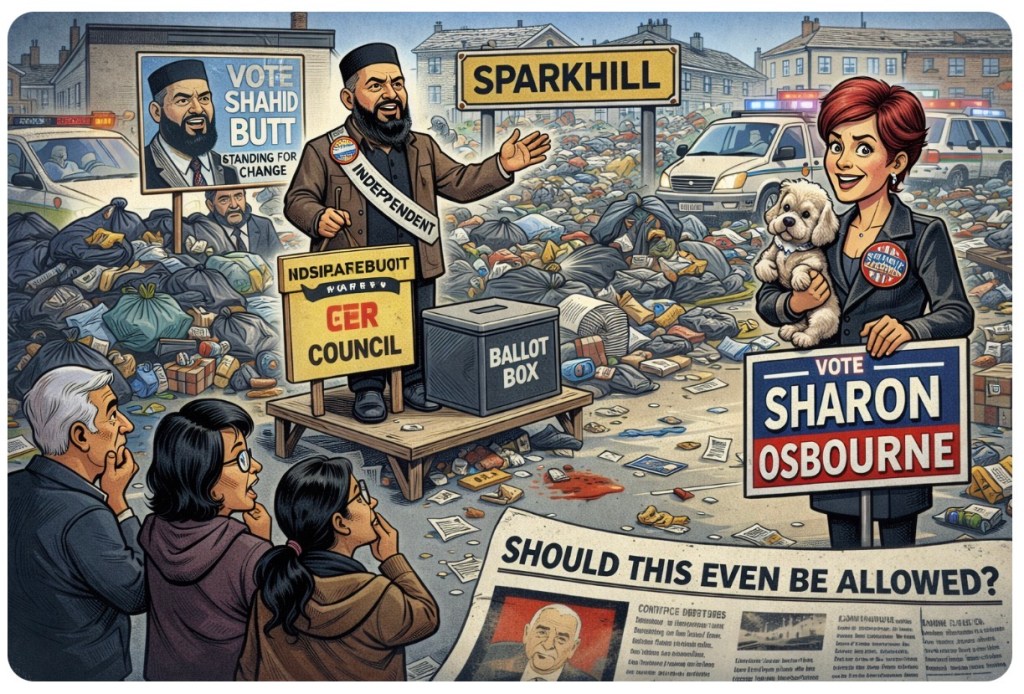
A Birmingham ward knee-deep in rubbish now finds itself knee-deep in political theatre.
Sparkhill residents are already fuming over bin strikes, mounting waste, and a council that seems to have misplaced both urgency and deodorant. Now comes the plot twist: a convicted terrorist, Shahid Butt, reportedly planning to stand as an independent candidate.
And just when you think the scriptwriters have run out of caffeine — Sharon Osbourne’s name is floated as a potential challenger.
Yes. That Sharon Osbourne. 🎤
🏛️ Democracy or Dark Comedy?
So here’s the question lighting up local WhatsApp groups:
Should this even be allowed?
In the UK, the law is clear — eligibility to stand for office depends on current legal status, not just past conviction. Individuals serving certain prison sentences are barred. But once a sentence is completed, and provided there are no additional legal restrictions (like specific disqualifications or ongoing incarceration), the right to stand can return.
That’s not a loophole. That’s how the law is structured.
The principle behind it is uncomfortable for many:
Democracy allows voters — not headlines — to decide.
But that doesn’t mean voters can’t question it.
If someone has a terrorism conviction in their past, the public will inevitably ask:
• Has there been rehabilitation?
• What were the circumstances of the conviction?
• Has there been accountability?
• What does this candidacy say about local political standards?
And hovering over it all: what does it say about trust?
Because while legal eligibility is one thing, political legitimacy is another.
Meanwhile, the bins still aren’t collected. The streets still smell like frustration. And residents may be less concerned with celebrity challengers and more concerned with basic civic competence. 🧹
🔥 Challenges 🔥
Is democracy strongest when it allows anyone legally eligible to stand — even if their past is deeply controversial?
Or should certain convictions permanently close the door to public office?


 Chameleon Magazine
Leave a comment