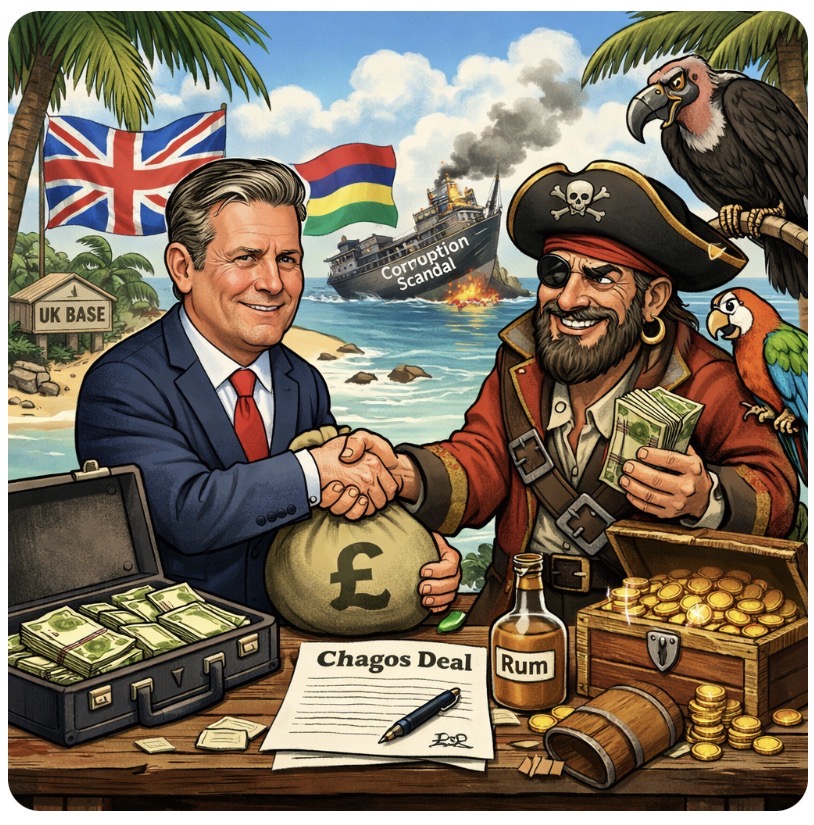
What was pitched as a tidy bit of post-colonial housekeeping has suddenly developed the unmistakable aroma of political panic. The Chagos deal—already controversial—now finds itself tangled in allegations, arrests, and awkward questions no one wants to answer on live television.
🚨 When Your Negotiating Partner Gets Arrested…
Enter Pravind Jugnauth — the former Prime Minister of Mauritius — who helped negotiate the Chagos agreement and has now reportedly been questioned and arrested as part of a money-laundering and financial-crimes investigation. He denies any wrongdoing.
And just like that, what was framed as a forward-thinking geopolitical reset now looks like it was negotiated in a room where someone forgot to Google the attendees. 🧐💻
Critics are circling with the enthusiasm of seagulls at a chip shop. Their concern? That any funds paid to Mauritius as part of the handover could be vulnerable to mismanagement or corruption — especially given the country’s broader political scandals and delayed prosecutions in other high-profile cases.
To be clear: allegations are not convictions. But politically? Optics matter. And the optics here are less “statesmanlike strategy” and more “did no one run a background check?”
For Starmer, this isn’t just about foreign policy. It’s about judgement. About due diligence. About whether the UK taxpayer’s cheque book has just wandered into a financial thriller without reading the script first. 🎬💰
Because nothing says “steady leadership” like wiring money while headlines scream “investigation.”
🔥
Challenges
🔥
If public funds are on the table and corruption concerns are in the air, should voters simply trust the process? Or demand stronger safeguards before a single pound leaves the building?
What do you think — prudent diplomacy or preventable blunder? Drop your sharpest takes in the blog comments (not just on social media 👀). Let’s hear the receipts, the reasoning, and the rage.
👇 Comment. Like. Share. Stir the pot responsibly.
The best comments will be featured in the next issue of the magazine. 📝🔥


 Chameleon Magazine
Leave a comment