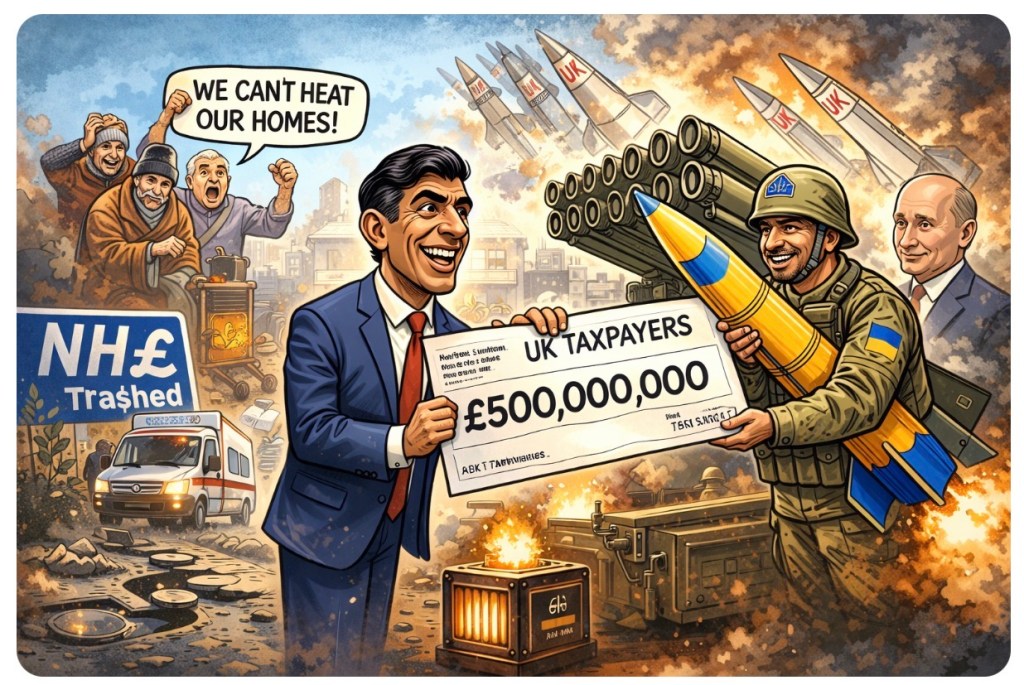
The UK has pledged roughly £500 million of taxpayer money toward Ukrainian rocket and military support — and the political afterburners are fully engaged.
Supporters call it strategic solidarity. Critics call it a high-stakes cheque written from the public wallet during a cost-of-living squeeze. Either way, the debate has blast-off energy.
🚀 “Defending Democracy” or Funding the Fireworks?
The UK government, under Rishi Sunak (and continued commitments under Keir Starmer depending on the timing of pledges), has framed military support to Ukraine as a matter of national security and international stability.
The argument goes like this:
- Support Ukraine now 🇺🇦
- Deter further aggression from Russia
- Prevent a wider European conflict
- Protect NATO credibility
In other words: spend now to avoid spending much, much more later. 💣➡️💷💷💷
But critics aren’t buying the strategic calculus so easily.
They point to:
- Strained NHS budgets
- Local councils on the brink
- Infrastructure decay
- Taxpayers already stretched thin
To them, “half a billion for rockets” sounds less like deterrence and more like misplaced priorities.
And the word rockets? That’s doing a lot of emotional heavy lifting.
💰 The Optics Problem: Rockets vs. Radiators
Politically, this isn’t just about foreign policy. It’s about optics.
When heating bills spike and public services creak, foreign military aid becomes an easy lightning rod. 🔥
Supporters say:
👉 This is about defending democratic sovereignty.
👉 Ukraine’s fight stabilises Europe.
👉 The UK benefits from long-term security.
Skeptics counter:
👉 There’s limited direct oversight on how funds are used.
👉 Voters weren’t exactly handed a referendum on rocket financing.
👉 “Temporary” funding often becomes permanent commitments.
Meanwhile, the public conversation swings between Churchillian resolve and weary frustration.
🌍 The Bigger Picture
This pledge isn’t happening in isolation. It sits within broader Western coordination — the US, EU nations, and NATO allies have collectively committed tens of billions in support since 2022.
So the UK’s half-billion is part of a larger geopolitical chessboard. ♟️
The real question isn’t whether money is being spent.
It’s whether the public sees it as security investment — or geopolitical overreach.
And that depends less on spreadsheets and more on trust.
🔥 Challenges 🔥
Is this bold leadership in defence of Europe — or another example of taxpayers footing the bill for grand strategy while potholes multiply at home?
Does long-term security justify short-term strain?
Drop your view in the blog comments (not just social media). Agree, disagree — but bring receipts and bring reason. 💬
👇 Comment. Like. Share.
The sharpest arguments (and the boldest rebuttals) will be featured in the next issue of the magazine.


 Chameleon Magazine
Leave a comment