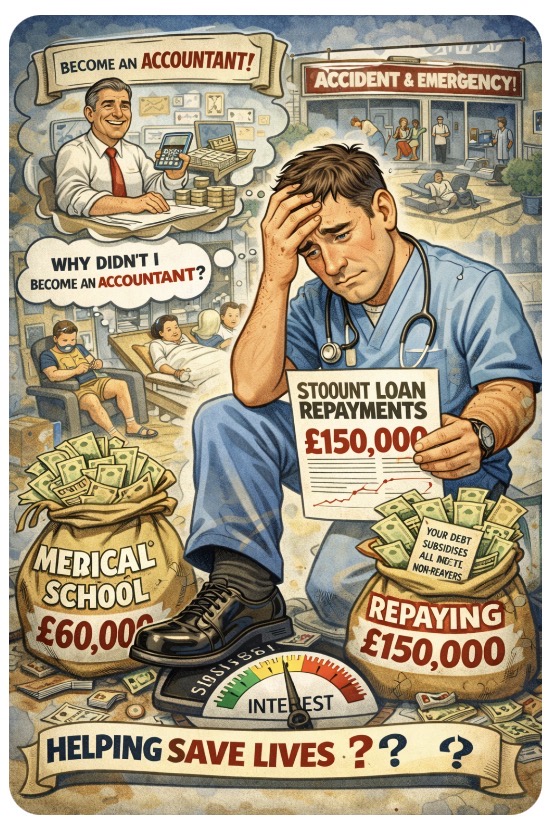
🩺💷Let’s paint the picture.
You’re 18. Bright. Motivated. Naïve enough to believe that becoming a doctor is a noble calling. So you sign the dotted line.
£60,000 in student loans later — and that’s before interest stretches it like hospital waiting lists — you qualify.
You’ve survived the exams. The night shifts. The tears in A&E at 3am. The cold tea. The rota gaps. The moral injury.
And then the repayment statement arrives.
📉 The Interest Is Working Harder Than You Are
That £60,000?
By the time interest compounds under the current student loan structure, many junior doctors are projected to repay £120,000–£150,000 over their careers.
Not because they borrowed that much.
But because:
- Interest rates climb 📈
- Salaries stagnate 💸
- Repayment thresholds move
- And the system quietly assumes many graduates will never fully clear the balance
So what happens?
High earners — including doctors — pay back not just their loan… but effectively subsidise the shortfall from others who will never repay in full.
Now cue the uncomfortable internal monologue:
“Should I have gone into accountancy?”
Less debt.
Earlier earning.
Remote work.
No one dies if you miscalculate VAT.
Meanwhile, the doctor who studied longer, trained harder, and carries life-or-death responsibility ends up questioning the financial wisdom of saving lives.
🏥 The Calling vs The Calculator
We tell young people medicine is a vocation.
We clap for them on Thursdays.
But financially?
- Years of training
- Below-inflation pay awards
- Crushing workload
- Six-figure lifetime repayments
And then we wonder why they’re emigrating to Australia. 🇦🇺✈️
Or switching careers.
Or quietly advising the next generation to “consider finance instead.”
Because here’s the awkward truth:
The system relies on idealism.
But compounds interest.
🔥 Challenges 🔥
Should doctors — who fill rota gaps, carry clinical risk, and keep the NHS breathing — be repaying more than double what they borrowed?
Is this a fair graduate contribution model?
Or are we financially penalising public service?
If you’re in medicine — or left it — drop your experience in the blog comments. Not just a scroll-past reaction. 💬
👇 Comment. Like. Share.
The most honest and powerful responses will be featured in the next issue of the magazine. 📰🔥


 Chameleon Magazine
Leave a comment