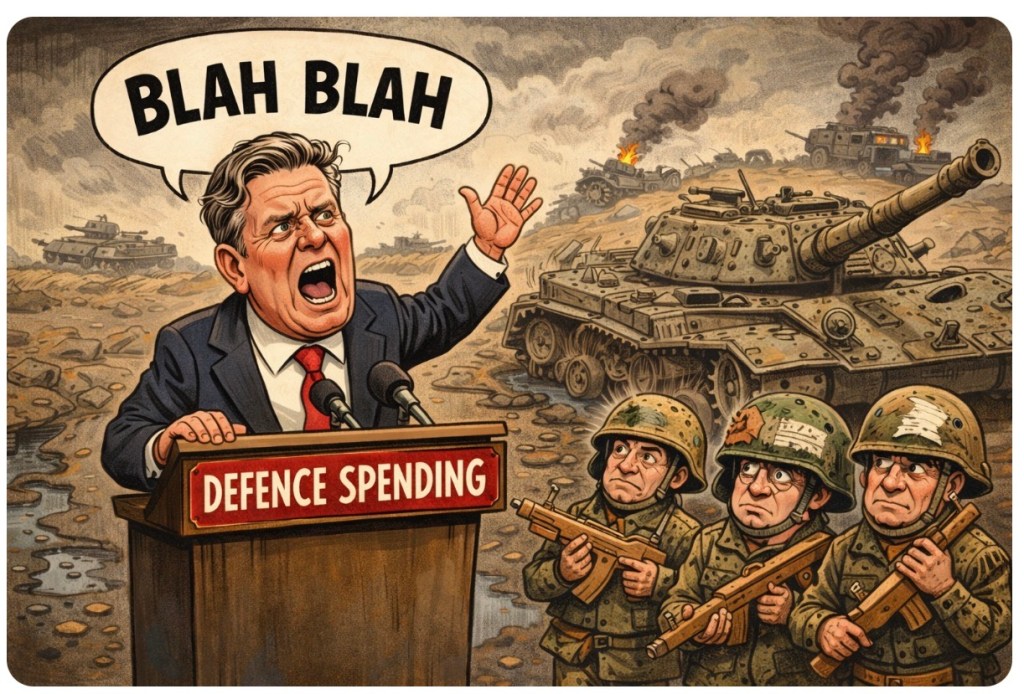
When former military chiefs accuse a prime minister of “not being honest” about defence spending, it’s not just Westminster gossip — it’s a flare fired into the political sky. 🚨
Keir Starmer now finds himself under fire as ex-service leaders warn that words won’t reinforce battalions, and speeches won’t plug budget holes at the Ministry of Defence. With cuts reportedly looming, critics are sharpening their knives — metaphorically, for now.
And yes, you might say it would be difficult to believe Keir was telling lies… well… maybe not. 👀
🪖 “The Time for Action Is Now” — Or Is It Spreadsheet Season Again?
Let’s decode the row.
Former senior officers are effectively saying:
If Britain wants to talk tough on global security, it needs to pay tough too.
Defence spending isn’t a vibes-based economy. You can’t deploy optimism. You can’t deter adversaries with PowerPoint slides. Tanks, ships, personnel — they all come with receipts. 💳
The criticism lands at an awkward moment. The UK faces pressure to:
- Increase NATO commitments
- Modernise ageing equipment
- Support allies abroad
- Maintain readiness at home
All while the Treasury whispers sweet nothings about “fiscal responsibility.”
So what’s the accusation really about?
It’s not necessarily that the Prime Minister is standing at a podium fabricating numbers. It’s that there may be a gap between rhetoric and reality — between promises of increased defence credibility and actual line-by-line budget allocations.
Politics loves an announcement. The military prefers ammunition. 🎯
And here’s the tension: if the government signals strength internationally while trimming domestically, critics will call it strategic cosplay.
Is this unfair? Possibly. Defence budgeting is a long-game operation involving multi-year commitments, procurement cycles, and classified realities the public never sees.
But optics matter. Especially when former chiefs — not opposition MPs — are the ones raising the alarm.
🔥 Challenges 🔥
Is this responsible fiscal caution — or dangerous penny-pinching dressed as prudence?
Should Britain be spending significantly more on defence in today’s global climate? Or are generals simply doing what generals do — asking for bigger budgets?
Don’t just rage-tweet. Take it to the blog comments. Tell us whether this is political spin, genuine security risk, or a bit of both. 💬⚖️
👇 Comment. Like. Share.
The sharpest insights and fiercest debates will be featured in the next issue of the magazine. 📰🔥


 Chameleon Magazine
Leave a comment