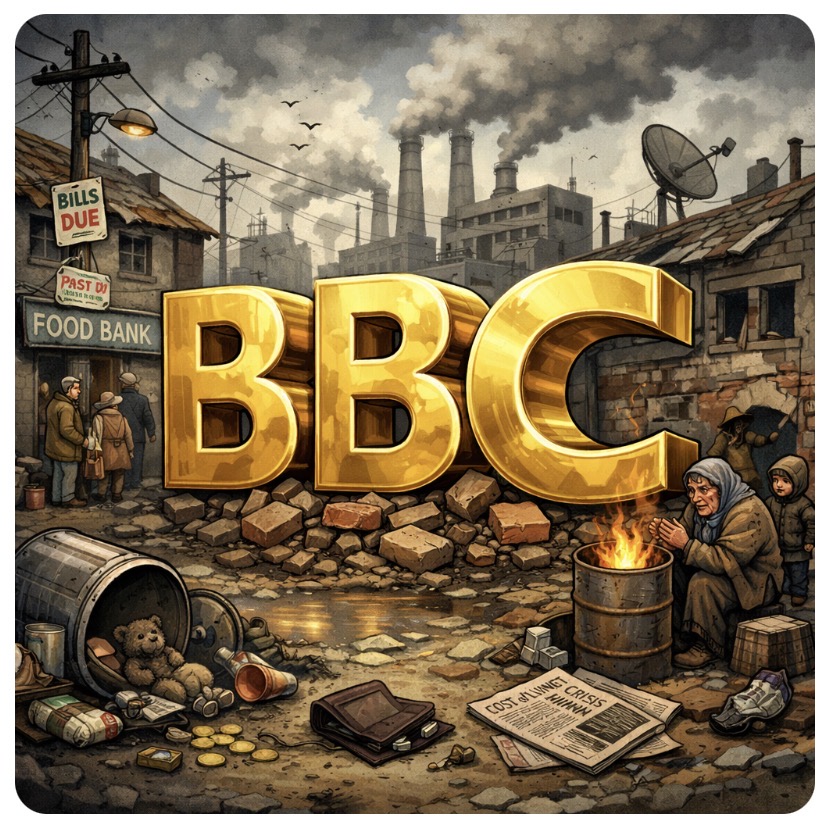
💷📺Public funding carries an implicit promise: if you compel the public to pay, you live by standards the public can recognise. That fragile social contract is the philosophical scaffolding beneath the licence fee — and right now, it’s creaking.
The headline figure — £175 million for a pension scheme described as “gold-plated” — doesn’t land in a vacuum. It lands in kitchens where energy bills are studied like military strategy. It lands in households trimming subscriptions, cancelling luxuries, and wondering how “legacy costs” always seem to mature at the worst possible moment.
No one disputes pensions matter. Contracts exist. Deficits don’t evaporate because Twitter is annoyed. But governance isn’t just about honouring yesterday’s signatures — it’s about ensuring yesterday’s promises still pass today’s smell test.
When a compulsory licence fee funds retirement liabilities rather than regional output or investigative journalism, the optics aren’t subtle. They’re neon.
📊 The Arithmetic of Accountability
The defence is familiar: “These are legacy arrangements.” True. But legacy isn’t an alibi — it’s a paper trail. Someone structured the scheme. Someone signed off the actuarial assumptions. Someone judged the risk acceptable.
If liabilities have expanded to £175 million, the issue isn’t outrage — it’s oversight. What projections missed? What safeguards failed? And why does the scale now feel misaligned with the financial reality of those underwriting it?
This is the structural tension at the heart of the licence fee model. The BBC is not a streaming startup hustling for subscribers. It operates under compulsion, not persuasion. Its income is underwritten by pensioners, families, and small businesses whose own retirement packages rarely resemble executive-tier insulation.
And here’s the political physics: scale communicates priority. A nine-figure pension allocation becomes symbolic whether leadership wants it to or not. It tells the public what gets protected when resources tighten.
Supporters argue transparency exists. Critics argue transparency should be unavoidable. In a publicly funded body, premium protection demands premium visibility. Scheme breakdowns. Executive versus staff distribution. Deficit trajectories. Not buried PDFs — visible, digestible accountability.
Because trust rarely explodes. It erodes. 🧱
It erodes when the institution appears buffered from the inflationary pressures shaping the lives of those paying for it. It erodes when “necessary commitments” seem disproportionately comfortable compared to the realities outside Broadcasting House.
£175 million isn’t just an accounting line. It’s a governance signal. A risk signal. A priority signal.
If the licence fee is compulsory, proportionality cannot be optional. 📡
🔥 Challenges 🔥
Here’s the uncomfortable question: can a compulsory public funding model sustain premium pension arrangements without equally premium transparency?
Is this responsible governance — or legacy insulation colliding with modern economics? Does symbolism matter as much as spreadsheets? And at what point does perception become policy pressure?
Drop your take on the blog itself — not just on social feeds. Bring the nuance. Bring the receipts. Or bring the outrage. 💬⚖️
👇 Comment. Share. Challenge the premise. Defend it if you dare.
The sharpest, smartest responses will be featured in the next issue of the magazine. 📝🏆


 Chameleon Magazine
Leave a comment