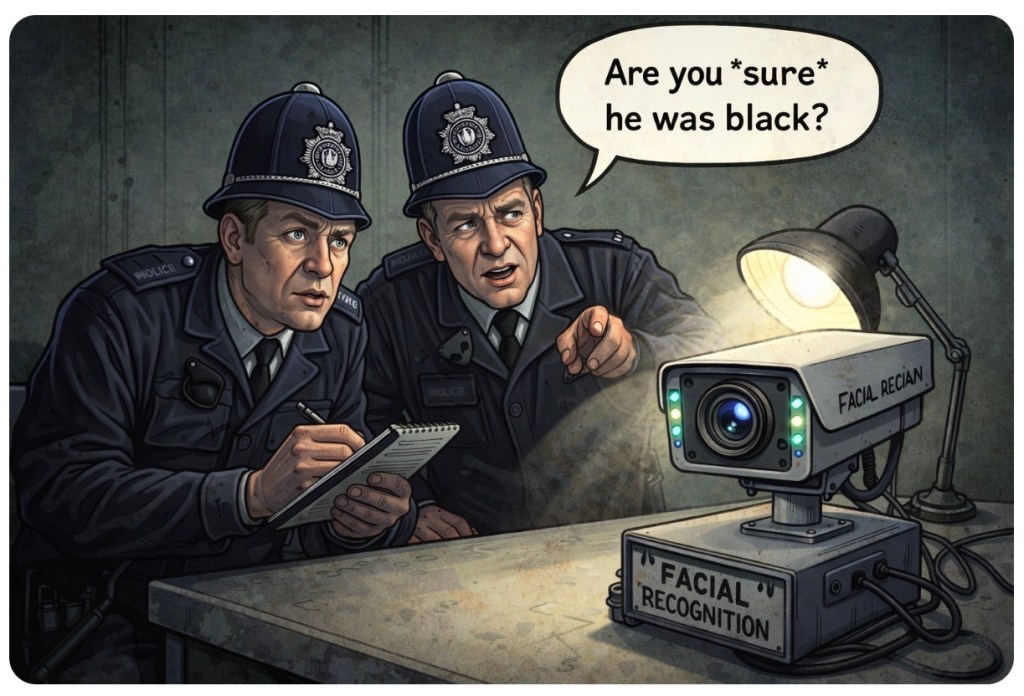
Facial recognition pings. A green tick flashes. The system says “match.”
And just like that, someone’s day goes from buying milk to booking a holding cell. 🚓🥛➡️🔒
Meanwhile, the real investigation? Crawling along like it’s powered by dial-up internet and a pot of cold tea.
🐌 When the Algorithm Sprints and the Humans Shuffle
Here’s the uncomfortable tension: technology moves fast. Bureaucracy does not.
The camera scans in seconds.
The alert triggers instantly.
The patrol responds quickly.
But corroborating the evidence? Reviewing footage? Checking alibis? Cross-referencing data properly? That part can move at what feels like geological speed.
So you end up with a strange imbalance:
- A system confident enough to flag someone.
- Officers cautious enough to say “we need to verify.”
- A suspect stuck in limbo while the gears grind slowly.
The danger isn’t necessarily evil intent—it’s overconfidence in automation. When the machine says “yes,” humans can unconsciously treat it as gospel rather than a lead. And that’s where due process starts sweating. 😬
Facial recognition isn’t magic. It’s probability. A similarity score. A sophisticated guess. But in the wrong moment, a guess can feel like a verdict.
And if verification lags behind accusation, trust erodes fast.
Nobody wants criminals walking free.
Nobody wants innocent people misidentified.
The real issue isn’t speed—it’s balance. If tech accelerates enforcement, safeguards must accelerate too. Otherwise we risk building a system where the algorithm runs a sprint and justice runs a marathon in flip-flops. 🏃♂️👟
🔥 Challenges 🔥
Should facial recognition be treated as evidence—or just an investigative lead?
Are we moving too quickly to deploy tech without matching safeguards?
And how much faith should we place in a probability score?
Drop your take in the blog comments (not just on social media). Measured arguments, sharp critiques, real-world experiences—we want them. 💬👇
👇 Like it. Share it. Challenge it.
The strongest comments will be featured in the next issue of the magazine. 📝🔥


 Chameleon Magazine
Leave a comment