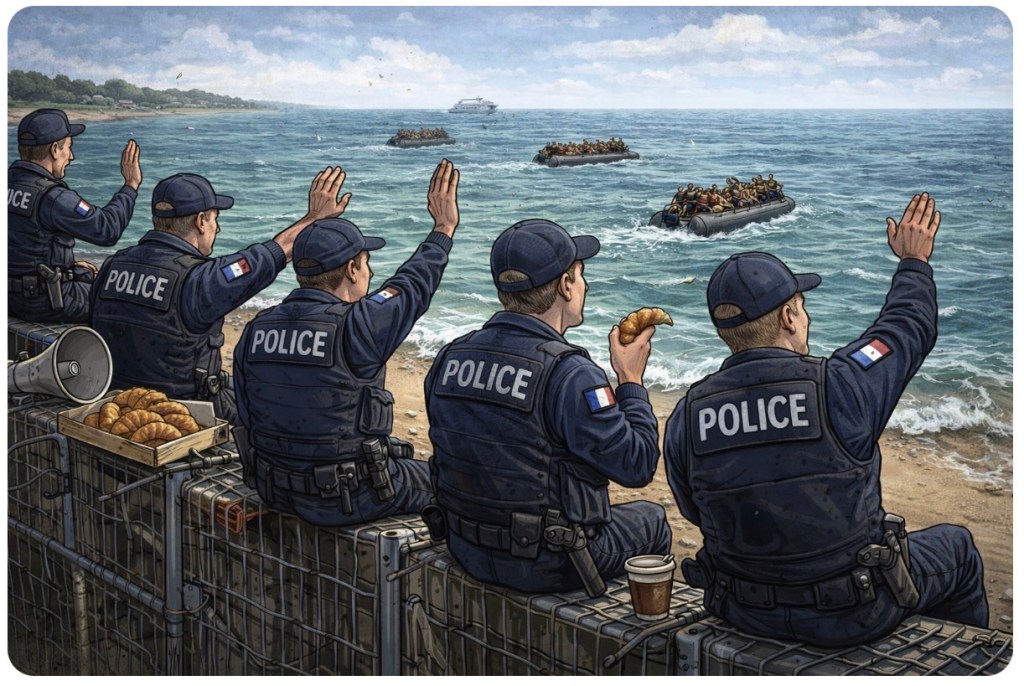
Somewhere in northern France, the espresso machine hisses, the butter melts, and—if you believe the headlines—the laughter echoes all the way across the Channel. Because Britain has pledged hundreds of millions to help France curb small-boat crossings… and critics say it looks less like border control and more like a very expensive continental subscription service. 🇬🇧➡️🇫🇷
Seven hundred million reasons to smile? Or seven hundred million reasons to squint? 👀
🛥️ Border Policy or Baguette Bailout?
Here’s the political theatre in full technicolour:
Britain writes the cheque.
France promises tougher patrols.
Boats still launch.
Opposition politicians sharpen their soundbites.
Cue the outrage.
To supporters, it’s pragmatic cooperation—paying a neighbour to reinforce shared borders and disrupt smuggling networks before they reach British shores. International problems require international solutions, they say. 🤝
To critics, it smells like déjà vu diplomacy: pay now, hope later. If crossings don’t dramatically fall, the optics are brutal. Because nothing fuels frustration faster than headlines about record funding paired with record arrivals.
And then there’s the uncomfortable question:
Are we funding enforcement—or funding leverage?
When migration pressure is complex—war, economics, global displacement—throwing money at one stretch of coastline can look suspiciously like trying to mop the sea.
Meanwhile, political messaging does what it does best: simplifies. One side paints it as strategic partnership. The other imagines French officials buttering croissants with sterling notes. 🧈💸
Reality? Probably somewhere less cinematic and far more bureaucratic.
🔥 Challenges 🔥
Is this smart diplomacy—or expensive symbolism?
Should border control ever depend on foreign cooperation cheques?
And how do we measure “success” in a crisis that keeps evolving?
Got a view? A rant? A policy breakdown sharper than a Parisian pastry knife? Drop it in the blog comments (not just on social media). 💬👇
👇 Like it. Share it. Stir the pot.
The most incisive (and spiciest) comments will be featured in the next issue of the magazine. 📝🔥


 Chameleon Magazine
Leave a comment