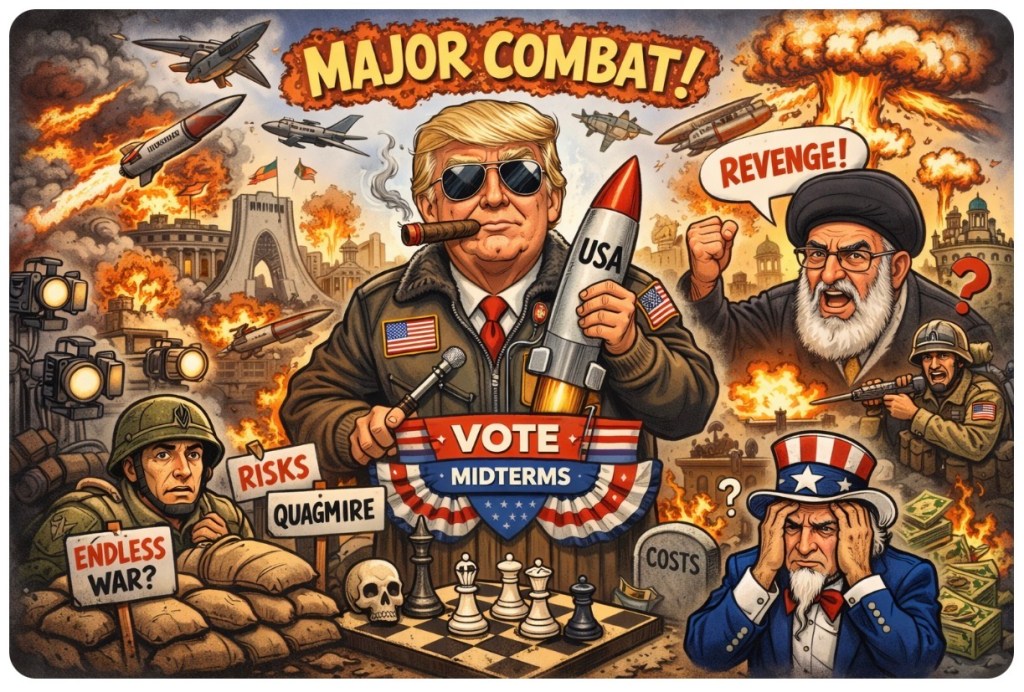
🚀🗳️🔥Today’s headlines read less like diplomacy and more like a blockbuster trailer: explosions over Tehran, missiles in the sky, and a U.S. president declaring “major combat operations.” The stakes? Iran’s nuclear ambitions, regional stability, and — conveniently — the looming midterm elections.
War, once again, is stepping onto the campaign trail wearing aviators and a flag pin.
💣 Strongman Theater or Strategic Masterstroke?
There’s a certain cinematic quality to it all. Strike first. Speak boldly. Warn of casualties. Promise resolve. It’s the political equivalent of flipping the table before negotiations even start — dramatic, decisive, and impossible to ignore.
For supporters, it projects dominance. For critics, it smells like déjà vu wrapped in combustible rhetoric. The phrase “never allow nuclear weapons” plays well in soundbites. But history whispers something less catchy: wars rarely follow scripts, and escalation has a nasty habit of rewriting campaign promises in blood and budgets.
Yes, projecting strength can rally a base. It signals resolve. It frames leadership as fearless. But strength isn’t just measured in shockwaves — it’s measured in aftermath.
Retaliation risks? Real.
Regional spillover? Likely.
Long-term entanglement? Historically undefeated.
The Middle East has been the graveyard of “quick wins” for decades. And once missiles fly, political narratives stop being fully controllable.
So does attacking Iran automatically make a president look strong?
Only in the opening act. 🎭
Sustained strength requires strategy, restraint, legal grounding, coalition-building, and a plan beyond “shock and awe.” Otherwise, what looks like resolve today can look like recklessness tomorrow.
🔥 Challenges 🔥
Is this decisive leadership — or election-season brinkmanship with global consequences?
Are voters drawn to displays of force… or exhausted by endless conflict?
And most importantly: who pays the price when political optics collide with geopolitical reality?
Drop your thoughts in the blog comments — not just on social media. This conversation deserves more than a scrolling thumbs-up. 💬👇
Hit comment. Hit share. Challenge the narrative.
The sharpest insights and boldest takes will be featured in our next magazine issue. 📰✨


 Chameleon Magazine
Leave a comment