📈💷“10-year UK gilt yields rise to 4.69%.” Sounds like the kind of sentence that lives exclusively in the spreadsheets of investment bankers and economists arguing over lunch in Canary Wharf.
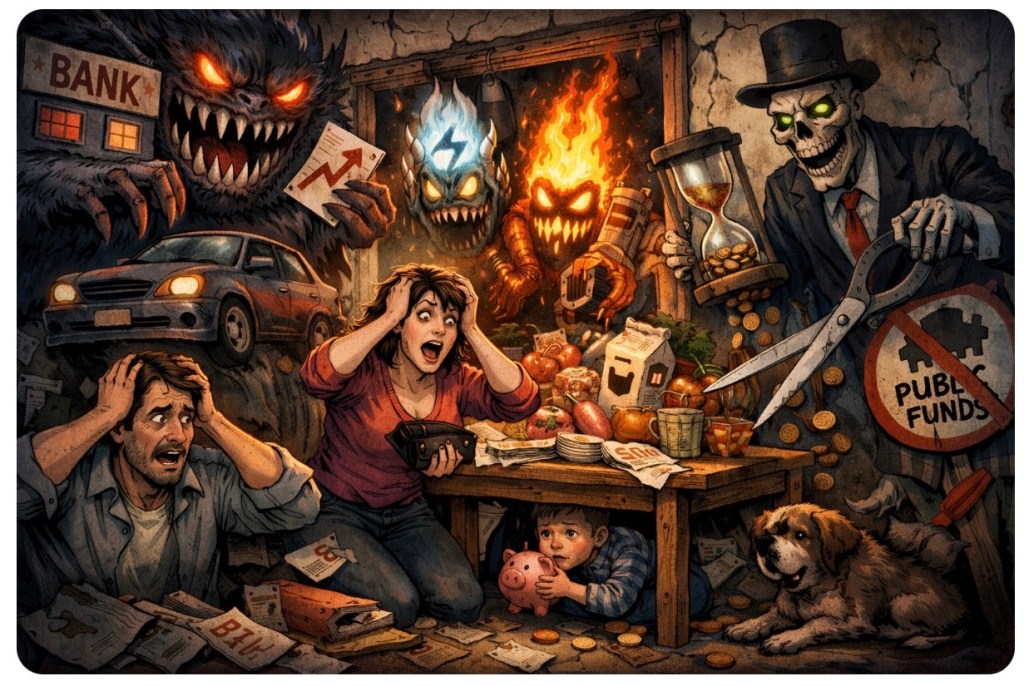
But behind that dry financial headline sits a simple reality: when the government’s borrowing costs rise, the ripple eventually reaches almost every working household in Britain. Mortgage payments, energy bills, wages, taxes—sooner or later, they all feel the tremor.
So let’s translate what that seemingly dull headline actually means in plain English.
📉 The Financial Domino Effect Nobody Mentions
First, the basics.
The UK government borrows money by selling bonds—called gilts—to investors. The yield is essentially the interest rate the government has to pay people who lend it money.
When investors think inflation might rise, the economy looks unstable, or global tensions threaten markets, they demand higher returns to take that risk.
So when yields climb to around 4.69%, it means the government must pay more interest to borrow.
And that’s where the dominoes begin to fall.
🏡 Mortgages and Loans Get Pricier
Government bond yields influence interest rates across the financial system.
For households, that usually translates to:
• Higher mortgage rates
• More expensive car loans
• Rising credit card interest
Banks often price loans relative to government bond yields. When gilts rise, borrowing becomes more expensive across the board.
In other words: the cost of money goes up.
🏛️ The Government Budget Gets Squeezed
Higher borrowing costs don’t just affect homeowners—they affect the entire national budget.
If the government spends more on interest payments, there’s less money available for everything else.
That pressure can show up as:
• Higher taxes
• Cuts to public services
• Slower pay growth in the public sector
Put simply: more taxpayer money goes to servicing debt instead of funding hospitals, schools, or infrastructure.
⛽ Energy and Living Costs Can Climb
Markets reacted this time partly because of fears that the Iran conflict could push oil and gas prices higher.
When energy prices rise, inflation tends to follow.
That can mean:
• Higher household energy bills
• More expensive petrol
• Rising food prices (because transport costs increase)
Some estimates suggest sustained energy shocks could add around £500 a year to household costs.
📊 Interest Rates Stay High for Longer
Many investors had expected the Bank of England to start cutting interest rates soon.
But if inflation fears grow—especially due to energy shocks—those cuts could be delayed.
That means:
• Mortgage relief takes longer
• Businesses invest less
• Wage growth can slow
And the squeeze on households continues.
💡 The Plain-English Translation
When government borrowing costs rise, it rarely stays confined to financial markets.
For working people, it often shows up as:
• Higher mortgage payments
• Higher energy and food bills
• Slower wage growth
• Possible tax pressure
In other words, the headline might look like financial jargon—but the consequences are very real at the kitchen table.
🔥 Challenges 🔥
Here’s the uncomfortable question: why do the biggest economic shifts always arrive disguised as boring headlines?
A decimal point moves in the bond market… and suddenly mortgages creep up, bills swell, and governments start talking about “tough choices.”
Coincidence—or a financial system that quietly shifts the burden onto ordinary households?
Drop your take in the blog comments. Not Facebook. Not X. The actual blog. 💬
👇 Hit comment, like, and share if you think these “boring” financial headlines deserve a bit more public attention.
The sharpest comments will be featured in the next issue of the magazine. 📝🔥


 Chameleon Magazine
Leave a comment