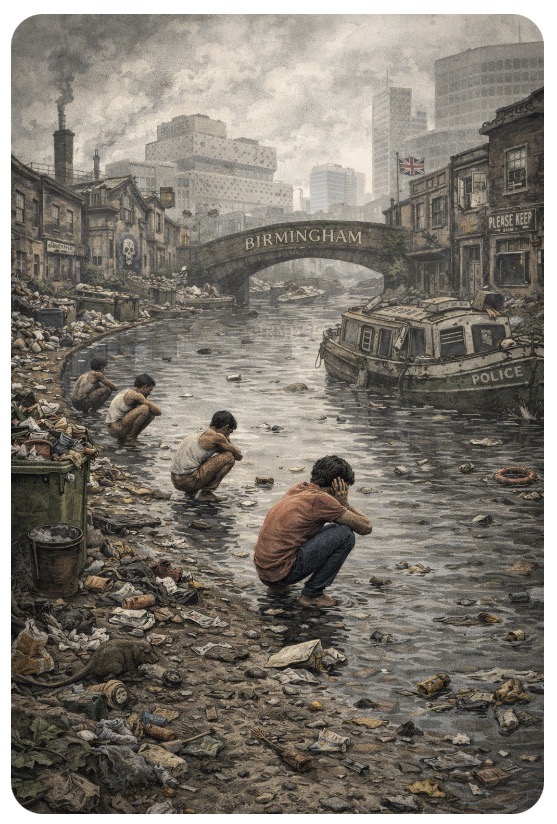
🗑️🏛️For a city once proud of its industrial backbone and civic ambition, the situation at Birmingham City Council has become an embarrassment difficult to ignore.
Years of mismanagement have pushed one of Europe’s largest local authorities effectively into bankruptcy. Meanwhile, basic services that residents pay for every month—like collecting the bins—have descended into chaos.
And the numbers are staggering.
The council has reportedly been spending over £20 million a year hiring private agencies just to do what the council itself was supposed to handle: collect rubbish from the streets of Birmingham.
For many residents, the result has been obvious. Overflowing roadside bins. Rotting waste piling up. Entire neighbourhoods left wondering if anyone at the council is actually in charge.
Then something curious happens.
🧹 Election Season: Suddenly the Brooms Appear
As local elections approach, something remarkable has occurred.
The streets are suddenly being cleaned.
And by whom?
Councillors themselves.
Now, on one level, seeing elected officials roll up their sleeves might look admirable. But to many residents it raises a much more uncomfortable question:
If councillors can suddenly organise street cleaning during election season, why hasn’t it been happening all along?
Instead of demonstrating dedication, the spectacle risks proving the opposite—that the systems meant to keep the city running have been allowed to collapse.
Even more surreal is the suggestion that residents themselves should step in to clean the streets.
Of course people should take pride in where they live. No one is defending littering or vandalism.
But there’s a simple logistical problem.
Where exactly are people supposed to put the rubbish when the bins are already overflowing and the collection trucks aren’t turning up?
🚨 A City Struggling With More Than Just Rubbish
The frustration doesn’t stop at waste collection.
Across parts of Birmingham, residents report rising concerns about crime, anti-social behaviour, and drug activity. Communities that once felt stable now feel neglected.
And while the city itself remains vibrant and resilient—thanks largely to the people who live and work there—its reputation has undeniably taken a hit.
Not because of its citizens.
But because of the perception that the administration running the city has lost control of basic governance.
⚖️ The Council Tax Question
Which leads to the uncomfortable issue many residents are now asking about openly.
On what moral basis does the council continue charging full council tax when essential services appear to be failing?
Miss a payment and the response is swift: reminders, penalties, and even court summons.
But when the council fails to deliver services residents are paying for, accountability seems far harder to find.
That imbalance is fuelling growing resentment.
🔥 Challenges 🔥
So here’s the question facing Birmingham residents as elections approach:
What exactly has the Labour-led council delivered that should inspire confidence?
What achievements should persuade people to walk to the polling station on 7 May and give them another term?
Has the council earned another chance—or is it time for Birmingham to try something different?
Drop your thoughts in the blog comments—not just on Facebook. We want to hear directly from the people who live with these problems every day. 💬🔥
👇 Comment. Like. Share.
Tell us what Birmingham deserves from its leaders.
The best comments will be featured in the next issue of the magazine. 📝


 Chameleon Magazine
Leave a comment