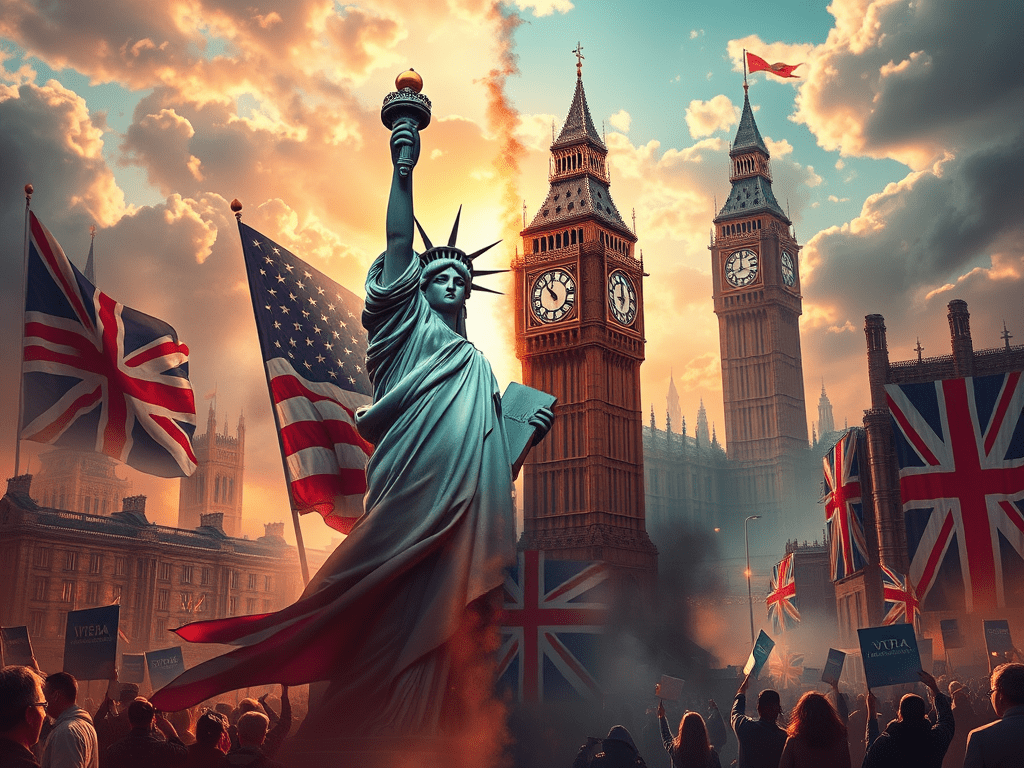
🌍📢A senior aide to Zohran Mamdani—a strategist known for helping shape messaging for the Democratic Socialists of America through viral videos and punchy online campaigns—has reportedly been advising elements of the British left on political strategy.
On paper, it sounds like the modern globalisation of politics: ideas, messaging, and campaign tactics crossing borders as movements try to energise younger voters and reshape debates.
But critics are already asking a different question: when political strategies built for one country are imported wholesale into another, do they actually work—or do they simply amplify division?
🎭 Importing Revolutions Like Streaming Content
Politics used to be local. Now it behaves more like a Netflix series.
Campaign styles that take off in New York or California can suddenly appear in Britain almost overnight—viral clips, rapid-fire messaging, and the framing of politics as a dramatic “global struggle.”
To supporters, this is modern activism. It energises people who feel locked out of traditional politics.
To critics, it feels more like ideological franchising.
They argue that importing strategies tied to American progressive politics risks ignoring the realities of Britain’s economy and political culture. After all, slogans travel faster than solutions.
And that’s where the tension begins.
Because when political messaging leans heavily into big ideological battles—capitalism versus socialism, elites versus workers—it can excite activists while worrying the people trying to run businesses, create jobs, and keep the economic engine turning.
Critics warn that if policy starts following the rhetoric too closely, the result could be a long road of economic uncertainty.
After all, economies don’t run on slogans or viral clips.
They run on industries, investment, and people willing to take risks building things.
And if those people begin to feel like they’re simply being asked to bankroll ideological experiments, the political backlash can arrive very quickly.
🔥 Challenges 🔥
Here’s the question for readers:
Is this the global exchange of ideas that modern politics needs, or the start of importing ideological battles that Britain doesn’t need?
Can viral messaging and activist energy actually build a stronger economy—or will voters eventually push back if they feel the cost is too high?
Drop your thoughts in the blog comments—not just on Facebook. We want the sharp takes, the arguments, and the predictions about where this road leads. 💬🔥
👇 Comment. Like. Share.
Tell us whether this is political innovation… or the opening act of a very expensive mistake.
The best comments will be featured in the next issue of the magazine. 📝


 Chameleon Magazine
Leave a comment