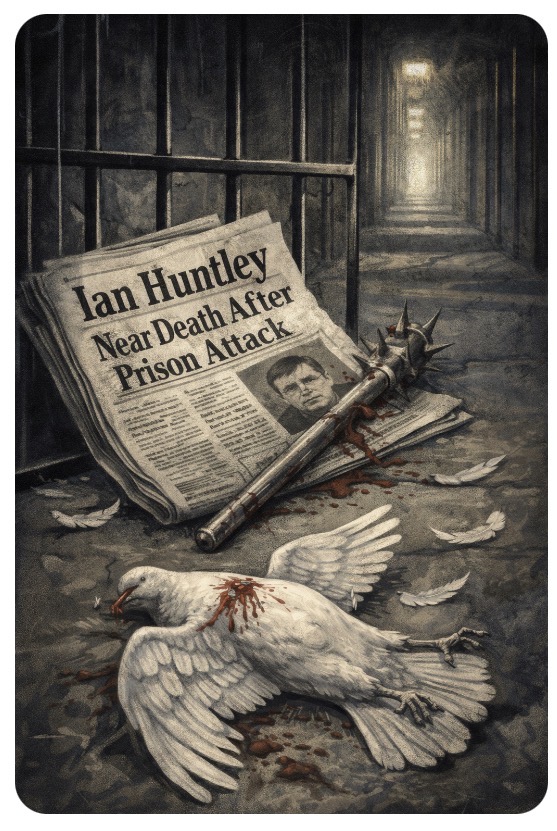
⚖️📰News reports say that Ian Huntley—the man responsible for the horrific killings of Holly Wells and Jessica Chapman in the 2002 Soham murders—is reportedly hours from death after being taken off life support in hospital following a brutal attack by another inmate.
According to reports, the ventilator keeping him alive has been switched off after he was battered with a spiked metal pole inside prison. For many people across the UK, the reaction hasn’t been grief, shock, or sympathy. Instead, it’s something closer to a national shrug.
⚔️ Justice, Revenge… or Just Consequences?
Huntley has spent more than two decades in prison as one of Britain’s most notorious child killers. His crimes left a permanent scar on the country and devastated families, communities, and an entire generation that remembers the faces of Holly and Jessica on television screens across the nation.
So when news breaks that the man responsible may not survive a prison assault, the emotional response from the public is… complicated.
For some, it raises uncomfortable questions about safety and order inside the prison system. After all, prisons are meant to deliver punishment through lawful sentences—not through improvised weapons and inmate vendettas.
But for many others, the reaction is brutally simple: sympathy is in very short supply.
Because in cases like this, public memory doesn’t fade easily. The names people remember aren’t Huntley’s—they’re Holly and Jessica’s.
And while prison systems are supposed to operate under law, fairness, and due process, there’s a dark reality everyone knows: inmates convicted of crimes against children often sit at the very bottom of the prison hierarchy.
Whether that’s justice, revenge, or simply the brutal social order of prison life is another debate entirely.
🔥 Challenges 🔥
Should the public feel conflicted when something like this happens?
Does prison violence represent a failure of the system… or an outcome many people quietly expect?
And here’s the uncomfortable question: if someone who committed one of Britain’s most horrific crimes dies behind bars after an inmate attack, is society supposed to mourn?
Drop your thoughts in the blog comments—not just on Facebook. This is one of those topics where opinions run strong, and we want to hear them. 💬🔥
👇 Comment. Like. Share.
Say what others might be thinking but won’t say out loud.
The best comments will be featured in the next issue of the magazine. 📝


 Chameleon Magazine
Leave a comment