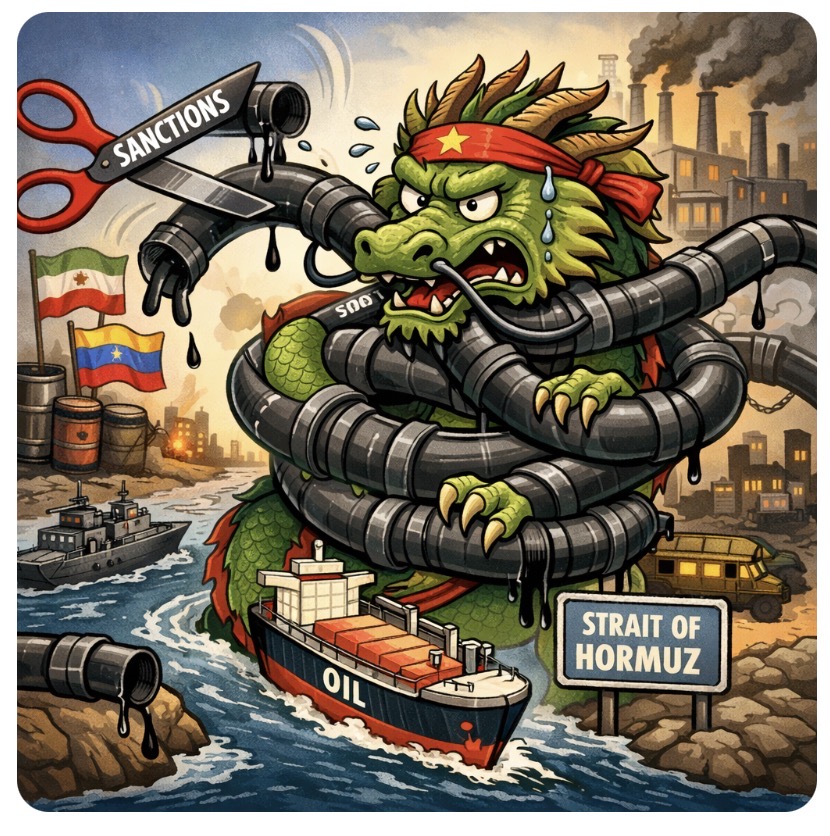
For years, China quietly built an economic superpower engine fueled by cheap oil from places most of the world avoided—Iran, Venezuela, and Russia. Discount barrels, quiet tanker fleets, and creative payment systems kept the factories humming.
But the geopolitical chessboard is shifting. Sanctions are tightening, shipping networks are under scrutiny, and global energy routes are becoming political pressure points.
The question now isn’t whether China can keep buying oil.
The real question is whether the strategy that once gave Beijing an advantage is slowly turning into a vulnerability.
🚧 The Cheap Oil Strategy That Powered a Superpower
China’s rise over the past two decades has depended on one brutal reality: industrial growth requires massive energy.
To keep costs low, Beijing leaned heavily into oil suppliers that were sanctioned or politically isolated. The upside? Massive discounts. Sometimes $10–$20 per barrel cheaper than global prices.
It was a clever workaround. While Western countries cut off certain regimes, China stepped in with tanker fleets, shadow trading networks, and long-term deals. Factories thrived. Export prices stayed competitive.
But now that geopolitical pressure is increasing, that carefully constructed supply chain is beginning to look… fragile.
If sanctions tighten further or conflict disrupts key routes like the Strait of Hormuz, China could suddenly find itself scrambling for energy on the open market—alongside everyone else. And when that happens, discounts vanish faster than free samples at Costco.
⚡ The Strategic Problem Nobody Likes to Talk About
Here’s the uncomfortable truth for Beijing:
China imports over 70% of its oil.
That means its entire industrial machine—factories, shipping, transport, and manufacturing—depends on supply routes it does not fully control.
Meanwhile, rivals are increasingly aware of that weakness.
Pressure on Iranian exports…
Restrictions on Venezuelan shipping…
Closer monitoring of “shadow fleets”…
Each move chips away at the alternative energy system China built to protect itself.
If the squeeze continues, Beijing faces two choices:
1️⃣ Pay far more for energy
2️⃣ Slow down industrial growth
Neither option looks great for the world’s largest manufacturing economy.
🌍 The Global Ripple Effect
If China’s energy pipeline tightens, the consequences won’t stop in Beijing.
Global markets could see:
- Higher oil prices
- Supply competition between Asia and the West
- Increased geopolitical tension around shipping routes
In other words, this isn’t just about China. It’s about who controls the fuel of the global economy.
Because when energy becomes a geopolitical weapon, every country suddenly starts checking the gas gauge.
🔥 Challenges 🔥
Here’s the question nobody seems eager to answer:
Is China’s energy strategy genius-level geopolitical maneuvering… or a ticking time bomb built on unstable alliances?
Drop your take in the blog comments — not just on social media. We want the sharpest theories, the boldest predictions, and the spiciest geopolitical hot takes. 🌶️💬
👇 Hit comment, like, and share if you think the global energy chess match is just getting started.
The best comments will be featured in the next issue of the magazine. 📝🔥


 Chameleon Magazine
Leave a comment