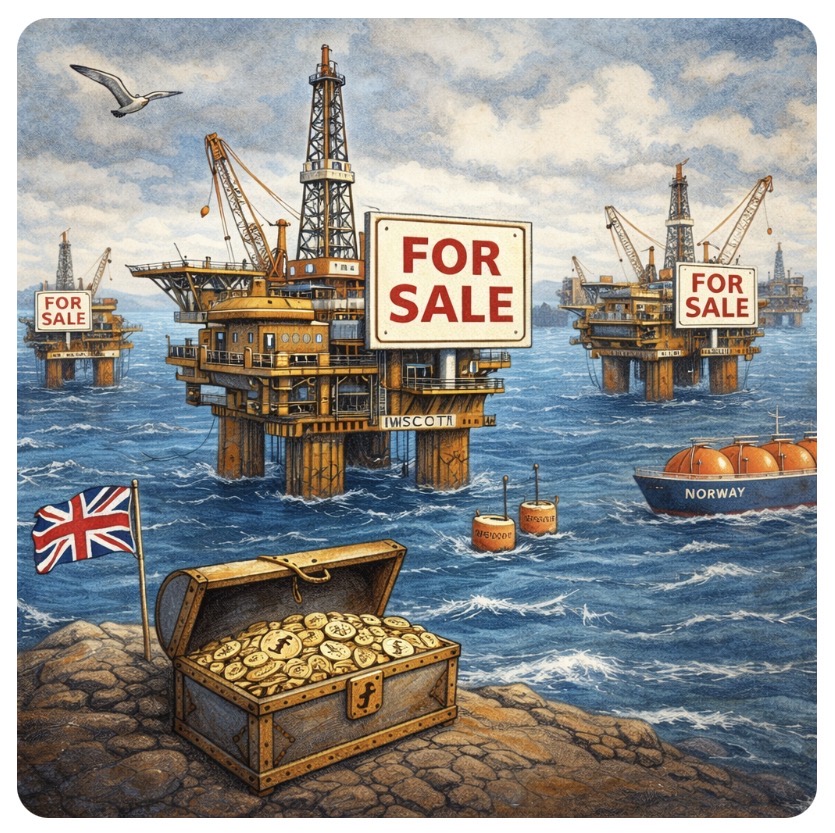
🛢️🇬🇧💸Britain is sitting on what some analysts estimate could be £1 trillion worth of oil and gas beneath the North Sea—yet households are paying some of the highest energy prices in Europe while importing fuel from abroad.
It’s the economic equivalent of freezing in your own house while your firewood sits locked in the shed.
🛢️ The Energy Beneath Our Feet
For decades the North Sea powered Britain’s economy.
It funded public services, created hundreds of thousands of jobs, and helped make the UK one of the world’s major energy producers.
But today, huge reserves remain untapped while the country increasingly imports fuel from places like Norway, Qatar, and the global LNG market.
Meanwhile, energy giants such as BP and Shell have warned that uncertainty over taxation and licensing is discouraging investment in new exploration.
The result?
Britain produces less of its own energy… and pays more for imported fuel.
💸 Paying More for Someone Else’s Energy
The logic frustrates many critics of current policy:
- Britain still uses large amounts of oil and gas
- Domestic production is being slowed or restricted
- Imports are increasing
- Consumers are paying higher prices
In other words, the UK hasn’t stopped using fossil fuels—it’s just buying them from someone else instead of producing them at home.
And when global markets tighten, British households feel the impact immediately.
Heating bills rise.
Electricity costs climb.
Industry faces higher energy costs than competitors abroad.
All while vast reserves remain under the seabed.
⚡ Energy Security vs Climate Policy
Of course, the debate isn’t simple.
Supporters of limiting new drilling argue that Britain must transition toward renewable energy to meet climate goals and reduce long-term reliance on fossil fuels.
Critics counter that the transition will take decades—and abandoning domestic resources too quickly simply exports production to other countries with weaker environmental standards.
So the real question becomes:
Should Britain produce the energy it still needs… or import it at higher prices while the North Sea sits largely untouched?
🔥 Challenges 🔥
Is leaving £1 trillion worth of oil and gas in the North Sea responsible climate leadership—or economic self-sabotage while households struggle with energy bills?
Should Britain prioritise energy independence and lower costs, or accelerate the shift away from fossil fuels even if imports rise in the meantime?
Drop your thoughts in the blog comments (not just Facebook). The sharpest arguments, boldest opinions, and most creative solutions are exactly what we want to hear. 💬🔥
👇 Comment, like, and share if you think Britain’s energy strategy deserves a serious national debate.
🏆 The best comments will be featured in the next issue of the magazine.


 Chameleon Magazine
Leave a comment