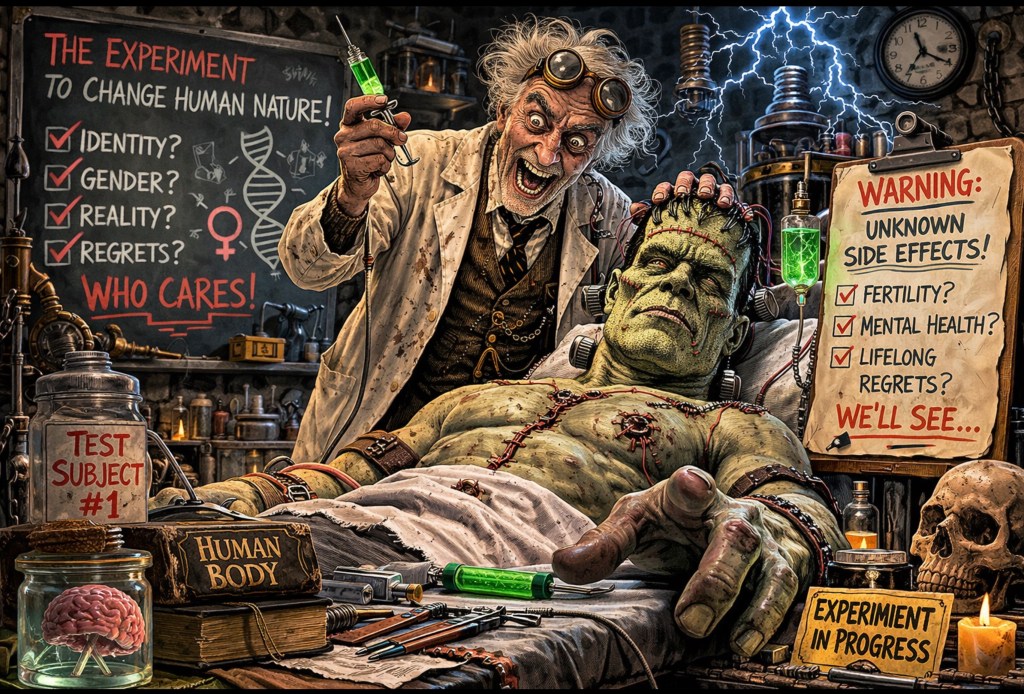
⚕️🧪🚧In a move that has sparked fierce debate across the country, the NHS has halted the prescription of gender-affirming hormones such as testosterone and oestrogen for under-18s. For transgender 16- and 17-year-olds who previously could access these treatments, the sudden stop represents a dramatic shift in policy — one that supporters call cautious medicine and critics call a rollback of care.
Whatever side of the argument people land on, one thing is clear: the issue has become one of the most emotionally charged medical debates of our time.
🧬 The Medical Debate Nobody Seems to Agree On
Medicine is supposed to move carefully, guided by evidence, long-term studies, and the simple principle of “first, do no harm.” Yet the conversation around gender medicine for minors has moved at breakneck speed over the past decade, leaving doctors, politicians, and parents scrambling to keep up.
Supporters of these treatments argue that hormone therapy can reduce distress and help young people who feel their bodies don’t match their identity. For many families, it’s framed as necessary care that can dramatically improve quality of life.
Critics, however, have increasingly raised alarms about the lack of long-term evidence, especially when it comes to teenagers whose bodies and minds are still developing. Concerns range from fertility issues to lifelong medical dependence — questions that science is still trying to answer.
That tension has now reached a breaking point.
The NHS decision signals a shift toward a more cautious approach, reflecting growing international scrutiny of youth gender medicine. Several European countries have already tightened rules or paused certain treatments for minors while research continues.
But the real dilemma sits in the uncomfortable middle:
How do you protect vulnerable young people while also avoiding irreversible decisions made too early?
That question has no easy answer — and the policy change guarantees the debate will only grow louder.
🔥 Challenges 🔥
Is the NHS finally applying necessary caution — or turning its back on young people who believe this care is essential?
Should medical treatments with life-long consequences be delayed until adulthood? Or does delaying them risk causing harm in other ways?
We want your honest thoughts — but bring them to the blog comments, not just Facebook. 💬
👇 Comment, like, and share.
Tell us where you stand in this complex debate.
The most thoughtful, provocative, and powerful responses will be featured in the next issue of the magazine. 📝🔥


 Chameleon Magazine
Leave a comment