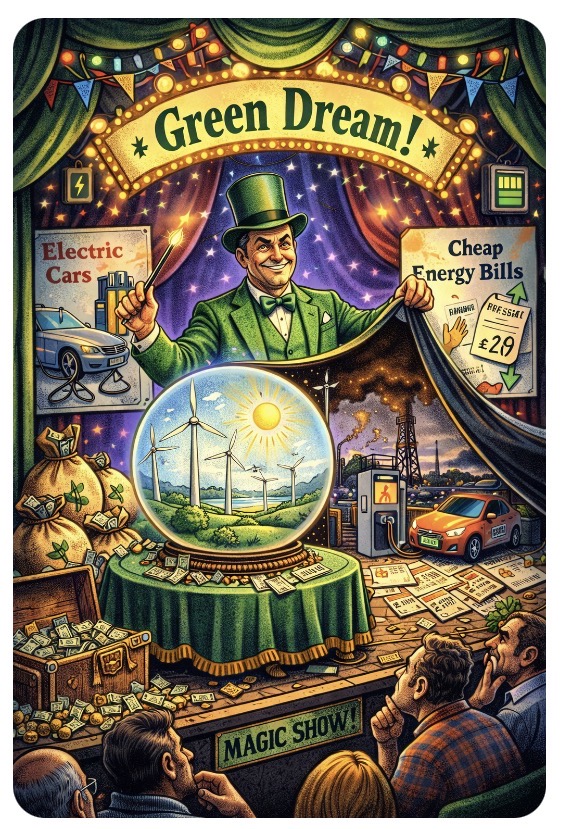
⚡💷Britain has been promised a greener, cleaner, and supposedly more secure energy future. Yet as Chancellor Rachel Reeves warns of a fresh inflation surge driven by global tensions and rising fuel prices, the uncomfortable truth is resurfacing: the UK remains deeply exposed to the same volatile energy markets it hoped to escape.
Motorists are already seeing it at the pump. Petrol is climbing toward 140p per litre, diesel is pushing 160p, and economists now warn that household gas and electricity bills could surge back toward £2,000 a year by the summer.
So much for the idea that the energy transition would shield Britain from global shocks.
🌍 The Green Safety Net That Isn’t There
For years, politicians sold the green transition as a double win: save the planet and escape the chaos of global fossil fuel markets.
But reality has been less comforting.
Even as Britain builds wind farms and solar capacity, the country still relies heavily on global oil and gas prices to keep homes warm, cars moving, and industries running. When conflict flares in the Middle East or supply chains tighten, prices jump—and Britain jumps with them.
The result? A strange halfway house.
We’re not fully fossil-fuel powered anymore… but we’re not yet energy independent either.
Which means the UK gets the costs of transition while still suffering the shocks of the old system.
And that’s exactly the squeeze Rachel Reeves is warning about.
Energy prices ripple through everything:
- transport
- food
- manufacturing
- household bills
When energy rises, inflation follows.
The Bank of England had hoped inflation would continue falling. Now that path looks far less certain.
🔌 Will Wind Turbines Make EVs Cheaper? 🚗⚡
This is one of the big promises often implied in the green transition: that cheap renewable electricity will eventually make electric vehicles cheaper to run and power.
But right now, the answer for many households is simple:
No.
Electric vehicles remain expensive to buy, charging costs have risen alongside electricity prices, and the infrastructure rollout is uneven. Wind turbines may generate power, but the price consumers pay is shaped by global energy markets, grid costs, taxes, and supply shortages.
So while renewable energy may grow over time, it hasn’t yet delivered the cheap motoring revolution many people were promised.
Right now, families face rising fuel costs whether they drive petrol, diesel, or plug into a charging station.
🔌 The Real Question Britain Must Face
The green transition isn’t the problem in itself. Most economists agree that long-term energy independence will require cleaner domestic energy sources.
But the real issue is how the transition is managed.
If governments push too fast without reliable alternatives, prices spike.
If they move too slowly, dependence on volatile fossil fuels continues.
Right now Britain appears stuck in the worst possible middle ground: paying more while still remaining vulnerable.
🔥 Challenges 🔥
Here’s the blunt question politicians rarely answer directly:
If the green transition was meant to make Britain more secure and cheaper to power, why are households still bracing for another energy shock?
And here’s another one worth asking:
Will wind turbines actually make EVs cheaper… or is that just another promise waiting for tomorrow?
💬 Drop your thoughts in the blog comments, not just on social media. Let’s hear what people really think about Britain’s energy future.
👇 Comment, like, and share this post if you think the energy debate needs more honesty.
The sharpest insights and boldest opinions will be featured in the next issue of the magazine. 🎯📝


 Chameleon Magazine
Leave a comment