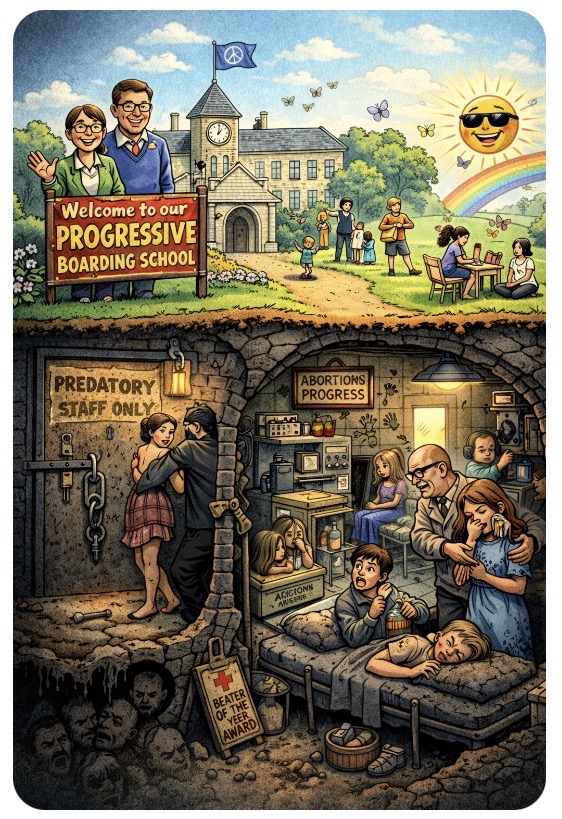
🎓⚠️For years, one of Britain’s most famously “progressive” boarding schools proudly marketed itself as a beacon of liberal education—free thinking, creativity, and a rejection of the rigid traditions of elite schooling. But according to disturbing accounts now emerging from former students, behind the reputation for enlightenment lay something far darker: allegations of sexual abuse by staff, exploitation of vulnerable pupils, and claims that some students were secretly taken for abortions.
The accusations, coming decades after many of the events allegedly occurred, paint a picture that clashes violently with the school’s carefully polished public image.
🏫 The Enlightened Facade… and What Was Hidden Behind It
For decades the school positioned itself as the anti-establishment alternative to Britain’s stiff, traditional boarding institutions. No stuffy uniforms. No rigid discipline. Just creativity, self-expression, and a nurturing environment where young minds could flourish.
But critics now argue that the very looseness and lack of oversight that made the school “progressive” may also have created conditions where boundaries blurred—and abuse allegedly flourished.
Former pupils claim some teachers used their authority to groom and exploit students, particularly during the 1970s and 1980s when safeguarding rules were far weaker than today. Some accounts describe relationships that were framed at the time as “consensual” but which, given the power imbalance between staff and minors, are now widely seen as clear abuse.
Most shocking are claims that certain pupils were allegedly taken away to undergo abortions, hidden from families and the outside world. If proven, such allegations would represent a profound betrayal of trust by those responsible for safeguarding young people.
These stories echo a pattern that has surfaced repeatedly across Britain in recent years: institutions—schools, churches, sports clubs, and even the BBC—where reputations and influence allowed misconduct to remain hidden for decades.
When institutions become symbols of cultural ideals—whether “traditional” or “progressive”—they sometimes become even harder to scrutinize. Loyalty, fear, and the desire to protect reputations can silence victims for years.
And so the question now confronting former students, investigators, and the public is painfully familiar: how did so many people know—or suspect—and yet nothing stopped it sooner?
🔥 Challenges 🔥
Here’s the uncomfortable truth worth confronting:
When abuse happens inside respected institutions, society often protects the institution before the victims.
Why?
Because reputations are powerful. Because admitting the truth shatters comforting narratives.
What do you think—should decades-old allegations still be pursued today, or is there a point where societies must simply move forward?
💬 Share your thoughts in the blog comments, not just on social media. Let’s have the real conversation where it matters.
👇 Comment, like, and share if you believe institutions must always be held accountable—no matter how powerful their reputation.
The sharpest insights and strongest arguments will be featured in the next issue of the magazine. 🎯📝


 Chameleon Magazine
Leave a comment