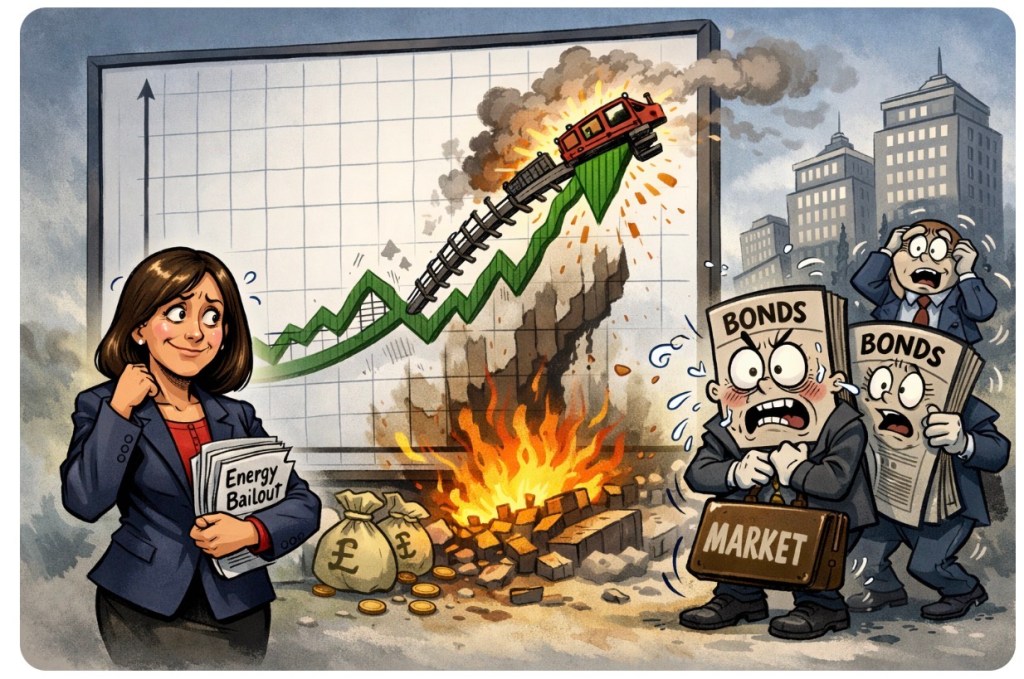
With oil prices climbing like a cat up a curtain, Rachel Reeves now faces a political pressure cooker: bail out households from soaring energy bills or risk sending financial markets into a mild existential crisis. The UK’s fiscal watchdog has warned MPs that a surge in oil prices could push inflation 1 percentage point higher by the end of the year—and any large government energy bailout could mean more borrowing… which bond markets tend to greet with the enthusiasm of a cat meeting a vacuum cleaner.
🔥 When “Helping Households” Meets the Bond Market’s Panic Button
Picture the scene. Millions of households staring at energy bills that look like phone numbers. Politicians rushing to promise relief. And somewhere in the background, the bond market quietly sharpening its knives.
The dilemma is beautifully awkward.
If the government steps in with a big energy bailout—subsidies, caps, rebates, whatever flavour of financial duct tape is fashionable this week—it has to borrow the money. That means issuing more government bonds.
Now normally that’s fine. Governments borrow all the time. But if investors start thinking the UK is throwing money around like a drunk uncle at a wedding, they demand higher interest rates to lend.
Translation:
The cost of government borrowing rises.
Which means taxpayers eventually pay more.
Which means the bailout designed to save money… starts costing even more money.
It’s the fiscal equivalent of putting out a kitchen fire with a flamethrower.
And markets have long memories. The ghost of the 2022 mini-budget meltdown still floats around Westminster like a financial poltergeist. Traders twitch at the mere scent of unfunded spending.
So the government’s choices look something like this:
- Let households absorb rising energy costs (politically explosive).
- Subsidise energy bills and borrow heavily (market nerves start jangling).
- Or attempt the magical political unicorn: help everyone without spooking investors.
Spoiler alert: unicorns are still in short supply.
🔥 Challenges 🔥
Here’s the real question:
Are energy bailouts economic compassion… or just another expensive plaster on a broken system?
If markets panic every time governments step in to protect households, who exactly is really in charge — elected leaders or bond traders in glass towers?
Drop your take in the blog comments. Rage, sarcasm, economic wisdom, conspiracy theories about oil barons—bring it all. 💬🔥
👇 Hit comment, like, and share if you think energy policy has turned into a high-stakes poker game with your heating bill as the chips.
The best comments will be featured in the next issue of the magazine. 📝


 Chameleon Magazine
Leave a comment