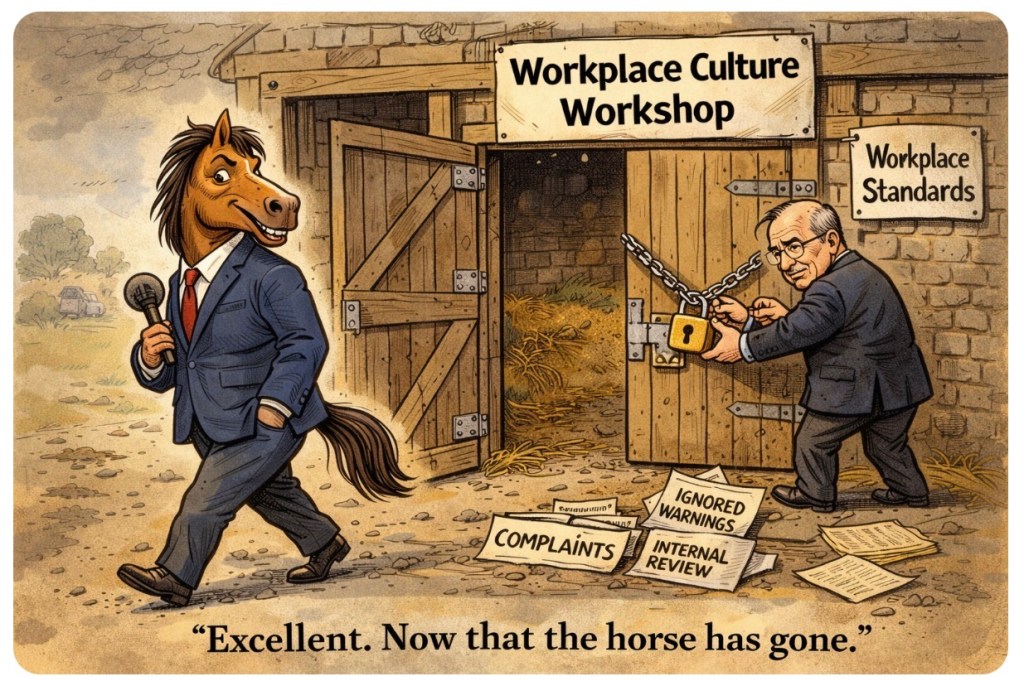
📺🙄Following the fallout from the Huw Edwards scandal, the BBC has reportedly decided that the solution to years of questionable behaviour among its star presenters is…
culture workshops.
Yes. After decades of power, privilege, and allegedly “untouchable” on-air personalities behaving badly, the corporation has reached for the corporate world’s favourite remedy: a seminar with a PowerPoint.
Because nothing says institutional reform like asking highly paid media veterans to sit in a room and learn the shocking revelation that basic professional behaviour is expected at work.
🧠 The Corporate Cure: A Flipchart and a Cup of Tea
According to reports, the BBC’s workplace culture review found that some high-profile presenters and managers behaved “unacceptably” and acted as though they were above the rules.
Which raises an obvious question.
If people believed they were untouchable, it usually means someone treated them that way.
And now, after the scandal exploded publicly, management has unveiled the grand solution: workshops designed to remind adults that abuse of power, intimidation, or inappropriate conduct is—brace yourself—not ideal workplace etiquette.
It’s a little like installing a smoke detector after the house burned down.
Or locking the stable door while the horse is halfway to Scotland.
Culture workshops make sense in organisations where the problem is misunderstanding.
But when the problem is power protecting power, a seminar with a laminated handbook feels less like reform and more like theatre.
Because if senior figures truly behaved as if they were untouchable, that culture didn’t appear by accident.
It was allowed.
Possibly encouraged.
And almost certainly ignored until the headlines became impossible to ignore.
🎭 The Untouchable Problem
Every large institution eventually develops its own celebrity class—people whose ratings, influence, or reputation make managers nervous about challenging them.
At that point the rules quietly bend.
Complaints are softened.
Warnings become “conversations.”
And problematic behaviour slowly becomes normalised.
Until suddenly it isn’t.
Then comes the inevitable corporate ritual:
- Commission a review.
- Announce training.
- Promise cultural change.
- Hope the public moves on.
It’s the bureaucratic version of saying “lessons will be learned.”
A phrase that usually means the opposite.
🔥 Challenges 🔥
Here’s the uncomfortable question:
Do “culture workshops” actually fix toxic workplace behaviour — or are they simply a public relations bandage after the damage is already done?
And more importantly…
Why do powerful institutions only discover their “culture problem” after a scandal explodes in public?
Drop your thoughts in the blog comments (not just Facebook). Bring the sarcasm, the outrage, and the examples from other institutions that tried the same trick. 💬🔥
👇 Comment, like, and share.
The sharpest responses will be featured in the next issue of the magazine. 📝


 Chameleon Magazine
Leave a comment