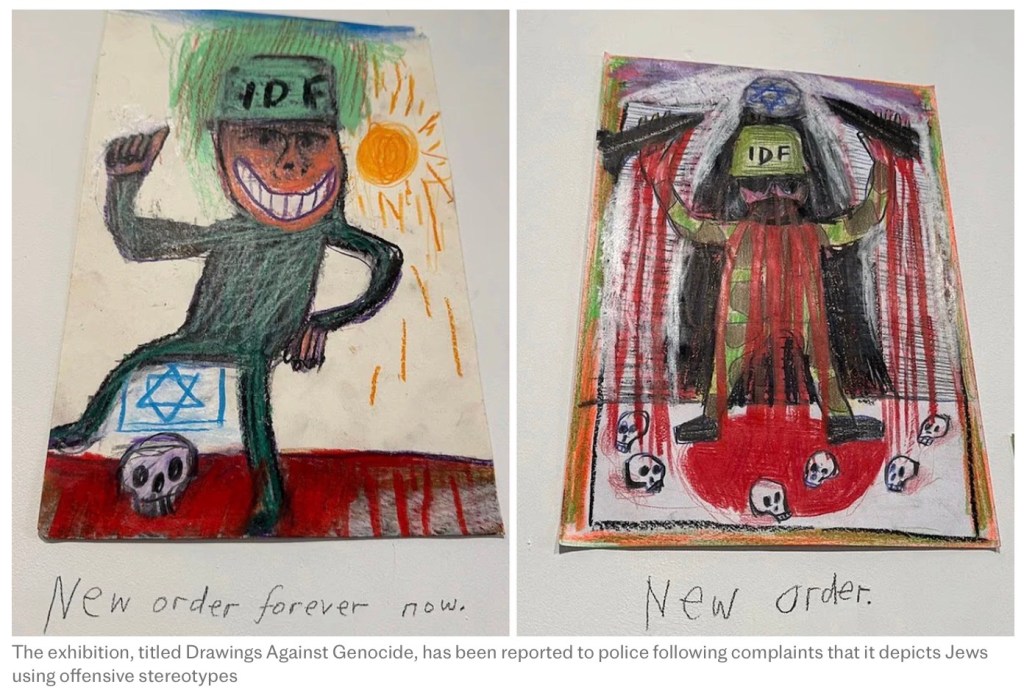
🎨🔥An art exhibition in Margate has ignited fury after reportedly depicting grotesque imagery of Jews in ways critics say echo deeply offensive, centuries-old anti-Semitic tropes. While police begin inquiries, the public reaction has been swift—and not exactly subtle. The bigger question bubbling under the surface? Why does outrage seem… selectively enforced?
🎭 The Gallery of Hypocrisy Is Now Open for Viewing
Ah yes, the modern art world—where meaning is “open to interpretation,” unless your interpretation gets you arrested. One minute, we’re told certain subjects are so sensitive they must never be criticized, joked about, or even questioned without risking social exile (or worse). The next, we’re apparently hosting exhibitions that critics say depict one of history’s most persecuted groups in a grotesque, dehumanising light—and calling it culture.
Bold. Brave. Possibly bananas. 🍌
Let’s be clear: offensive imagery that risks fuelling hatred or violence isn’t edgy—it’s lazy. It’s the intellectual equivalent of shouting insults through a megaphone and calling it poetry. And when authorities appear inconsistent in how they respond to different kinds of offence, people notice. Oh, they definitely notice. 👀
Because here’s the uncomfortable truth: if outrage becomes selective, it stops being moral and starts being political theatre. One group’s pain is not a punchline. Another group’s beliefs are not a free-for-all target. Either we apply standards consistently, or we admit we’re just picking favourites in the culture war.
And nothing fuels division faster than the perception that some people are protected while others are fair game. That’s not “progressive.” That’s just chaos wearing a beret. 🎩
🔥
Challenges
🔥
So where do you stand? Is this free expression gone too far—or just another example of double standards hiding behind the word “art”? And who decides where the line is drawn… and for whom?
Drop your take in the blog comments—don’t just shout into the void. 💬⚡
👇 Hit comment, hit like, hit share. Say the quiet part out loud (respectfully… or not).
The sharpest takes, hottest burns, and smartest arguments will be featured in the next issue of the magazine. 🎯📝


 Chameleon Magazine
Leave a comment