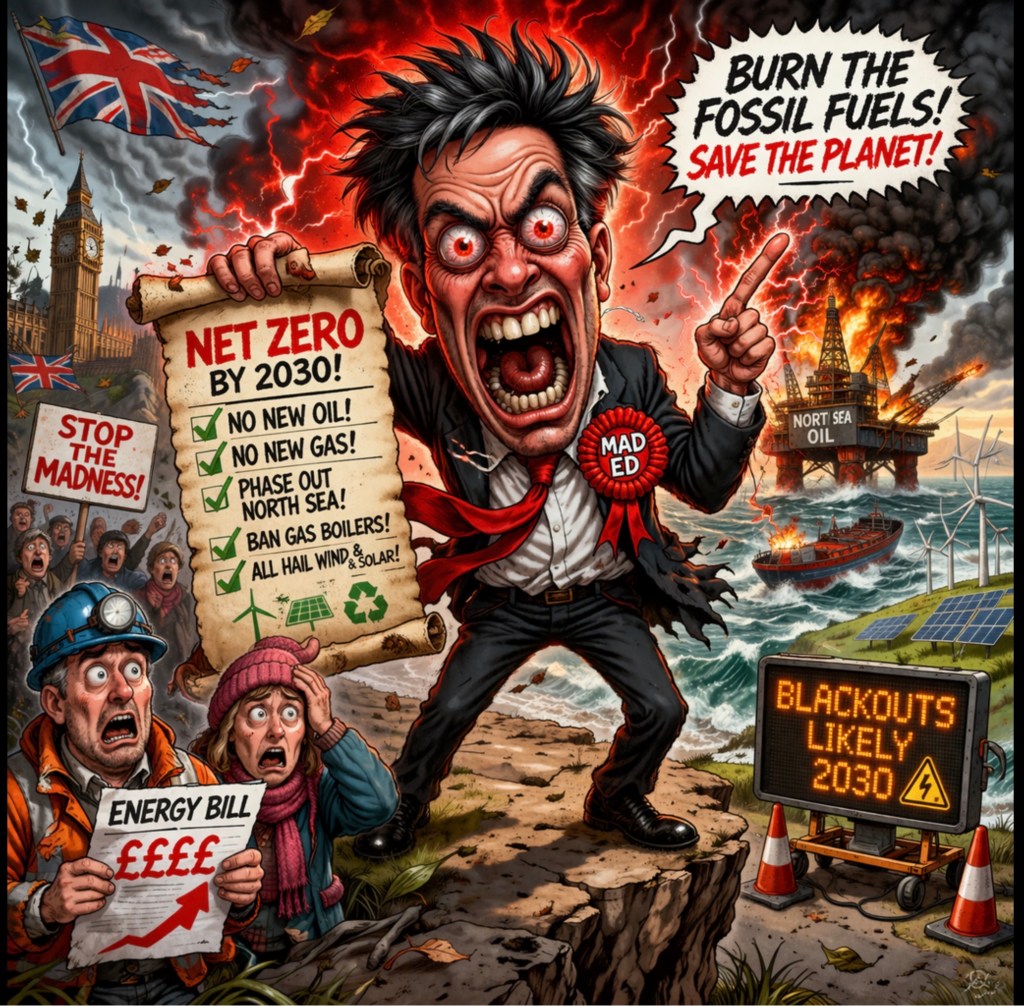
Accusations are flying, tempers are rising, and the phrase “net zero fanaticism” is being hurled around like a petrol can at a bonfire. Critics say the push against North Sea drilling risks making Britain poorer, weaker, and more dependent. Supporters say it’s called not sleepwalking into climate chaos. Somewhere in the middle sits a country wondering whether it’s saving the planet… or just outsourcing its problems. 🌍💷
🌪️ Green Dreams vs Grey Realities: The Energy Tug-of-War 😬
Let’s translate the shouting match.
On one side:
“Stop drilling, accelerate net zero, lead the world, save the future.” 🌱
On the other:
“Drill more, secure supply, protect jobs, stop pretending imports are cleaner.” 🛢️
And in the centre? Households staring at energy bills like they’ve just been personally insulted. 💸
The criticism aimed at Ed Miliband leans heavily on the idea that ideology is trumping practicality—that shutting down domestic fossil fuel production doesn’t magically reduce demand, it just shifts where the fuel comes from (often with a bigger carbon footprint and less control).
But here’s the catch: calling it “fanaticism” is political theatre. Because the opposite position—doubling down on fossil fuels indefinitely—has its own flavour of denial baked in.
So what we’re really watching isn’t sanity vs madness. It’s two competing risks:
- Move too fast → economic strain, energy insecurity
- Move too slow → climate damage, long-term cost explosion
Neither side gets to pretend this is simple.
And let’s drop the “asylum” rhetoric for a second—because reducing complex policy disagreements to insults about mental health doesn’t strengthen the argument. It just weakens the credibility of the person making it. 🧠⚠️
The real question isn’t whether someone is “unfit”—it’s whether the policy balance is.
🔥 Challenges 🔥
Is Britain sacrificing economic strength for climate leadership—or is it finally facing reality while others drag their feet? And who actually pays the price when politicians gamble on either path?
Bring your sharpest takes to the blog comments—not the usual surface-level noise. 💬⚡
👇 Like, comment, and share if you think the energy debate has become more about slogans than solutions.
The boldest, smartest (and yes, spiciest) responses will be featured in the next issue. 🎯📝


 Chameleon Magazine
Leave a comment