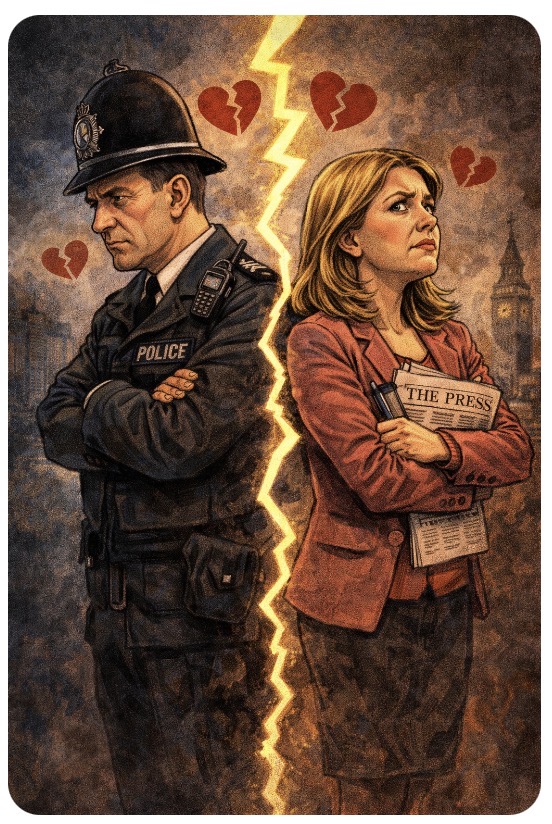
The long-running “special relationship” between Fleet Street and the boys (and girls) in blue has taken a spectacular nosedive. Allison Pearson is now dragging a police chief into the High Court, after being accused of hate speech—turning what used to be a quiet exchange of whispers into a very public courtroom shouting match. 📣📜
🗞️ From Pillow Talk to Courtroom Combat
Once upon a time, the media and the Metropolitan Police Service were practically inseparable. Leaks flowed like cheap wine at a Westminster Christmas party 🍷—a little tip-off here, a juicy headline there. Everyone scratched everyone else’s back, and the public got the carefully curated “truth” served up with a side of outrage.
But now? The honeymoon’s over. The dishes are smashed. And someone’s called the lawyers. ⚖️💥
Pearson’s legal move flips the script. The same machinery that once allegedly fed stories to journalists is now being accused of targeting them—of slapping on “hate speech” labels like parking tickets and letting reputations take the hit.
It raises a rather awkward question:
Were they partners in information… or just using each other until it suited them? 🤝➡️🗡️
Because if the police can investigate journalists over speech, and journalists can sue the police over overreach, then what we’re watching isn’t justice—it’s a turf war with better vocabulary.
And let’s not pretend this is all about principle. This is power, plain and simple. Who controls the narrative? Who gets to define “harm”? And who ends up apologising (or paying) when it all goes sideways?
Meanwhile, the public sits ringside, watching two institutions that once worked hand-in-glove now accuse each other of misconduct—like a messy divorce where both sides forgot the kids are still in the house. 🏠😬
🔥 Challenges 🔥
If the watchdogs and the law enforcers are at war… who exactly is watching the truth? 👀
Is this accountability in action—or just elites turning on each other when the deal goes sour?
Take it to the blog—bring your cynicism, your sarcasm, or your sharpest takes. 💬🔥 This one deserves more than a passing scroll.
👇 Comment, like, and share. Pick a side—or torch them both.
The best responses will be featured in the next magazine issue. 🎯📝


 Chameleon Magazine
Leave a comment