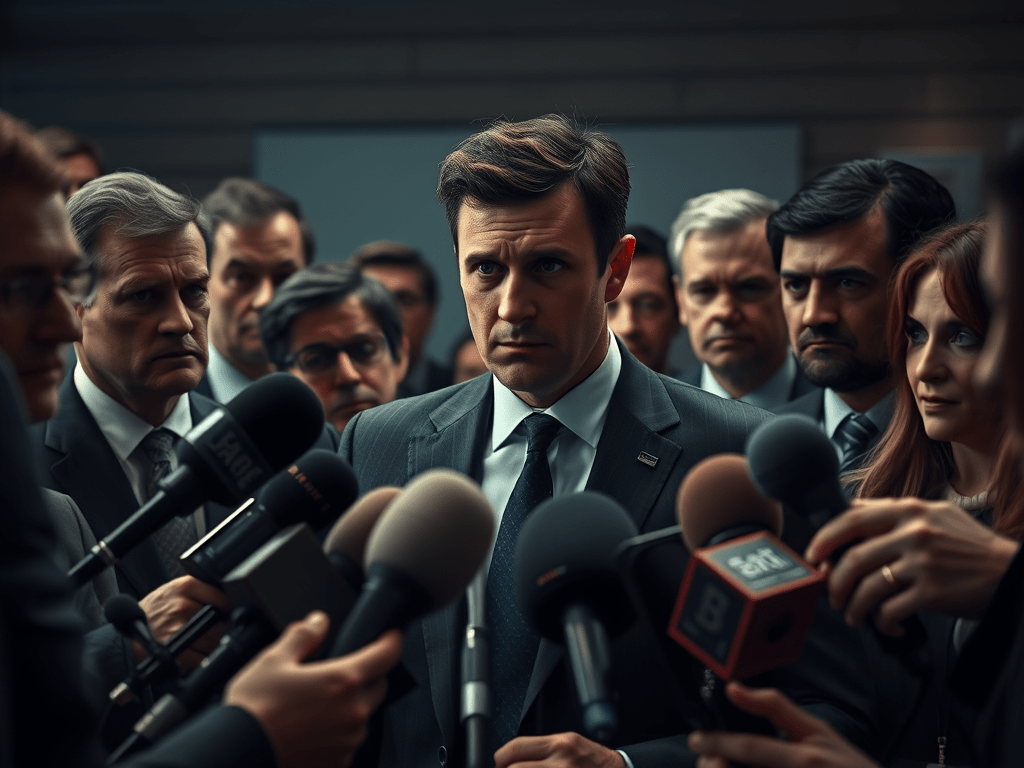
Britain abstains, the world debates, and somewhere in the middle of it all, Keir Starmer perfects the ancient political art of saying absolutely nothing… with maximum effort.
A vote at the United Nations General Assembly on one of history’s darkest crimes—and the official response? A masterclass in verbal fog: “No comment.”
🤷 The Sound of Silence… But Louder
You can almost picture it: microphones poised, journalists circling, tension in the air—and then… nothing. Not even a wobble. Just a carefully polished non-answer, delivered with all the conviction of someone choosing a sandwich filling.
Because why take a stance when you can:
- Offend no one (briefly) ✔️
- Clarify nothing ✔️
- Leave everyone equally confused ✔️
It’s diplomacy by disappearing act. 🎩✨
On reparations—a topic loaded with history, morality, and yes, potential financial implications—the approach seems to be: if you don’t say anything, maybe the problem will politely leave the room.
Spoiler: it won’t.
And while debates rage over accountability, history, and who should pay what, the leadership line appears to be hovering somewhere between “strategic ambiguity” and “please stop asking.”
Meanwhile, the public is left decoding silence like it’s a government-issued riddle:
- Does “no comment” mean no reparations?
- Or just “no comment yet”?
- Or the classic: “no comment until after the headlines settle”?
It’s less policy, more placeholder.
🔥
Challenges
🔥
Is silence a smart political shield—or just avoidance dressed up as strategy? 🤨
When it comes to issues this big, should leaders speak clearly… or keep ducking the question?
Drop your take directly on the blog—call it out, defend it, or tear it apart. 💬🔥
👇 Comment, like, and share—because silence shouldn’t be the loudest voice in the room.
The sharpest takes will be featured in the next issue of the magazine. 🎯📝


 Chameleon Magazine
Leave a comment