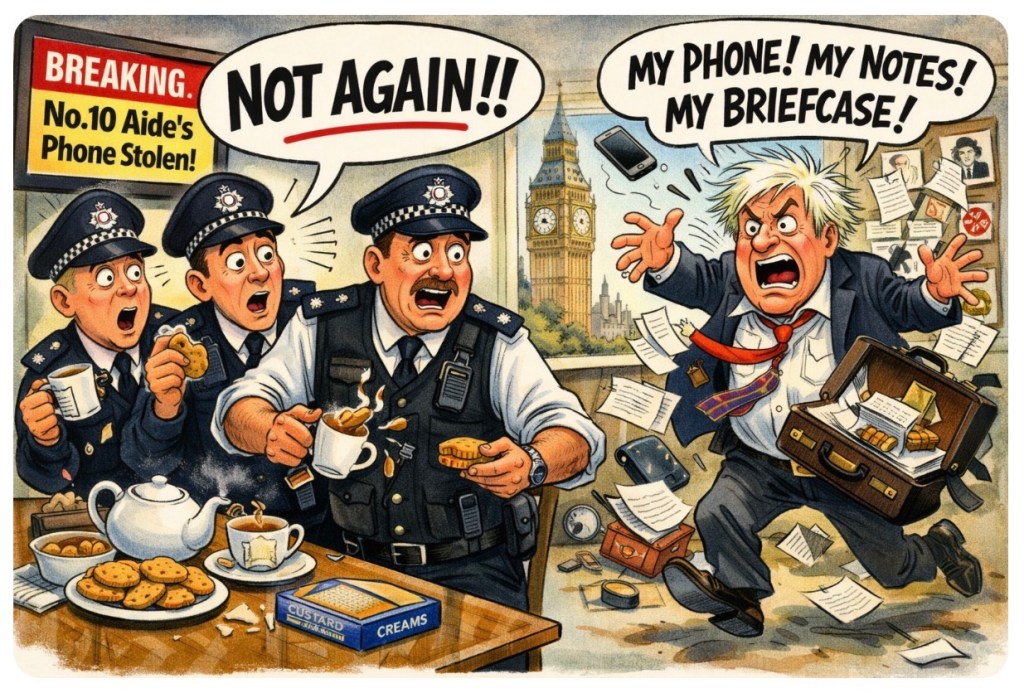
When a former No.10 chief of staff loses a phone, it’s not just a “whoops, check the sofa cushions” situation—it’s suddenly a full-blown episode of Sherlock, minus the violin and plus a lot more paperwork. As detectives comb through CCTV like it’s the Zapruder film, the nation collectively asks: why did urgency arrive later than second-class post?
☕ The Great Biscuit Break Before Justice
Ah yes, the moment of realisation. Somewhere in a police station, between dunking a digestive and debating whether to make another cuppa, a lightbulb flickered: “Hang on… this might actually matter.”
Only then did the investigative gears begin to creak into motion. CCTV footage? Reviewed. Street timelines? Examined. Eyebrows? Slightly raised.
Because nothing says “swift justice” like a delayed reaction that suggests the case was initially filed under “miscellaneous mild inconvenience.”
Let’s be honest—if this were Dave from Doncaster reporting a nicked Nokia, the response might’ve been a sympathetic shrug and a crime reference number scribbled on the back of a receipt. But add a dash of Westminster pedigree, and suddenly it’s CSI: Whitehall. 🎭
Meanwhile, the rest of us are left wondering whether the real crime is the theft… or the speed at which concern kicks in depending on whose pocket the phone was in.
🔥 Challenges 🔥
Is this a serious investigation—or a masterclass in selective urgency? Why does importance seem to hinge on job titles rather than the crime itself? And how many biscuits must be sacrificed before action is taken? 🍪
We want your take—sharp, sarcastic, or scorching hot. Drop your thoughts directly on the blog (not just socials 👀).
👇 Comment, like, and share if you’ve ever felt your own “missing phone” moment didn’t quite make the priority list.
The best responses will be featured in the next magazine issue—so bring the heat. 🔥📝


 Chameleon Magazine
Leave a comment