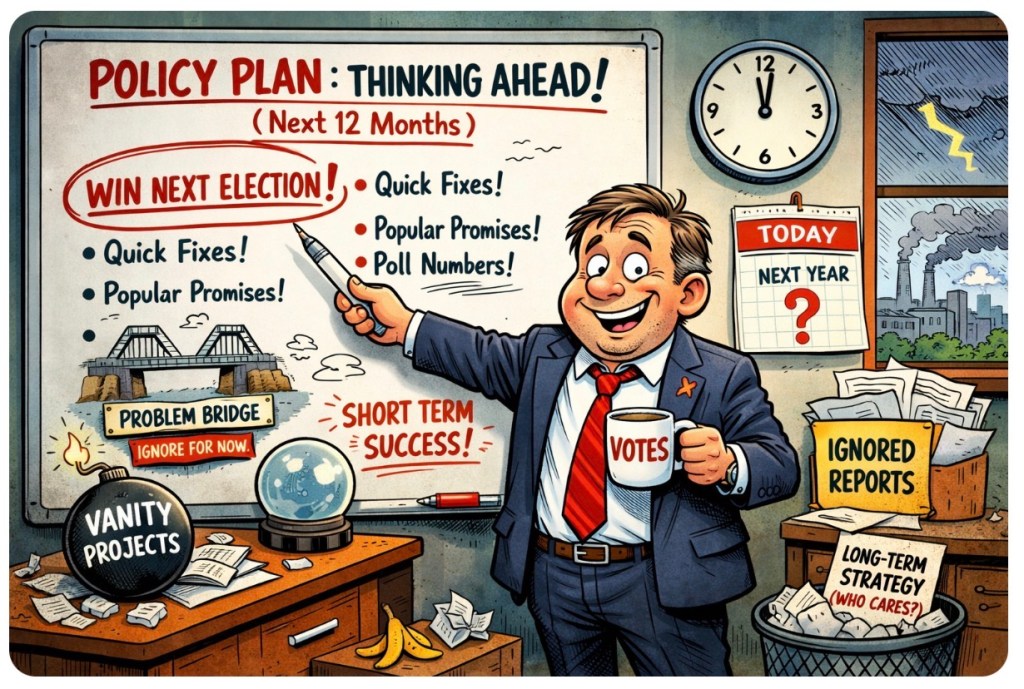
☕📺Ah yes, the sacred morning ritual: toast, tea, and two people confidently debating the future of a nation while seemingly allergic to long-term thinking. What could possibly go wrong?
🧠 “Experts” Without the Homework
What you’ve described isn’t really a debate—it’s more like two halves of an argument that refuse to acknowledge each other exist.
On one side, we’ve got the “no point drilling now” argument. And to be fair… they’re not entirely wrong. New North Sea oil projects take years—sometimes decades—to come online. So no, flipping the drilling switch today won’t magically lower your energy bill next winter. That’s just reality.
But here’s where it falls apart: that same argument often ignores why we’re in this mess. Energy policy has been dominated by short-term political wins—quick savings, good headlines, minimal upfront cost. Long-term resilience? Kicked down the road like an empty crisp packet.
On the other side, we’ve got the “oil companies held us to ransom” narrative. There is a grain of truth here too—energy firms have absolutely pushed for subsidies or incentives during low-profit periods. That’s how big industry works.
But reframing that as villainy while ignoring government decisions is… convenient. Successive governments chose not to invest in domestic refining capacity, infrastructure upgrades, or energy storage. Why? Because importing was cheaper at the time. And “at the time” has been the UK’s favourite policymaking horizon for years. ⏳
🧩 Strategy Missing: When Politicians Freelance the Future
Here’s the uncomfortable truth: politicians, left to their own devices, shouldn’t be the sole architects of long-term national strategy. Not because they’re unintelligent—but because the system they operate in rewards short-term wins, media soundbites, and survival until the next election. That’s not strategy—that’s crisis management in a suit. 🧾
What’s missing is serious, embedded input from business strategists, infrastructure planners, and long-range thinkers—people whose entire job is to map out 10, 20, even 50-year outcomes. The kind of people who understand supply chains, investment cycles, risk modelling, and how to build something that actually lasts. Instead, we get policies stitched together like a last-minute school project—no cohesion, no durability, and no clear destination.
You wouldn’t let someone plan a cross-country expedition with only a weather forecast for the next four hours… so why are we letting entire economies run on the political equivalent of “we’ll see how it goes”? 🗺️
🔄 The Real Issue: A Decade of Kicking the Can
This isn’t about one bad decision—it’s about a pattern:
- Prioritising cheap imports over energy independence
- Chasing Net Zero headlines without building the supporting infrastructure
- Avoiding long-term investment because it doesn’t win elections
- Letting critical industries decline, then acting surprised when they disappear
So now we’re stuck in a paradox:
- We didn’t invest in oil & gas → now we’re exposed
- We didn’t invest enough in renewables/storage → now we’re dependent
- We didn’t future-proof anything → now everything feels urgent
And suddenly everyone on breakfast TV is an energy strategist. Brilliant. 🙃
🔥 Challenges 🔥
So here’s the real question: are we finally ready to think beyond the next election cycle—or are we doomed to repeat this loop with a different energy source next time?
Drop your take in the blog comments—are politicians failing us, or are we rewarding short-term thinking at the ballot box? 💬⚡
👇 Like, share, and jump into the debate. Call it out, tear it apart, or defend it—but don’t sit on the fence.
The sharpest comments will be featured in the next issue of the magazine. 📝🔥


 Chameleon Magazine
Leave a comment