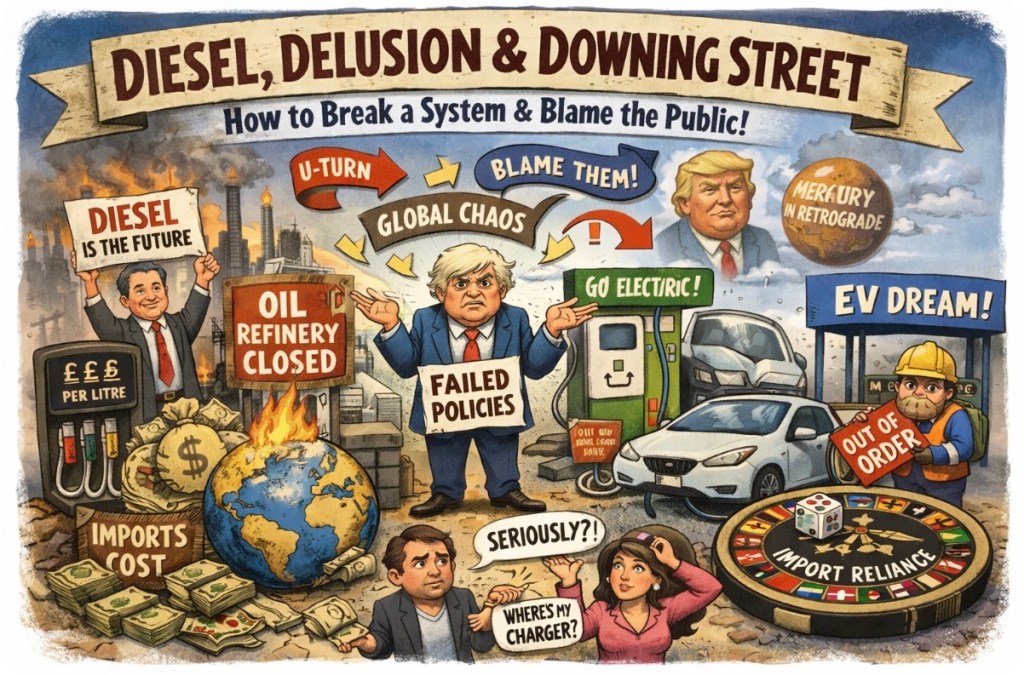
⛽🔥From diesel U-turns to refinery shutdowns and a sudden evangelical push toward electric cars, the grand plan appears to be: create chaos, deny responsibility, and hope nobody notices the smoke. The public is told to “trust the process” while paying more at the pump, more on imports, and more for the privilege of navigating a system that feels increasingly stitched together with political duct tape.
⚡ Policy Ping-Pong: From Diesel Darling to Environmental Villain
Remember when diesel was the golden child? Lower CO₂ emissions! Tax incentives! Buy now, save the planet later! Fast forward a few years and suddenly diesel drivers are treated like environmental outlaws. Funny how that works when policy is written on the back of a napkin and revised every election cycle.
Now comes the electric vehicle (EV) revolution—bold, shiny, and… wildly underprepared. Charging infrastructure? Patchy at best. Grid capacity? Let’s just say it’s not exactly itching for millions of cars plugging in at 6pm. It’s like inviting the entire country to a dinner party and forgetting to buy chairs. 🚗⚡
Meanwhile, refinery closures and reduced domestic production mean increased reliance on imports. Translation: higher prices, greater vulnerability, and a front-row seat to global market chaos. Because nothing says “energy security” like crossing your fingers and hoping international supply chains behave themselves.
And when things go wrong? Oh, don’t worry—there’s always someone else to blame. Global markets. Previous governments. Consumers. Weather. Mercury being in retrograde. Anyone but the architects of the mess.
🛢️ Import Nation: The Great British Energy Gamble
Shutting down refineries while increasing dependence on imported fuel isn’t just ironic—it’s strategic self-sabotage with a polite press release. The more reliant you become on external supply, the more exposed you are to geopolitical roulette.
And yes, when global figures like Donald Trump or other unpredictable actors shake markets, countries with weak domestic resilience feel it hardest. That’s not conspiracy—it’s basic economics with a side of common sense.
So here we are: higher costs, reduced control, and a government asking for patience while simultaneously pulling the rug out from under its own policies.
🔥 Challenges 🔥
So what’s the plan—keep nodding along while policies flip-flop like a politician in a wind tunnel? Or start asking the uncomfortable questions? 🤔🔥
Why are we expected to adapt overnight while infrastructure lags years behind? Who benefits from this confusion—and who’s footing the bill?
Drop your take directly on the blog. Not Facebook. Not X. The blog. 💬
Call it out, break it down, or roast it with surgical sarcasm.
👇 Smash comment, like, and share if you’re tired of paying for policy experiments.
The sharpest takes, funniest burns, and boldest truths will be featured in the next issue of the magazine. 🎯📝


 Chameleon Magazine
Leave a comment