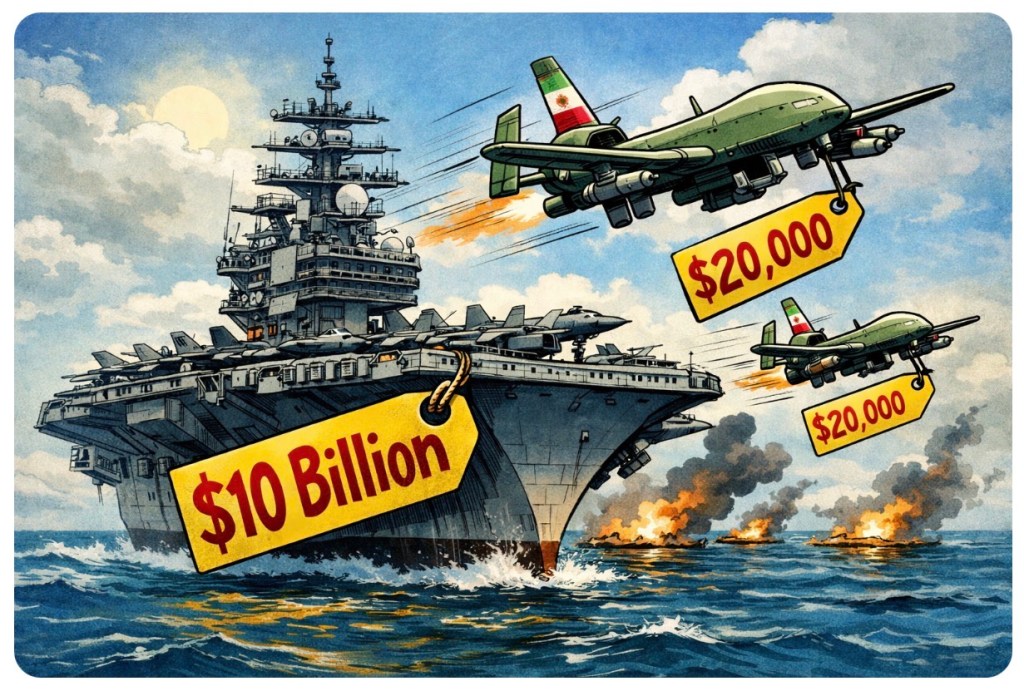
If the Strait of Hormuz gets choked off, the theory goes, the United Kingdom doesn’t just feel a pinch—it spirals into a full-blown budget apocalypse. Oil stalls, prices explode, supply chains wobble like a three-legged chair, and suddenly the phrase “cost of living crisis” feels quaint. Add a few bargain-bin drones into the mix—cheap, cheerful, and annoyingly effective—and apparently the Royal Navy is left guarding the seas with binoculars and vibes. 🚁📉
🚨 The £1 Million Warship vs £500 Drone Showdown 🚨
Here’s the pitch: modern warfare has gone full discount mode. Why build a £1 billion warship when you can fling a swarm of drones that cost less than a London flat deposit? It’s David vs Goliath—if David had Amazon Prime and a grudge.
And here’s the uncomfortable twist—if oil stops flowing, Britain doesn’t have a cushion big enough to laugh it off. We import a huge chunk of our energy. Take that away, and things don’t gently decline—they lurch. Fast. Fuel shortages, price spikes, transport grinding down, businesses choking, households choosing between heat and food. That’s not a slow burn—that’s a shock to the system that gets very real, very quickly. ⛽📉
The Royal Navy isn’t exactly a dinghy club. It operates layered defence, alliances, and—crucially—doesn’t guard global shipping lanes solo like some maritime Batman. Still, the anxiety hits a nerve: global chokepoints like the Strait of Hormuz are pressure valves for the entire world economy. You squeeze them, and everyone feels it in their wallet. 💸
Now toss in politics, because what’s a crisis without a bit of Westminster theatre?
Enter Ed Miliband, waving the Net Zero flag while energy prices are already making people consider whether candles are a lifestyle choice. The outrage writes itself: “Why are we sprinting toward green dreams while bills are doing their own impression of a SpaceX launch?” 🚀💡
Critics say the timing is madness. Supporters say it’s the only way out of global energy chaos. Meanwhile, the public is stuck refreshing their bank apps like it’s a live sports score.
And then comes the punchline that’s equal parts satire and unease: Britain, former empire, financial hub, global influencer… ringing up countries in Africa asking if they’ve got a spare generator and a decent extension lead. 🌍🔌
Absurd? Yes. Comfortable thought experiment? Not even slightly.
🔥 Challenges 🔥
If the taps ran dry tomorrow, how long before things start to crack? Days? Weeks? 🤔
Are we prepared for that kind of shock—or just hoping it never comes?
Take it to the blog comments—properly. Not just a scroll-and-scoff. 💬🔥
👇 Like, share, and say it loud—are we resilient, or just pretending?
The sharpest takes will be featured in the next issue of the magazine. 🎯📝


 Chameleon Magazine
Leave a comment