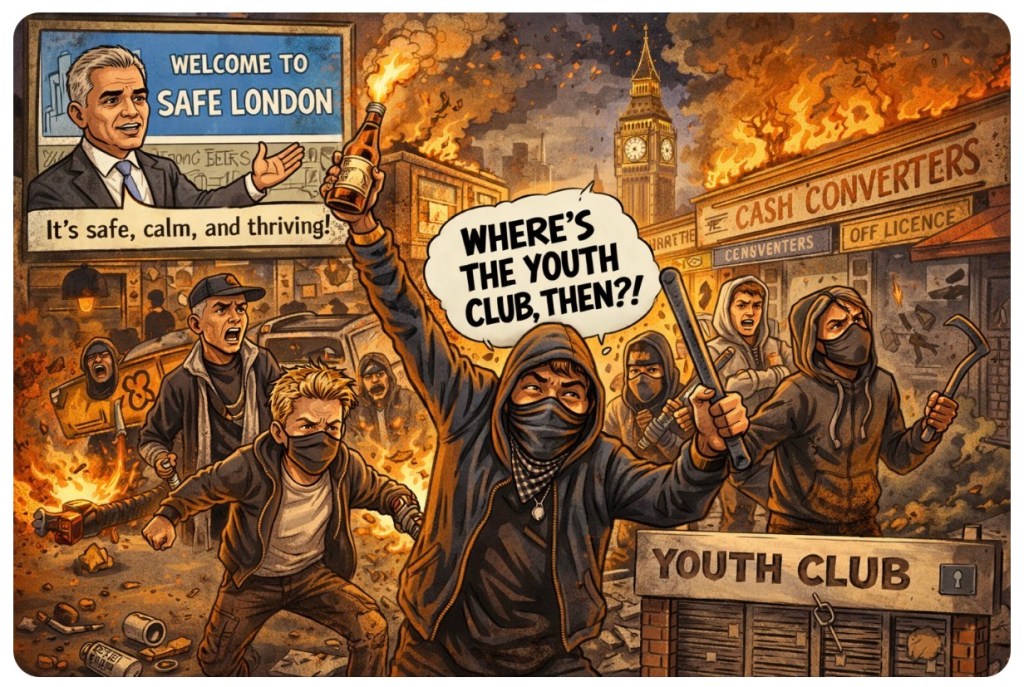
While videos of chaos ripple across timelines and headlines shout about mobs in Clapham, Sadiq Khan steps up to the podium with the confidence of a man trying to convince you rain is just “aggressive sunshine.”
According to City Hall, London isn’t unsafe—it’s just… misunderstood. A few smashed shopfronts? Community engagement. A surge in disorder? Vibrant youth expression. If you squint hard enough, you can almost see the rebrand: “London—now with added adrenaline.”
🚨 Spin Cycle: When Reality Gets a PR Makeover
Let’s get one thing straight: cities are complicated. Crime exists. Data fluctuates. But there’s a difference between nuance and outright narrative gymnastics.
When people see:
- Viral clips of mobs overwhelming streets
- Businesses shuttering early “just in case”
- Residents quietly adjusting routes home
…and they’re told, “This is false propaganda,” it doesn’t calm nerves—it erodes trust.
Because here’s the uncomfortable bit: public safety isn’t just about statistics—it’s about lived experience.
If people feel unsafe, brushing it off like a bad Yelp review isn’t leadership—it’s denial in a tailored suit.
🎭 The Theatre of “Everything’s Fine”
There’s a peculiar performance happening:
- Officials insist things are under control 🎤
- Citizens compare notes in group chats 📱
- Reality sits somewhere awkwardly in between 😬
And while no serious person believes every incident defines an entire city, pretending those incidents don’t matter is just as absurd.
London is a great city. It’s also a city facing real challenges—like many major capitals. The problem isn’t acknowledging that. The problem is pretending acknowledgment itself is dangerous.
🔥 Challenges 🔥
So here’s the question: When does reassurance become gaslighting? 🤔
At what point do people stop buying the “nothing to see here” script and start demanding something more grounded in reality?
Are we dealing with exaggerated panic—or polished denial?
And more importantly… who gets to decide?
💬 Take it to the blog comments—your take, your experience, your unfiltered truth. No spin, no slogans.
👇 Like it. Share it. Challenge it.
The sharpest insights (and the spiciest reality checks) will be featured in the next issue of the magazine. 📝🔥


 Chameleon Magazine
Leave a comment