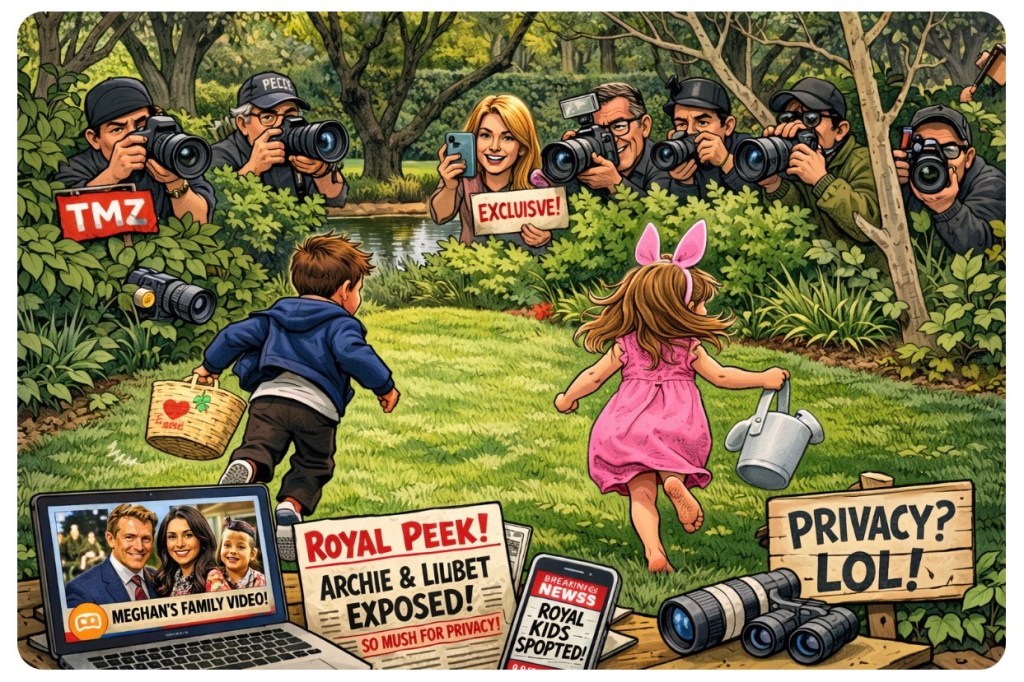
Just when you thought the word privacy meant “keeping things out of the public eye,” along comes Meghan Markle with a gentle reminder that in 2026, privacy apparently comes with a “share” button.
Yes—rare, intimate family clips of Archie and Lilibet, released to the world like a limited-edition Netflix drop. And naturally, the internet does what it always does: zooms in, shares, debates, and dissects.
So let’s ask the awkward question everyone’s thinking… 🤔
📱 Selective Privacy: Now You See It, Now You Don’t
The original narrative was clear: step back from royal life, escape relentless media intrusion, and protect the family—especially the children—from global scrutiny.
Fair enough. Most people would nod along to that.
But then… curated glimpses appear. Carefully framed, emotionally warm, just enough to engage—but not enough to invite questions (ironically doing exactly that).
And that’s where the confusion creeps in:
- If privacy is the goal, why release anything at all?
- If sharing is okay, where’s the line drawn?
- And who controls that line—the public, or the PR team?
Because once something hits the internet, it’s no longer “private.” It’s content. And content travels.
🎭 Control vs Exposure: The Real Game
Here’s the more grounded take:
This isn’t really about abandoning privacy—it’s about controlling it.
There’s a big difference between:
- Being chased by paparazzi 📸
- And choosing what the world sees, on your terms
In that sense, it’s less contradiction and more strategy.
They’re not rejecting publicity—they’re curating it.
But—and it’s a big but—that nuance doesn’t always land well with the public. Because to many people, it feels like wanting the benefits of visibility without the downsides of scrutiny.
🪞 The Optics Problem
And this is where your point hits:
To the outside world, it can look like:
“We left for privacy… but here’s a highlight reel.”
Even if the intention is controlled sharing, the perception can feel inconsistent—especially when children are involved.
Because once those images are out there:
- They will be shared globally 🌍
- They will be analysed
- And they will become part of the very media cycle they stepped away from
So the criticism isn’t really about the act itself—it’s about the message vs the reality.
🔥
Challenges
🔥
So where do you land on this?
Is this a fair way to reclaim control from intrusive media…
or does it blur the very boundaries they once said they needed?
💬 Take it to the blog—don’t just scroll past. Is this smart strategy or mixed messaging?
👇 Like, share, and drop your take in the comments.
The sharpest opinions (and spiciest contradictions) will be featured in the next issue. 📝🔥


 Chameleon Magazine
Leave a comment