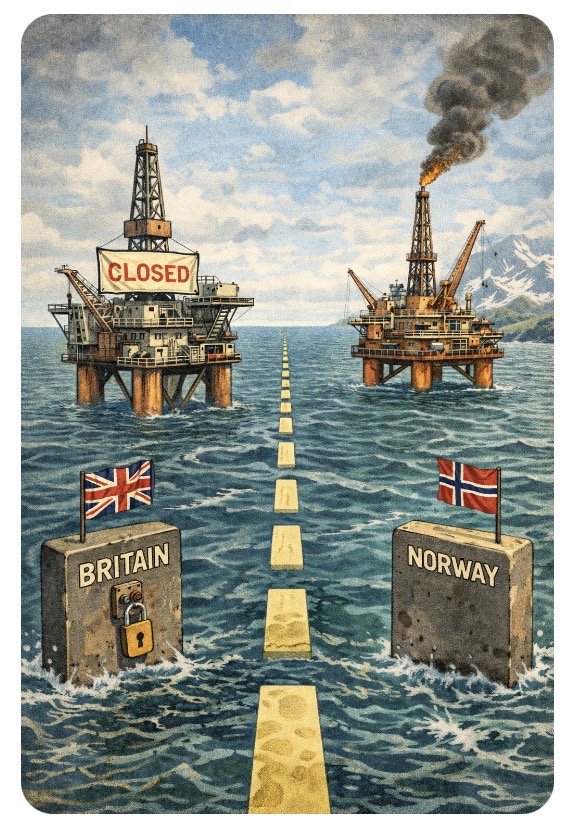
⛽💰🇬🇧Let’s cut through the fog: North Sea gas isn’t just about saving money—it’s about making it. Yet somehow, the conversation keeps getting dressed up like it’s just a question of “cost” rather than ownership, control, and straight-up national revenue.
Because here’s the part that keeps getting conveniently downplayed…
💷 Not Just Cheaper—It Pays Us Back
Yes, using our own gas can be cheaper than importing it. That’s basic logic. But the real kicker? When it’s ours, the money doesn’t just disappear overseas—it circulates back into the country.
Licensing. Taxes. Jobs. Investment.
That’s revenue.
It’s the difference between:
💸 Paying someone else’s bills
💷 Or getting paid from your own assets
If you’re importing gas, you’re sending billions out the door. If you’re producing your own, you’re not just saving—you’re earning. It’s not just about picking apples from your own garden… it’s about selling a few crates while you’re at it.
🌍 The “Not In My Backyard” Illusion
And yes—of course—you’ll hear the environmental argument.
“Drilling here is bad for the planet.”
Fine. But here’s the uncomfortable twist…
If you’re still importing gas, the environmental impact doesn’t magically disappear—it just moves. It becomes someone else’s coastline, someone else’s ecosystem, someone else’s problem.
Out of sight. Out of mind. 🌊➡️🌍
So let’s not pretend that outsourcing production is some kind of moral high ground. It’s not environmental virtue—it’s environmental outsourcing.
Because making another country deal with the extraction, the emissions, and the disruption doesn’t make the demand cleaner. It just makes the conscience quieter.
🎩 The Selective Logic Olympics
Here’s where it gets interesting.
When it suits the narrative, we’re told:
“Domestic production saves billions.”
But the moment you mention revenue, control, and economic leverage, the conversation suddenly gets… complicated. Foggy. Full of caveats.
Why?
Because once you admit it’s not just cheaper—but also profitable—it becomes a lot harder to argue against it without shifting the goalposts entirely.
And that’s the real debate, isn’t it?
Not whether it saves money.
Not whether it generates revenue.
But whether those benefits outweigh other priorities—and whether we’re being told the full story.
🔥 Challenges 🔥
Is this about economics, ethics, or optics? If we still need the gas either way, does shifting the burden abroad really solve anything—or just make it easier to ignore? Drop your take—agree, disagree, or dismantle the whole argument 👇🔥
👇 Hit comment, hit like, hit share. Is Britain dodging responsibility—or missing an opportunity?
The best comments will be featured in the next issue of the magazine. 🎯📝


 Chameleon Magazine
Leave a comment