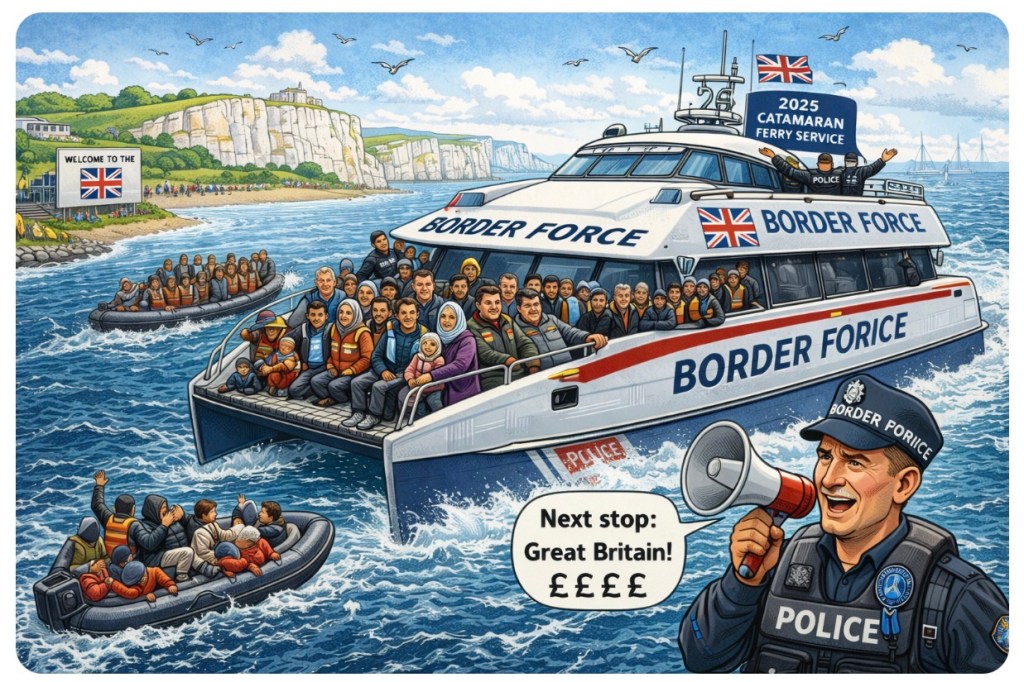
The UK government has unveiled its latest masterstroke in border management: spend £30 million a year on shiny new catamarans… and hope the problem politely solves itself. Enter Border Force with a fleet upgrade that sounds impressive—until you ask the obvious question: what exactly are these boats meant to achieve?
Because depending on who you ask, this is either a firm stance on illegal crossings… or the world’s most expensive ferry service.
🚢 The Great British “Turnaround”… or Turnstile? 🔄
Four sleek new vessels, cutting through the Channel like taxpayer-funded optimism. The official line? Strengthen patrols, improve response, and “tackle” illegal crossings.
But critics—and let’s be honest, a growing number of baffled onlookers—see something else entirely:
A system where boats intercept migrants… only to bring them into the UK anyway.
It’s less “stop the crossings” and more “escort service with uniforms.”
Now, to be fair, international law and safety obligations mean you can’t just ignore boats in distress. People at sea get rescued—full stop. That’s not politics, that’s maritime reality.
But here’s where the frustration kicks in:
If every interception still ends with arrivals on British shores, then what exactly is being “controlled”?
It starts to feel like we’re paying £30 million a year not to solve the problem—but to manage the optics of not solving it.
And in the meantime, the crossing numbers tick upward, the costs balloon, and the public gets another press release dressed up as progress.
🔥 Challenges 🔥
If stronger borders still mean rising arrivals, is this strategy working—or just floating along? Are these boats a necessary safety measure… or a very expensive symbol of policy failure?
💬 Head to the blog and say it straight: Is this control, compromise, or complete confusion?
👇 Like, share, and drop your take below. No holding back.
The best, boldest comments will be featured in the next issue of the magazine. 🎯📝


 Chameleon Magazine
Leave a comment